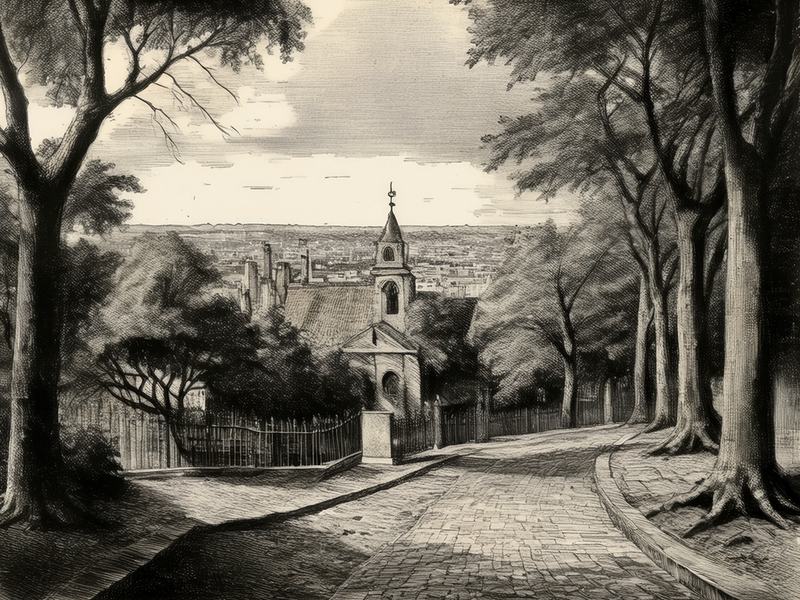
From Mont-Louis to Père-Lachaise
From a Jesuit property in 1626 to the largest cemetery in Paris: four centuries of transformation on the Charonne hill.
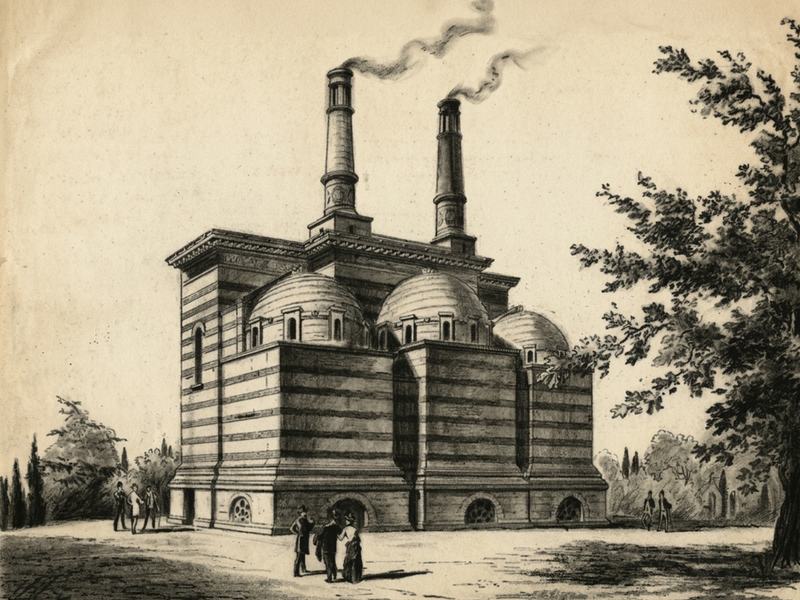
When Paris Learned to Burn Its Dead
France's first crematorium, opened in 1889 in a neo-Byzantine style by Jean Camille Formigé: the story of a fifteen-year fight for freedom of burial.
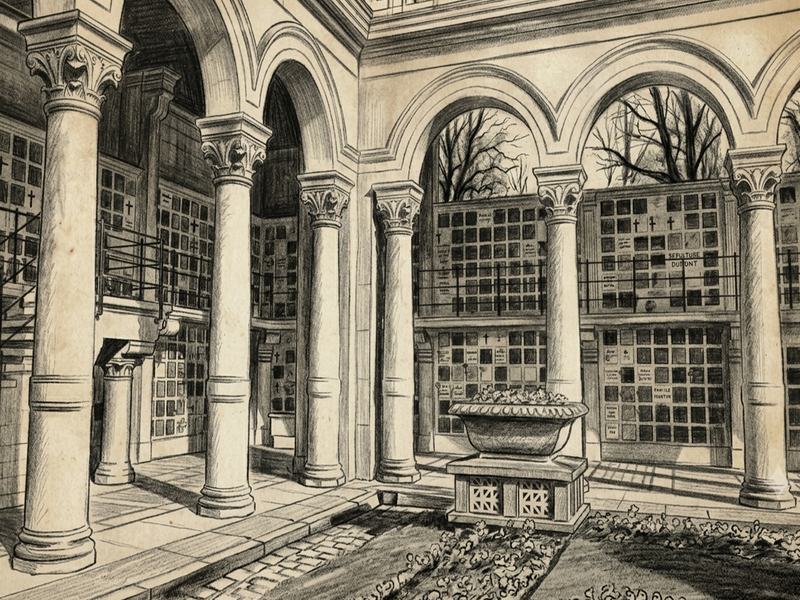
Twenty-Six Thousand Niches for Eternity
Built in phases between 1893 and 1920 by the architect Formigé, the Père-Lachaise columbarium spans four wings and four levels around the crematorium: 26,606 numbered niches, including those of Maria Callas, Max Ophüls and Isadora Duncan.
The Twilight of the Queen of Oudh
Three days in Paris before oblivion — Père-Lachaise's first Indian grave.
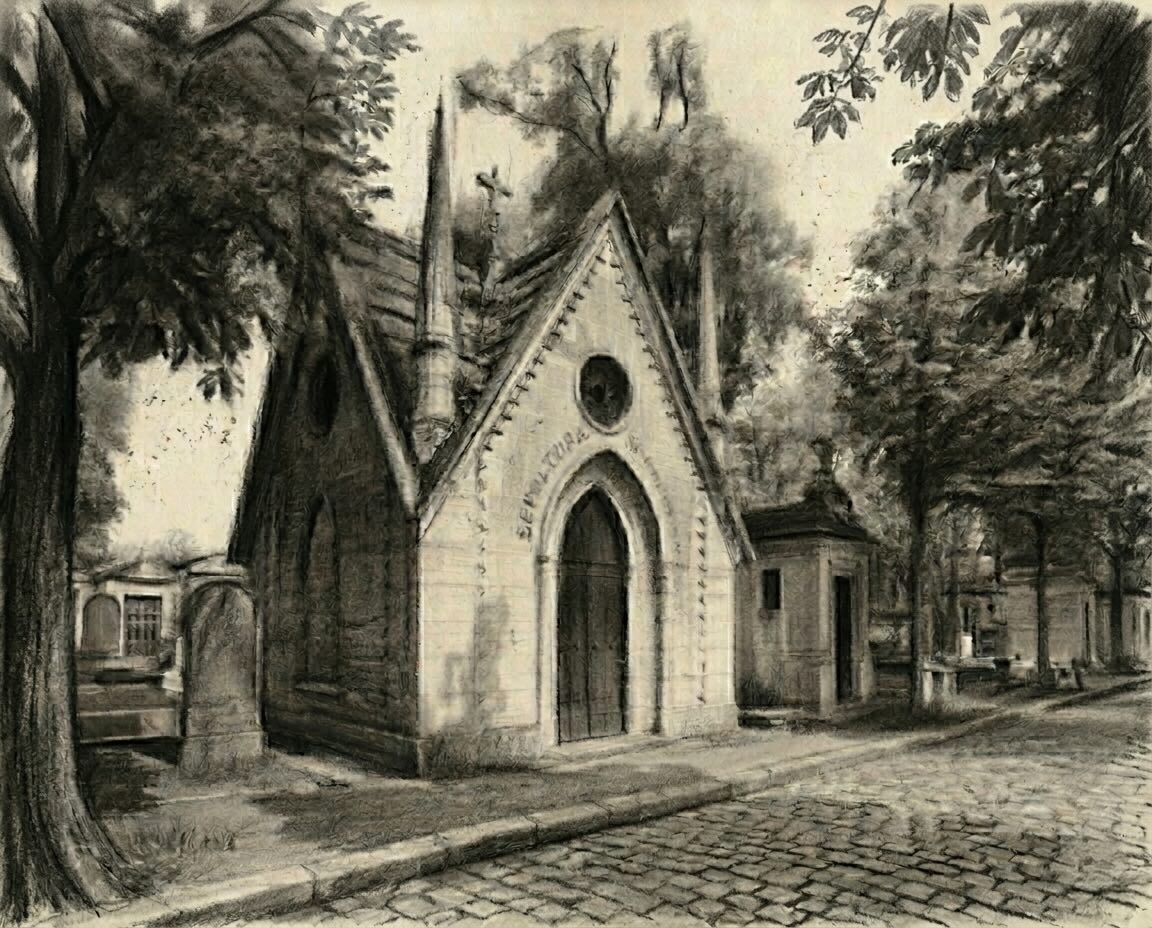
The First Chapel
Eternity, made to measure — the invention of the Greffulhe chapel.
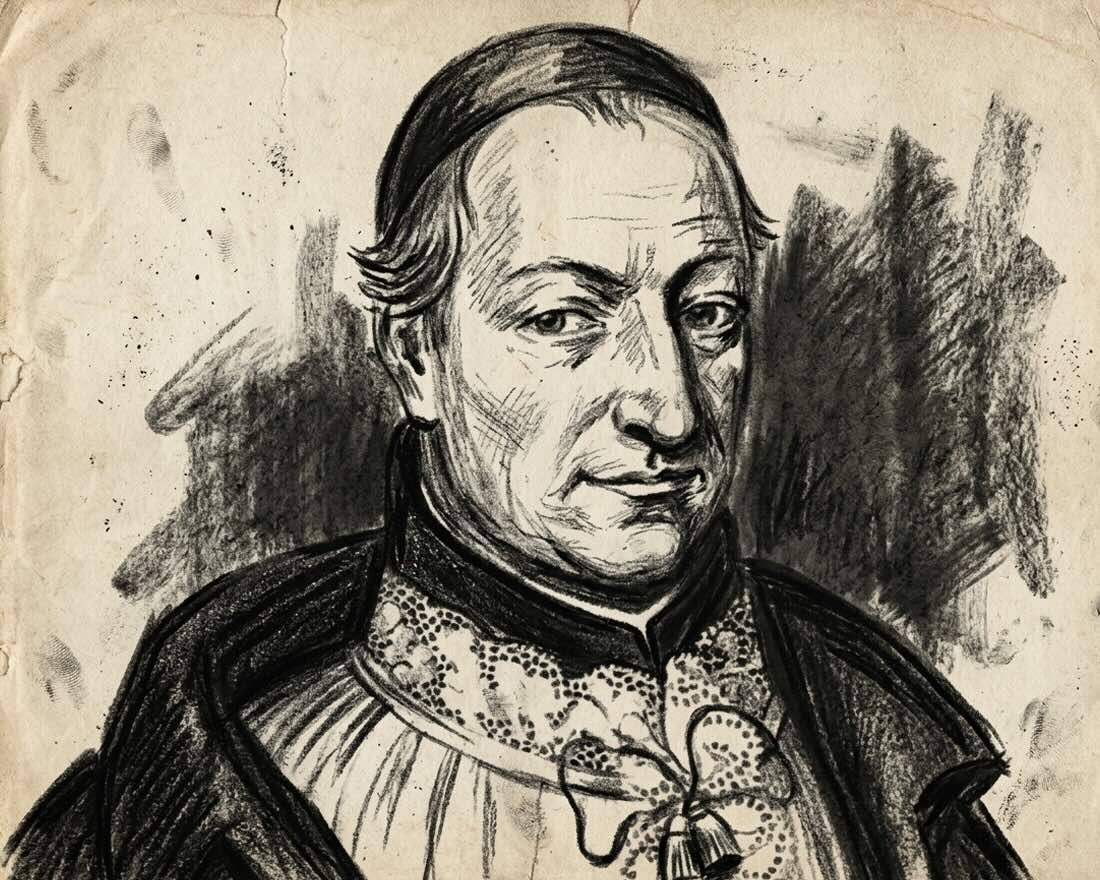
Who Was Père Lachaise?
Louis XIV's confessor, who gave the hill its name.
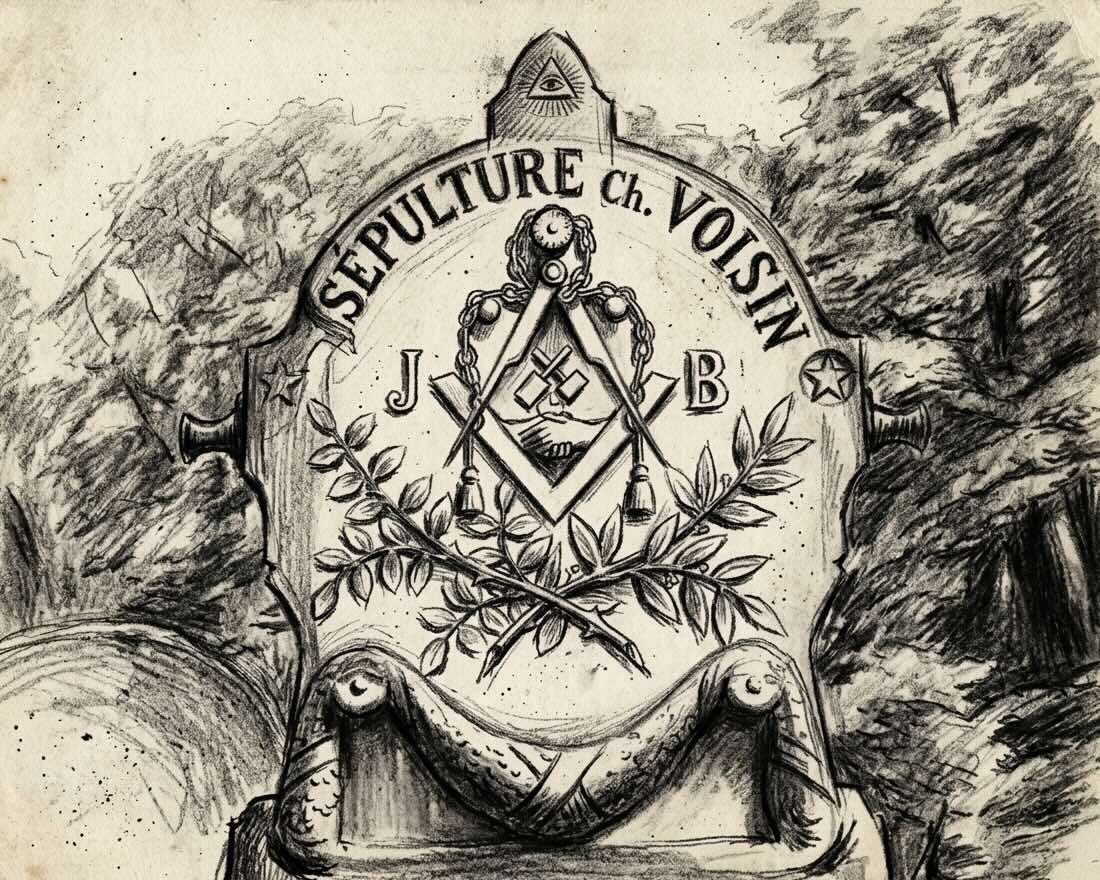
The Freemasons' Whisper
Squares, compasses and acacias: the secret alphabet carved in stone.
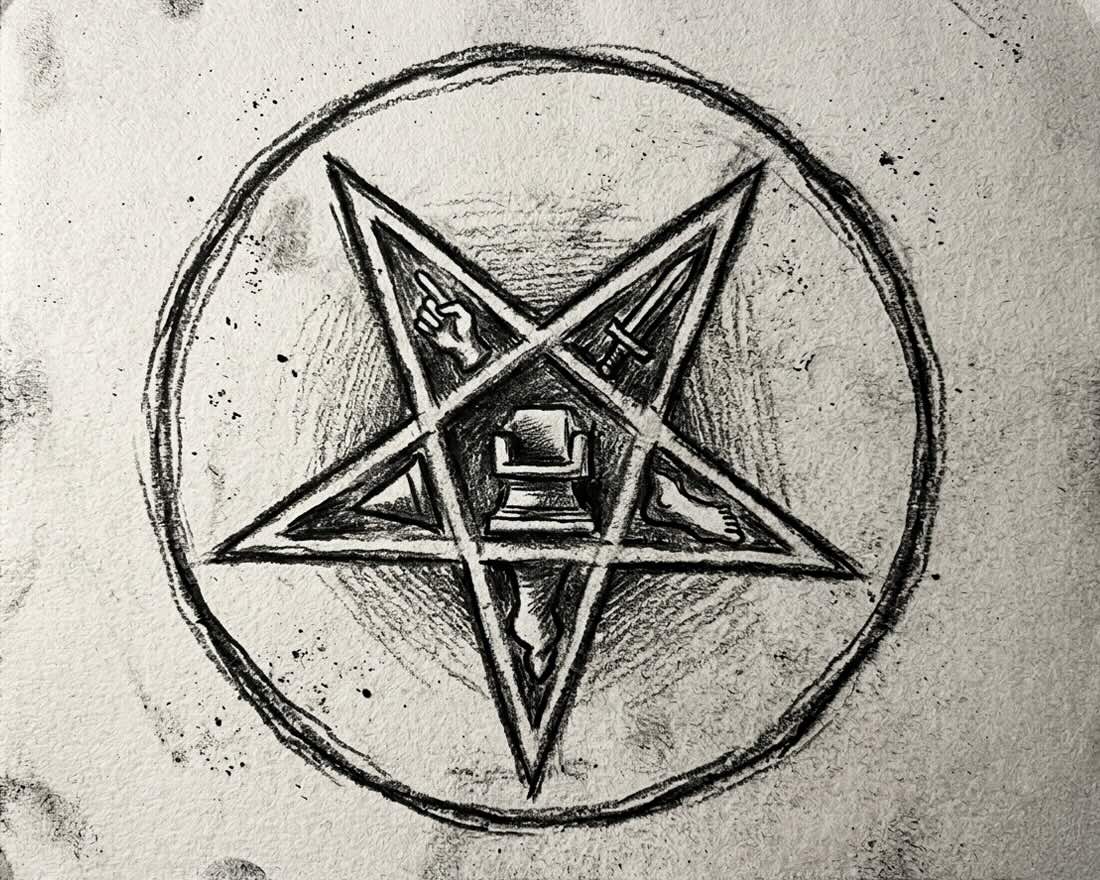
The Dark Legends
Nocturnal rituals and occult folklore: two centuries of tales that haunt the paths.
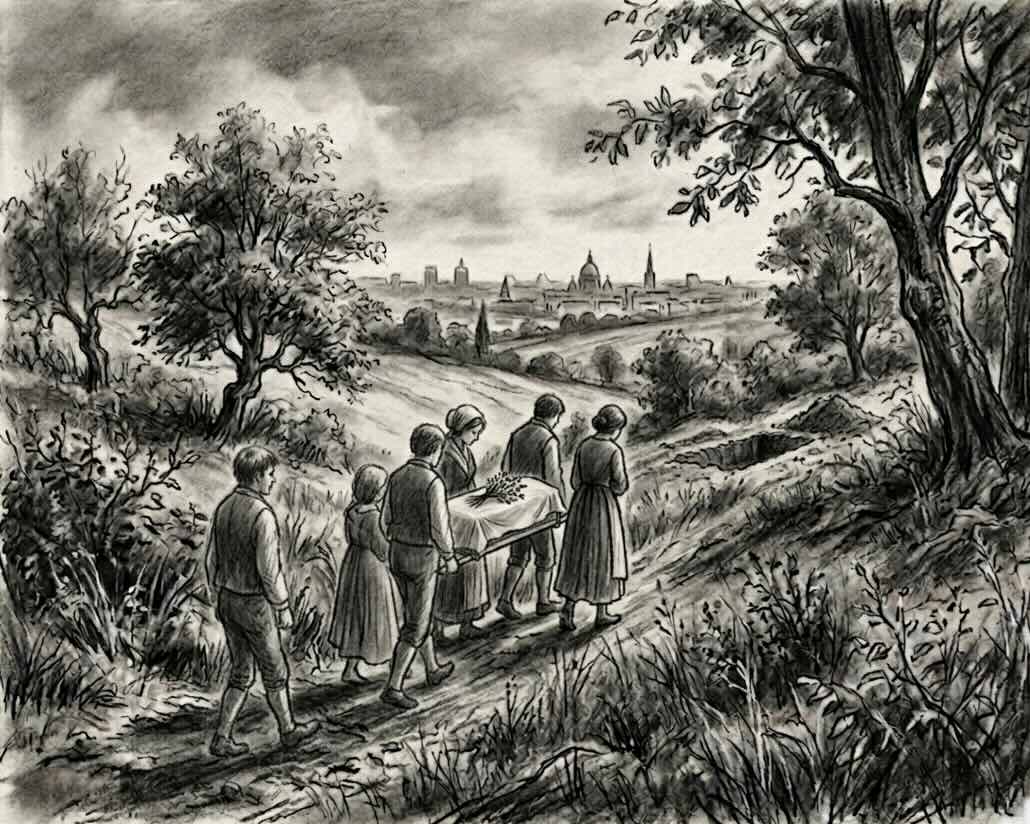
The First Burial
1804: the lilac child, Père-Lachaise's first breath.
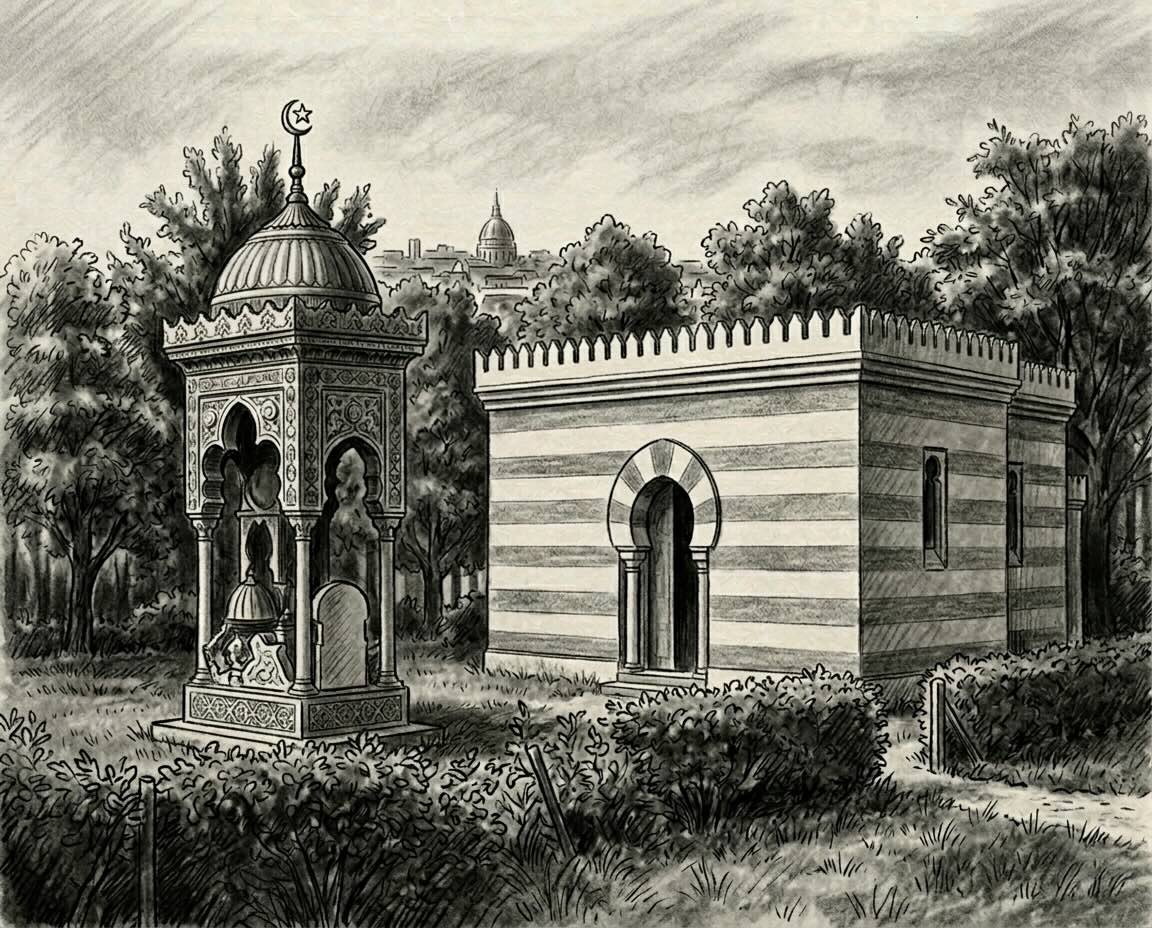
The Forgotten Mosque
Mainland France's first mosque, at the heart of the necropolis.
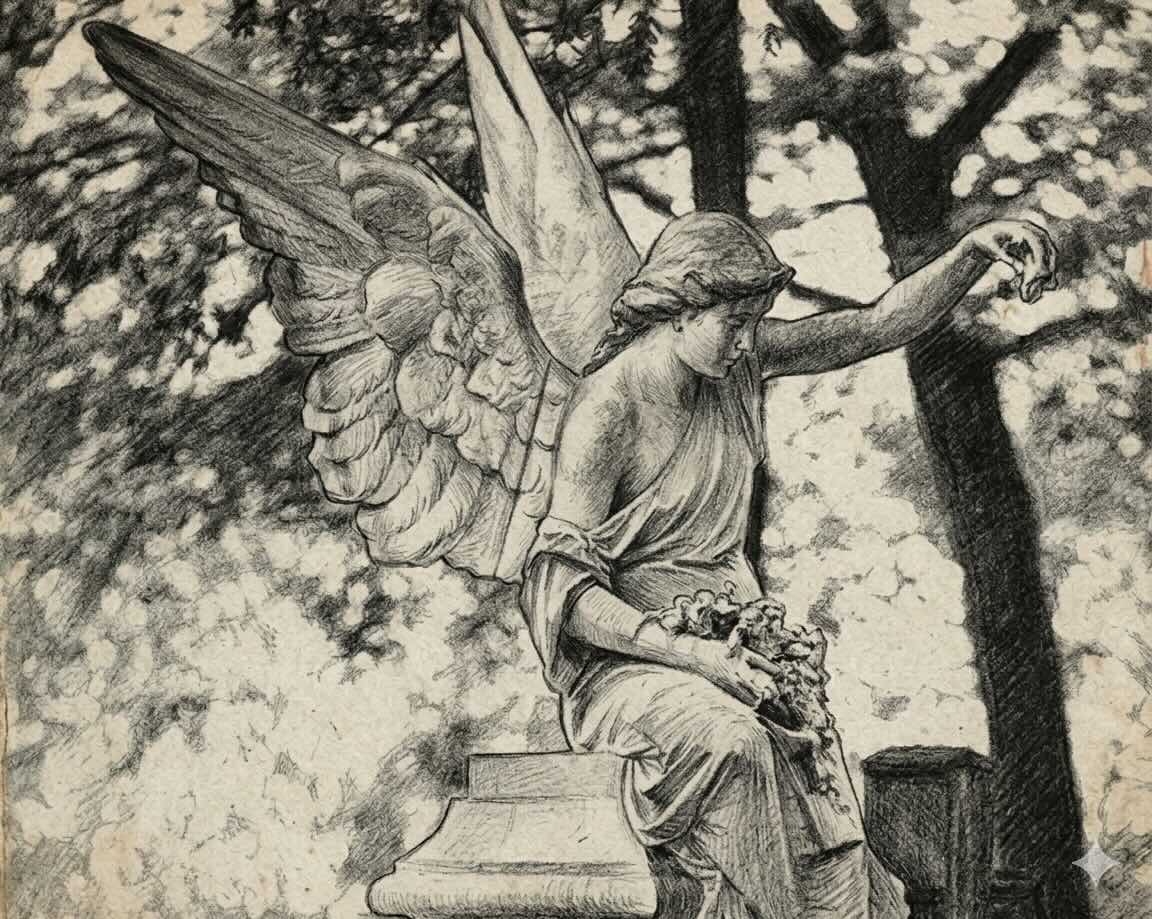
The Free Plots
The shadow Pantheon: rest offered to the crownless.
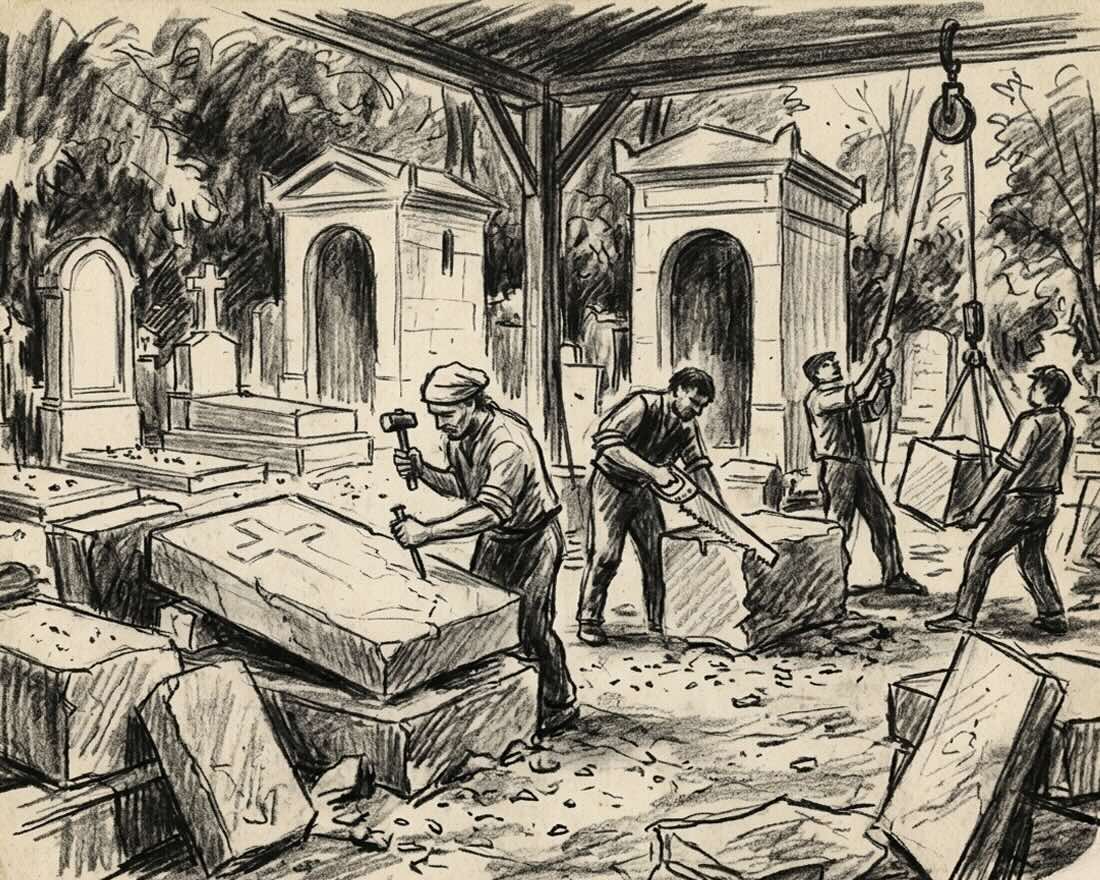
The 1910 Strike
When the gravediggers downed tools, the cemetery tipped into chaos.
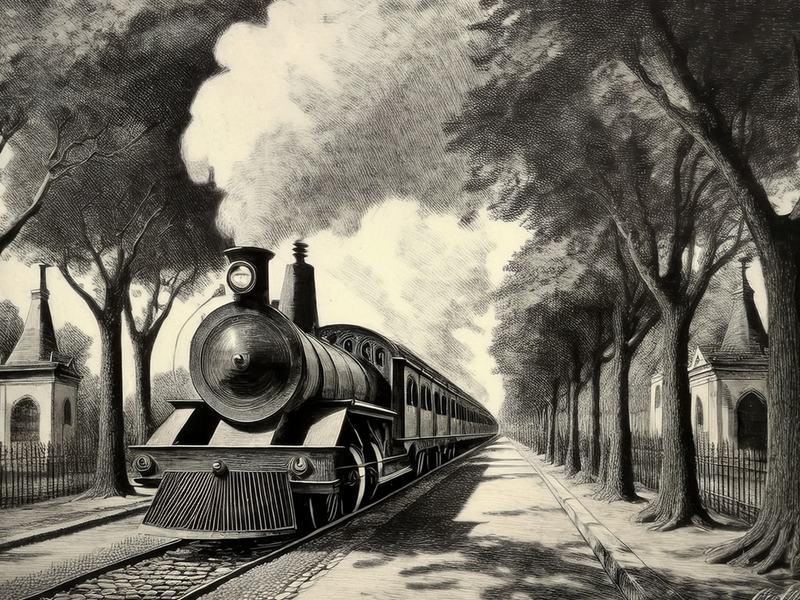
The Death Train That Never Left
In 1863, Baron Haussmann sought to close Père-Lachaise, Montmartre and Montparnasse and transfer all of Paris's dead to a thousand-hectare necropolis at Méry-sur-Oise, served by a funeral train. The council rejected the scheme twice.
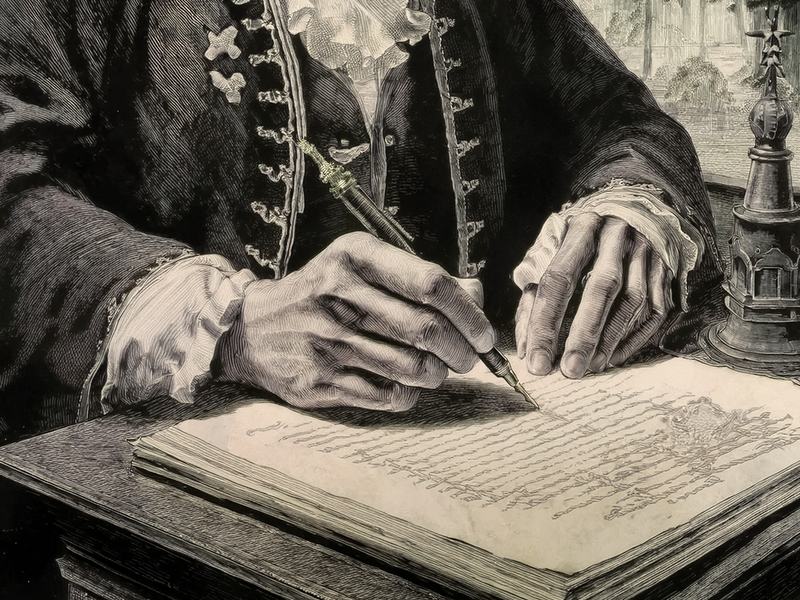
Twenty-Seven Articles for Burying the Dead
Signed at Saint-Cloud on 12 June 1804 by Napoleon Bonaparte, the imperial decree on burials banned interment within towns and founded modern French funeral law. Its two co-signatories — Chaptal and Maret — rest at Père-Lachaise.
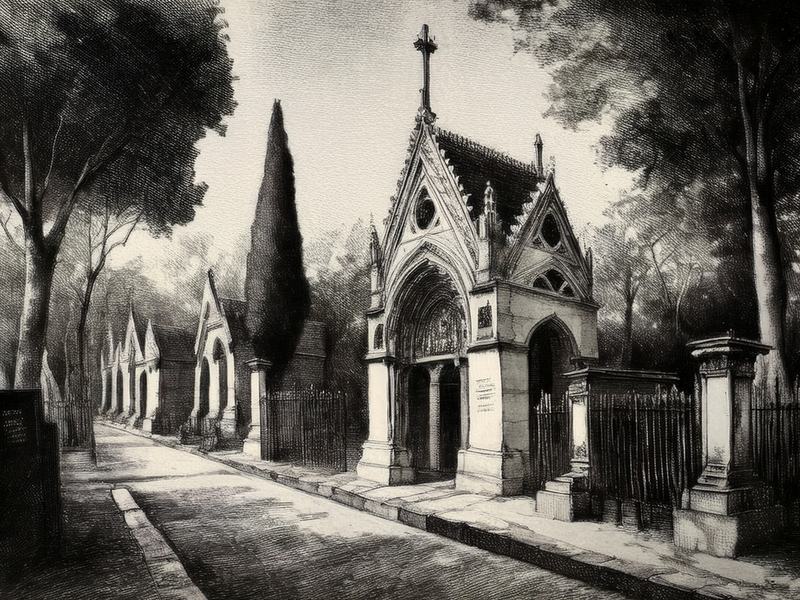
The Cemetery That Devoured the Hill
Between 1824 and 1850, five successive extensions took Père-Lachaise from seventeen to forty-four hectares. The last, on the Charonne plateau, turned the romantic garden into a grid-planned city of the dead, with paved streets, pavements and fountains.
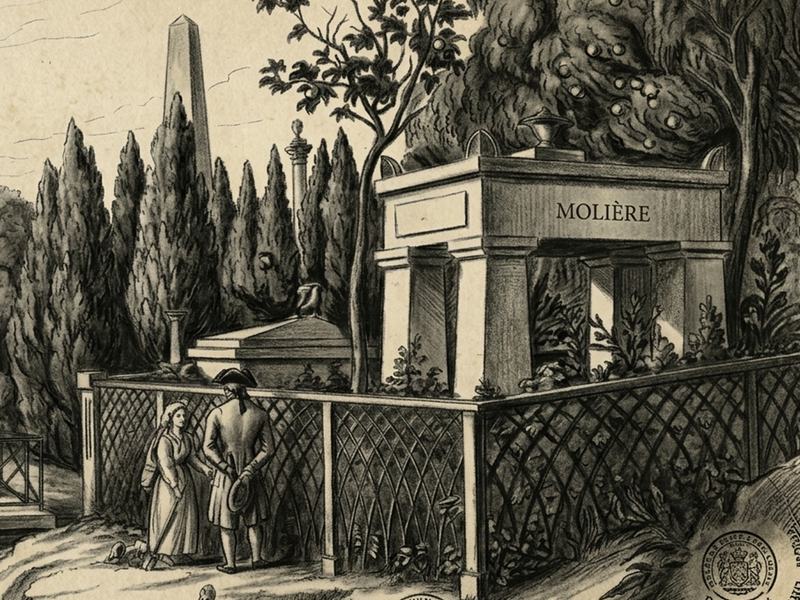
The Day Molière Saved Père-Lachaise
In March 1817, the City of Paris arranged the transfer of the presumed remains of Molière, La Fontaine, Héloïse and Abelard to the Eastern Cemetery. The publicity stunt was a triumph: thirteen years after a deserted opening, Père-Lachaise became the place to be buried.
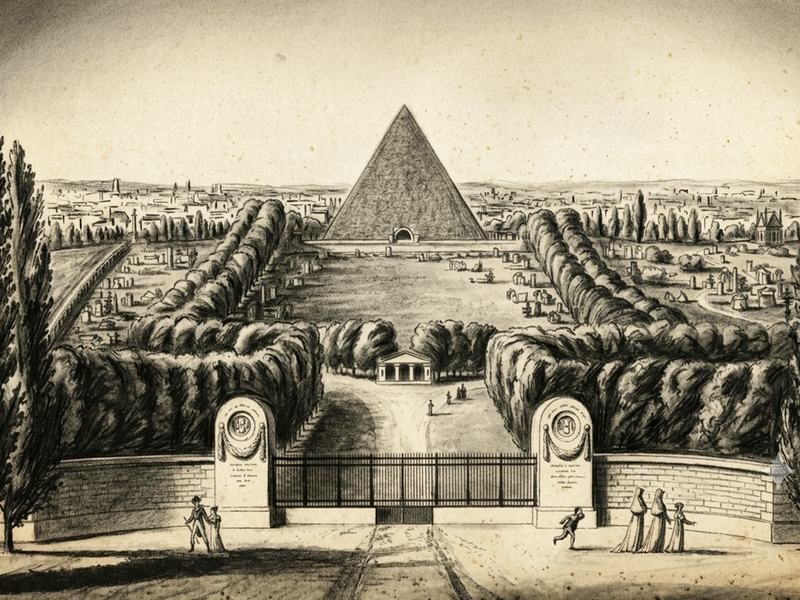
The Lost Pyramid of Père-Lachaise
Architect of the Palais de la Bourse and inspector of public works for the Seine, Alexandre-Théodore Brongniart (1739–1813) designed for the Eastern Cemetery an English-style garden punctuated by a pyramid, a campo santo and monumental follies — a plan that stayed, for the most part, on paper.
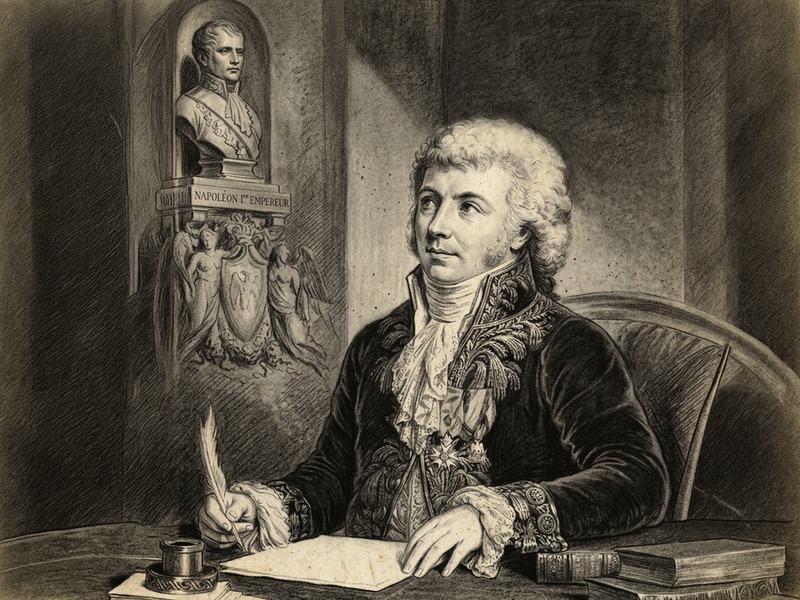
The Man Who Bought the Hill
The first prefect of the Seine appointed by Bonaparte in 1800, Nicolas Frochot bought the Mont-Louis estate for 180,000 francs and founded Père-Lachaise cemetery — before being buried there himself, in Division 37.
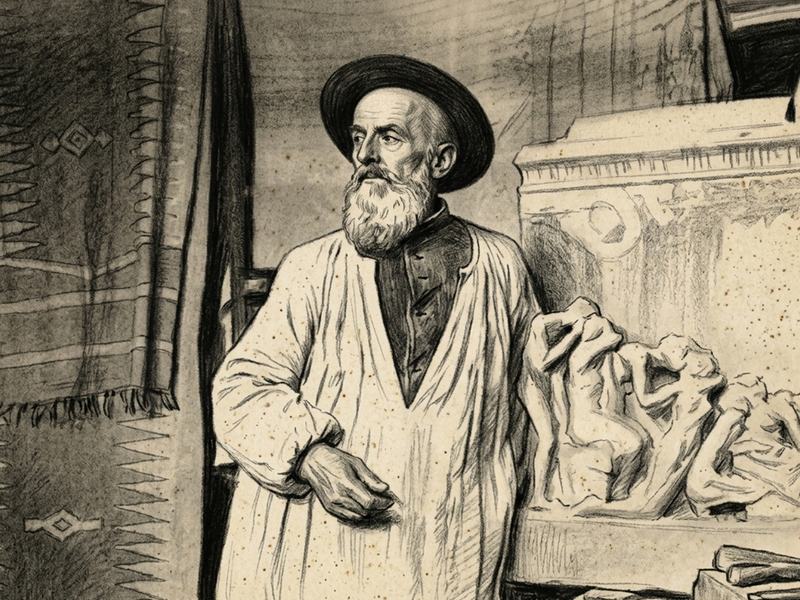
The Painter Who Burned His Canvases
Paul-Albert Bartholémé was a painter. The day sculpture took hold of him, he burned his canvases in an open field. Twelve years later, on 1 November 1899, ninety-eight thousand people came to see his Monument to the Dead at Père-Lachaise.
A Farewell Without Stone
In 1985, Père-Lachaise opened France's first garden of remembrance: a lawn in Division 77 where ashes are scattered with no grave, no plaque, no visible trace. More than thirteen hundred families choose this option each year.
Even Perpetuity Has an End
Behind Bartholémé's Monument to the Dead, underground galleries have received, since 1953, the exhumed bones from reclaimed plots across Paris's seventeen cemeteries. This ossuary is where perpetuity comes to an end — and where hundreds of names have slipped into oblivion.
The Gate No One Reads
Three million visitors pass through the main gate of Père-Lachaise each year without looking up. Two Latin inscriptions, two winged hourglasses and two stone torches have been carved there since 1822 — remnants of a funerary scheme designed by the architect Étienne-Hippolyte Godde.
How Books Filled the Graves
Between 1808 and 1830, at least nine guidebooks were devoted to Père-Lachaise: sentimental journeys, philosophical rambles, illustrated companions. It was this funerary literature, unmatched anywhere in the world, that turned a shunned garden into a prestige necropolis.
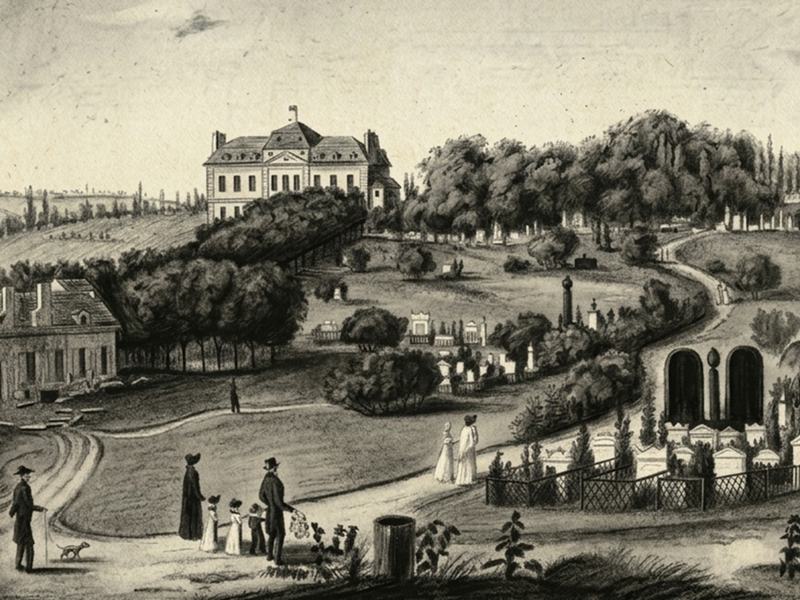
Thirteen Graves for Seventeen Hectares
When Père-Lachaise opened in May 1804, only thirteen families agreed to bury their dead there. Parisians balked at this distant hill, with neither church nor parish tradition. It would take thirteen years and the transfer of famous remains to fill this deserted garden.
Eternity on a Waiting List
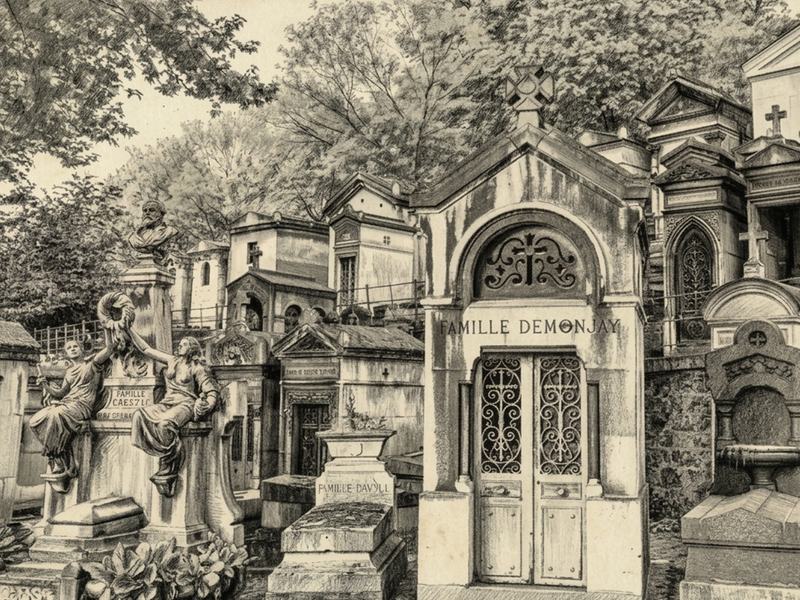
Roughly 70,000 plots across 44 hectares, 90 per cent of them perpetual: Père-Lachaise has been full since the mid-twentieth century. To keep receiving its dead, the City reclaims abandoned graves and converts chapels into columbaria.
The Last Barricade
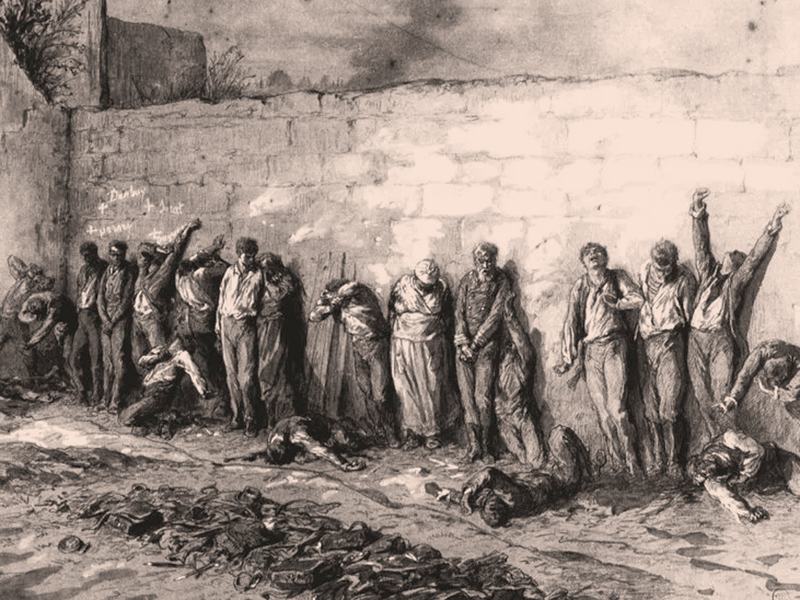
On 28 May 1871, Versailles troops seized Père-Lachaise after fighting among the graves. A hundred and forty-seven Communards were shot against the boundary wall in Division 76 — a wall that became the most emblematic site of memory for the French left.
Eight Hundred and Fourteen Deaths in One Day
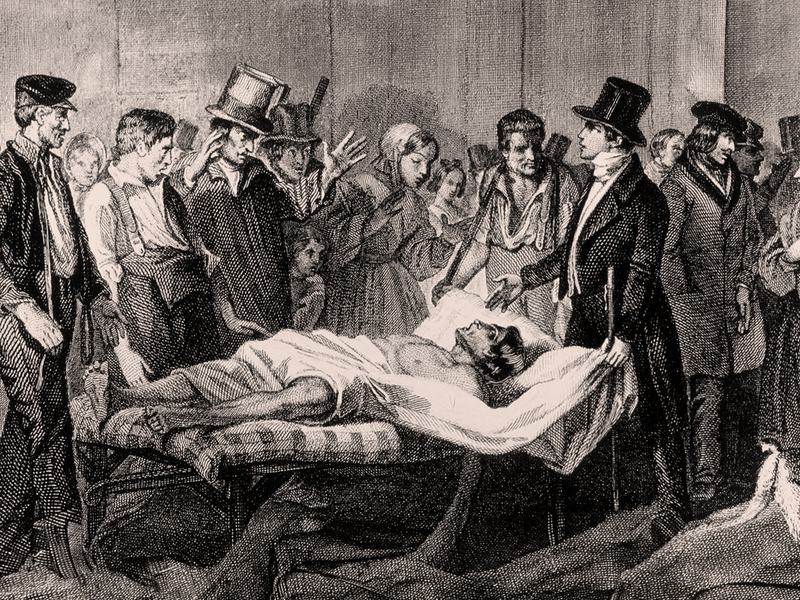
In 1832, cholera killed 18,402 Parisians in six months. The head of government, Casimir Périer, fell ill after visiting cholera patients at the Hôtel-Dieu and died on 16 May. His bronze monument, in Division 13, dominates the central roundabout of Père-Lachaise.
From Antique Sarcophagus to Polished Granite
Over two centuries, Père-Lachaise has passed through every funerary style: neoclassical steles of the Empire, neo-Gothic chapels of the July Monarchy, Second Empire eclecticism, Art Nouveau, reinforced-concrete modernism — right up to today's polished granite slabs.
What the Stones Say
Inverted torches, winged hourglasses, broken columns, ouroboroi, stone butterflies: the graves of Père-Lachaise carry a vocabulary of symbols almost no one reads any more. Every motif carved in stone once held a precise meaning — and most visitors walk past without knowing it.
A Hundred and Sixty-Eight Bronze Faces
Père-Lachaise holds a hundred and sixty-eight bronze busts, a hundred and twenty of them dating from 1850 to 1918. Painters, musicians, doctors, members of parliament, mayors: the bourgeoisie of the Third Republic had themselves portrayed on their graves by the leading sculptors of the day.
The Flowers That Never Wilt
Glazed earthenware wreaths, porcelain statuettes, tessera mosaics: four hundred and sixteen pieces of funerary ceramic have been catalogued at Père-Lachaise. These fragile, often anonymous objects are the remnants of a folk art that once stood in for real flowers on graves.
A Thousand Stained-Glass Windows Behind Locked Doors
Père-Lachaise holds more than eleven hundred stained-glass windows in its funerary chapels — the largest collection of funerary stained glass in France. Almost all are invisible: the chapel doors are locked, and visitors pass by without knowing what the stone walls conceal.
The Métro Architect Among the Dead
In 1899, Hector Guimard designed the grave of a wine merchant, Ernest Caillat, in Division 2 of Père-Lachaise. It is the cemetery's only Art Nouveau grave by the architect behind the Paris métro entrances — and Guimard himself is not buried there.
The Museum No One Visits
Twelve listed monuments, thirty thousand graves recorded on the register of historic monuments: Père-Lachaise is France's largest open-air sculpture museum. Three million visitors come each year — most of them for a single grave.
The Dead Without a Grave
Along the Avenue Circulaire, some fifteen monuments erected between 1946 and 2017 commemorate the victims of the Nazi camps. Père-Lachaise, a cemetery built to receive bodies, became the site of memory for those who never had a grave.
The Man Who Preserved the Dead
In 1837, the chemist Jean-Nicolas Gannal patented an arterial-injection embalming process that revolutionised the preservation of bodies. More than two thousand five hundred people were embalmed by his workshop over twenty years — many of whom rest at Père-Lachaise.
The Jewellery Worn From the Dead
In the nineteenth century, mourning families wore bracelets, rings and brooches plaited from the deceased's hair. Hair, being imputrescible, became a physical link between the living and the dead — a fragment of the body turned into a keepsake.
The Innocent Man of Division 8
Joseph Lesurques, guillotined on 30 October 1796 for the robbery of the Lyon mail coach, rests in Division 8 of Père-Lachaise. The epitaph carved on the grave says it all: “He was the victim of the most deplorable of human errors.” He was never exonerated.
A Hundred and Twenty-Six Names and a Cinematograph
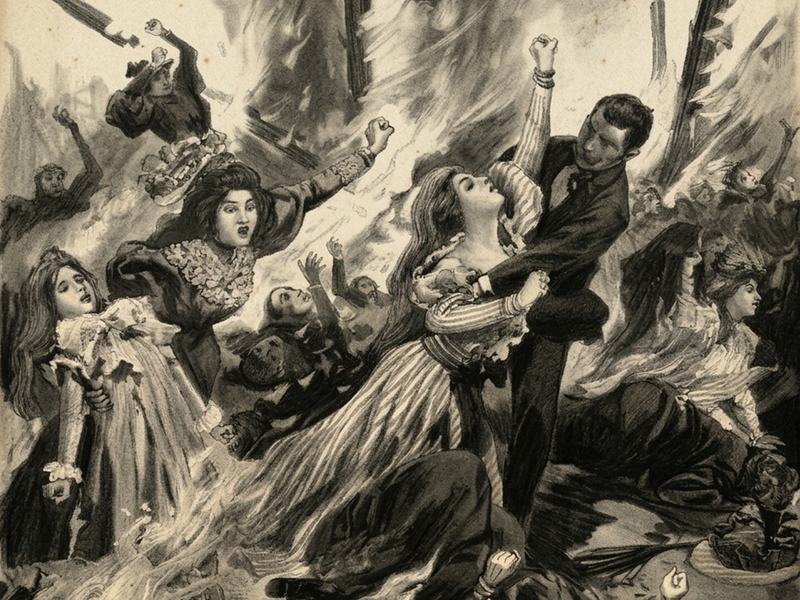
On 4 May 1897, the fire at the Bazar de la Charité, on the Rue Jean-Goujon, killed a hundred and twenty-six people — mostly women of the Parisian aristocracy. A monument to the unidentified victims stands in Division 92 of Père-Lachaise, and the disaster gave rise to forensic odontology.
Two Million Roubles and One Night
Since 1896, a legend has promised the Demidoff fortune to anyone who keeps a year-long vigil over a Russian princess's glass coffin at Père-Lachaise. The mausoleum exists, in Division 19. So does the princess. But the glass coffin, the will and the fortune are a newspaper invention.
The Grave That Changed the Cemetery
Jim Morrison died in Paris on 3 July 1971 and was buried in Division 6 of Père-Lachaise five days later, before five people. The Doors singer's grave has become the cemetery's most visited place of pilgrimage — and its administration's most stubborn problem.
The Sphinx That No Longer Smiles
Oscar Wilde's tomb in Division 89 of Père-Lachaise, a winged sphinx carved by Jacob Epstein in 1912, was covered in lipstick marks for decades. In 2011, a protective glass screen put an end to the ritual of kissing it — and changed how visitors related to the monument.
The Journalist People Touch
Yvan Salmon, known as Victor Noir, a twenty-two-year-old anti-Bonapartist journalist, was shot dead on 10 January 1870 by Prince Pierre-Napoléon Bonaparte. Jules Dalou's bronze recumbent figure, placed in Division 92 of Père-Lachaise in 1891, has become the object of a fertility ritual.
The Heart That Does Not Rest at Père-Lachaise
Frédéric Chopin has been buried in Division 11 of Père-Lachaise since 1849. But the composer's heart is not in the grave: preserved in cognac by his sister Ludwika, it has rested since 1879 inside a pillar of Holy Cross Church in Warsaw.
The Century That Invented Its Dead
Between 1820 and 1900, the Parisian bourgeoisie built an unprecedented cult of the dead: perpetual plots, family chapels, Sunday visits, All Saints' wreaths. Père-Lachaise is the central monument of this secular religion of remembrance.
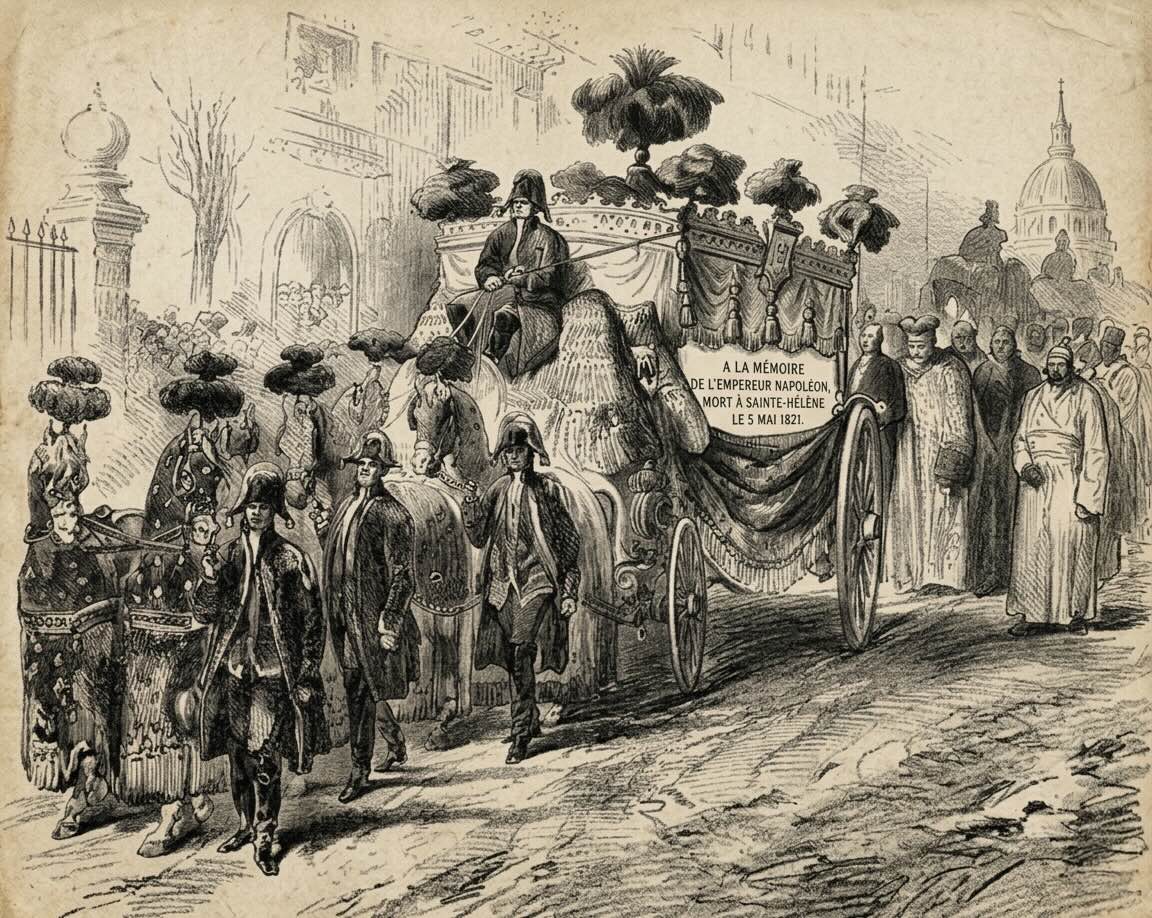
Eight Classes for One Last Journey
In the nineteenth century, the funeral procession that carried the deceased to Père-Lachaise followed a strict price list: eight classes of funeral, from a one-horse hearse draped in black serge to an eight-horse carriage caparisoned in silver-embroidered velvet.
A Bell on the End of a Finger
In the nineteenth century, the fear of being buried alive haunted Parisian families. Dozens of safety coffins were patented, fitted with bells, breathing tubes and cords tied to the corpse's fingers — an anxiety that left its mark on the history of Père-Lachaise.
The Sharpshooter Bartholdi Carved
Ignace Hoff, an Alsatian sharpshooter feared by the Prussians during the 1870 siege of Paris, rests in Division 4 of Père-Lachaise beneath a statue by Bartholdi — the last work of the sculptor of the Statue of Liberty. A small zinc figure of an Alsatian girl keeps watch at the foot of the monument.
The Sports Columnist Who Invented the Future
Gaston de Pawlowski, a literary critic and sports reporter, rests in Division 23 of Père-Lachaise. In 1912, Pawlowski published “Journey to the Land of the Fourth Dimension,” a prophetic novel that anticipated television, motorways and relativity — two years before the Great War.
The Scarf, the Seine and the Columbarium
Isadora Duncan, a pioneer of modern dance, died in Nice on 14 September 1927, strangled by a scarf caught in a car wheel. The dancer's ashes rest in the Père-Lachaise columbarium, niche 6,796, alongside the ashes of her two children, who drowned in the Seine in 1913.
The Telegraphist Who Saved Forty Thousand Soldiers
Juliette Dodu, born on Réunion in 1848, intercepted Prussian dispatches at the Pithiviers telegraph office for seventeen days in 1870. The first woman awarded the Médaille militaire, she rests in Division 28 of Père-Lachaise — though historians doubt the story's accuracy.
The Invisible Women of the Hill
Père-Lachaise holds dozens of celebrated women — Édith Piaf, Sarah Bernhardt, Colette, Rosa Bonheur, Isadora Duncan — yet tourist guides mention only a handful. Across forty-four hectares and seventy thousand plots, women's memory remains largely erased.
What the Ground at Père-Lachaise Has Not Forgotten
The subsoil of Père-Lachaise conceals remains that predate the cemetery. During works carried out between 1849 and 1875, labourers uncovered ancient bones and foundations, a reminder that the Charonne hill was inhabited centuries before the first burial in 1804.
The Phantasmagorist of Division 8
Étienne-Gaspard Robert, known as Robertson, a physicist from Liège and inventor of the phantascope, terrorised Directory-era Paris by projecting the ghosts of Marat and Danton before petrified audiences. Robertson's grave in Division 8 of Père-Lachaise is a four-metre-high spectacle in stone.
The Colonel Who Chose the Eagle
Charles de La Bédoyère, colonel of the 7th Line Infantry Regiment, rallied his troops to Napoleon near Grenoble in March 1815 instead of arresting him. Present at Waterloo, arrested during the White Terror, he was shot on 19 August 1815 on the Plaine de Grenelle. He rests in Division 16 of Père-Lachaise.
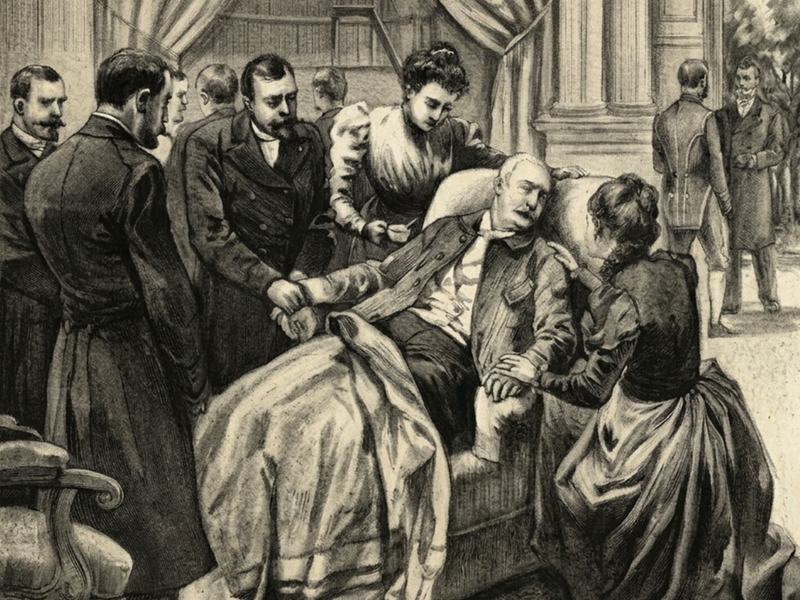
The President Who Was Only Pompey
Félix Faure, seventh president of the Third Republic, died at the Élysée Palace on 16 February 1899 in circumstances that became famous. The state funeral, on 23 February, was marked by Paul Déroulède's attempted coup. The president rests in Division 4 of Père-Lachaise.
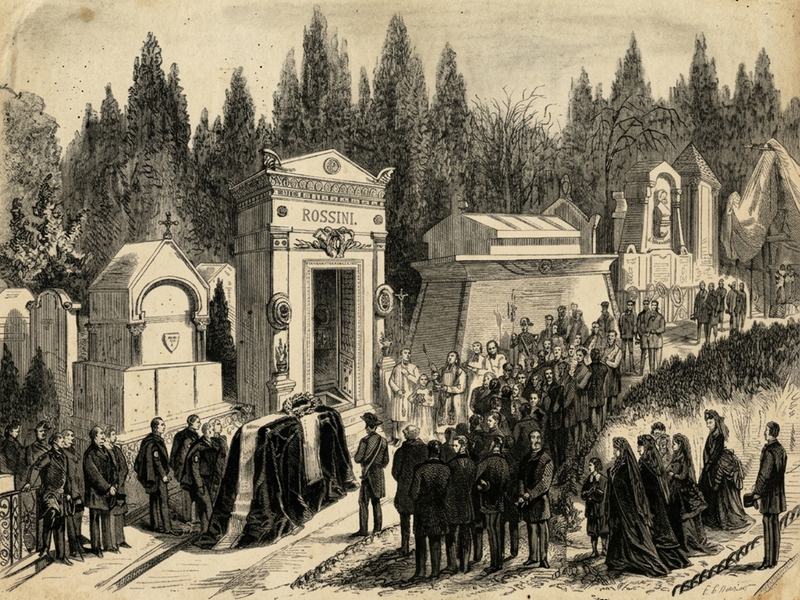
The Coffin That Crossed Paris Twice
Gioacchino Rossini died at Passy on 13 November 1868. A funeral procession crossed the whole of Paris to Père-Lachaise, Division 4. Nineteen years later, on 1 May 1887, his remains were exhumed and repatriated to Florence, to the Basilica of Santa Croce. The chapel at Père-Lachaise is a cenotaph.
Forty-Four Hectares of Green Between the Graves
Père-Lachaise is the largest green space within central Paris: forty-four hectares, four thousand one hundred and thirty-four trees of eighty species, two hundred and twenty wild plant species and a hundred and forty animal species.
The Day the Cemetery Gave Up Pesticides
In 2015, Père-Lachaise stopped all chemical treatment across its forty-four hectares. Ten years on, the result is striking: two hundred and twenty wild plant species, sixty-two bird species, orchids, foxes and a protected buttercup.
When Orchids Grow Between the Graves
Père-Lachaise holds more than two hundred and twenty wild plant species, recorded between 2010 and 2020. Wild orchids bloom there in summer. The small-flowered buttercup, a species rare and protected in Île-de-France, grows there between the burial slabs.
The Trees That Eat the Graves
At Père-Lachaise, trees have engulfed entire graves: roots gripping the stones, trunks swallowing the steles, branches lifting the slabs. This phenomenon, dubbed “plant necrophagy,” affects dozens of graves across the cemetery's forty-four hectares.
Nine Trees That Watched the Dead Go By
Père-Lachaise has nine trees listed as remarkable by the City of Paris: a Montpellier maple planted in 1833 in Division 77, a twenty-five-metre cedar of Lebanon in Division 4, a plane tree whose roots engulf graves in Division 45, and a gum tree unique in Europe.
Sixty-Two Species Beneath the Canopy
Père-Lachaise is home to sixty-two bird species, recorded between 2010 and 2020 by the City of Paris. Tawny owl, Eurasian sparrowhawk, green woodpecker, Eurasian jay, goldcrest: the cemetery is one of the richest ornithological sites within central Paris.
The Four-Legged Tenants of the Hill
Père-Lachaise is home to a hundred and forty wild animal species, including three pairs of foxes settled there since 2020 and colonies of stray cats protected since 1999. At night, unlit, the Charonne hill becomes an ecological corridor in the heart of Paris.
The Most Flower-Covered Dolmen in Paris
Allan Kardec, a teacher from Lyon who became the codifier of Spiritism in 1857, rests in Division 44 of Père-Lachaise beneath a granite dolmen covered in flowers. Twenty million Brazilians follow the Spiritist doctrine — Kardec's grave is the most flower-covered in the cemetery.
The Doctor Who Spoke to the Dead
Gérard Encausse, known as Papus, a doctor and occultist born in A Coruña in 1865, founder of the Martinist Order in 1891 and adviser to Tsar Nicholas II, rests in Division 93 of Père-Lachaise. He died on 25 October 1916 of tuberculosis contracted at the front, leaving a hundred and sixty published works.
“Stop, Traveller, You Behold a Hero”
In 1809, the mother of Antoine de Guillaume-Lagrange, a non-commissioned officer of the 16th Dragoons killed in Poland on 4 February 1807, had Père-Lachaise's first sculpture erected in Division 29. The cenotaph, the work of Godde and listed as a historic monument in 1983, gave its name to the Chemin du Dragon.
Père-Lachaise Before Photography
Before the invention of photography, Père-Lachaise was drawn, engraved and lithographed by dozens of artists. The engravings by Quaglia (1832) and by Lassalle and Rousseau (1839) document a cemetery that has since vanished.
Eight Centuries of Wandering for Two Lovers
The monument to Héloïse and Abelard, in Division 7 of Père-Lachaise, is a Gothic pastiche assembled by Alexandre Lenoir in 1800 from fragments of six abbeys. It was transferred to the cemetery in 1817 and listed as a historic monument in 1983.
“Being Buried at Père-Lachaise Is Like Having Mahogany Furniture”
Victor Hugo summed up the fashion for funerary chapels in Les Misérables. From 1810, the first family chapel appeared in Division 43. Today Père-Lachaise holds thousands of them — small stone temples that tell two centuries of bourgeois vanity.
When Auguste Comte Invented a Religion
Auguste Comte, buried in Division 17 of Père-Lachaise, did not merely found positivism. The philosopher created a complete religion — with its own calendar, nine sacraments, a temple and a funerary liturgy still practised in Brazil.
Eighteen Tours in One Weekend in May
Since 2018, Père-Lachaise has taken part in the Printemps des cimetières, France's only national event dedicated to funerary heritage. In 2024, eighteen events were on offer in a single weekend — a record for one cemetery.
Ninety-Six Thousand Graves to Decipher
Taphophiles are cemetery enthusiasts. At Père-Lachaise, they walk the divisions, photograph the steles and uncover forgotten biographies. The APPL, founded in 2004, brings together these detectives of funerary history.
Ten Thousand Ceremonies Among the Graves
Père-Lachaise is not a museum: it is a working cemetery where thousands of funerals, burials and cremations take place every year. Its crematorium, the first in France, carries out more than six thousand five hundred cremations a year.
Eighty Staff for Forty-Four Hectares
Gravediggers, gardeners, reception staff, road workers: eighty people work at Père-Lachaise three hundred and sixty-five days a year. The curator, Benoît Gallot, the son of a stonemason, has led the team since 2010.
Nine White Marble Graves for Mazda
In Divisions 89 and 93 of Père-Lachaise, nine white marble graves bear Babylonian motifs and quotations from Zoroaster. These are the graves of the Parsis, followers of the god of light, originally from Bombay.
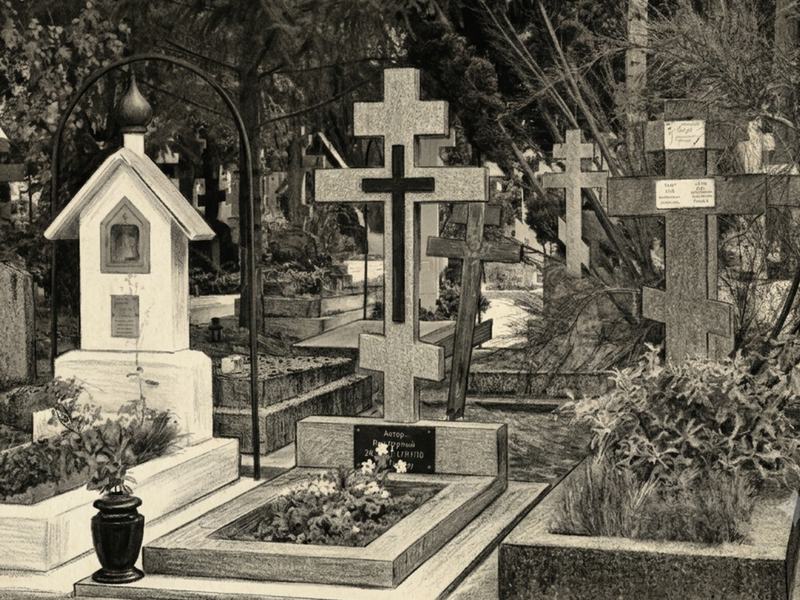
From the Soldiers of 1814 to the Exiles of 1917
Père-Lachaise holds fifty-six Russian graves. The first dates from 1814, when the tsar's troops camped in the cemetery. The Demidoff-Stroganov mausoleum, the most imposing at Père-Lachaise, overlooks the Charonne cliff.
The Bestiary in Stone
Faithful dogs, guardian lions, rearing horses, winged sphinxes, serpents of eternity: the graves of Père-Lachaise house a carved bestiary in which every animal carries a precise meaning within the vocabulary of nineteenth-century funerary art.
Tombs of Absence
From the Dragon grave in 1809 to the Deportation memorials: at Père-Lachaise, dozens of famous graves contain no body at all.
The Eleven O'Clock Cry
Mademoiselle Clairon, a star of the Comédie-Française, recorded in her memoirs in 1798 the tale of a dead suitor who haunted her every evening at the same hour — one of the oldest legends of Père-Lachaise.
When Dawn at Père-Lachaise Smelled of Gunpowder
In the nineteenth century, Père-Lachaise — isolated, hilly, closed to the public until morning — served as a dawn duelling ground. Officers, journalists and politicians crossed swords or exchanged bullets among the graves before the gates opened to the living.
The Fatal Slab of the Chanaleilles
On 7 April 1895, the Marquise de Chanaleilles and her daughter visited their family chapel in Division 3 of Père-Lachaise. The slab gave way beneath their feet — a six-and-a-half-metre fall into the vault. The marquise, aged eighty-six, died of internal bleeding an hour later.
Words in Stone
From Alfred de Musset's verse to Apollinaire's calligram, from Arman's cry to Jim Morrison's Ancient Greek, Père-Lachaise holds hundreds of funerary inscriptions that say far more than “Eternal regrets.”
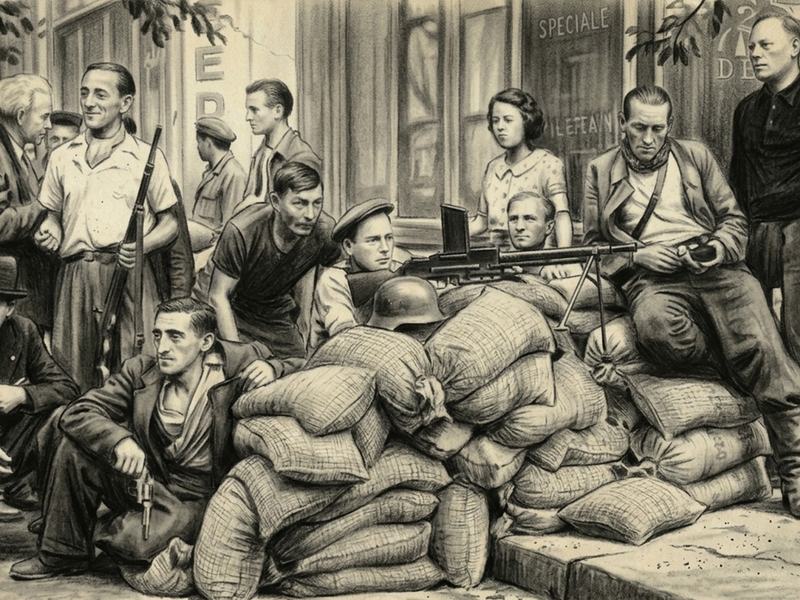
Silence and Ashes
From 1941 to 1944, the Gestapo forced anonymity on resistance fighters cremated at the Père-Lachaise columbarium. The occupying forces desecrated graves and erased antifascist inscriptions, even as the cemetery received the remains of those who had fought.
Quiet on the Set!
From Truffaut's Jules and Jim (1963) to Fantastic Beasts: The Crimes of Grindelwald (2018), by way of Resnais's Same Old Song and Honigmann's documentary Forever, Père-Lachaise is one of Paris's most distinctive film locations — a natural forty-four-hectare set where the dead serve as extras.
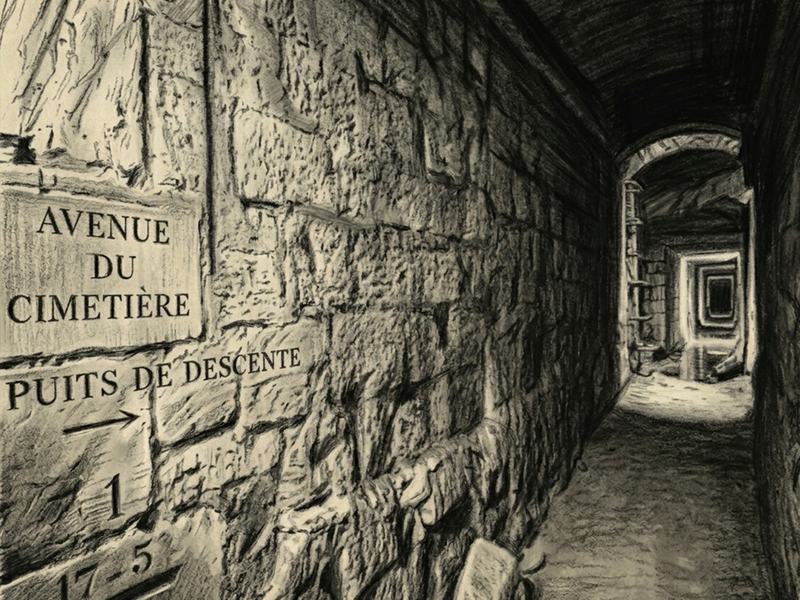
The Ghost Cemetery Beneath Père-Lachaise
In 1810, the mining engineer Héricart de Thury proposed digging a network of fifteen-metre-high galleries beneath the cemetery to house monumental tombs. The scheme collapsed. The only underground space actually built, in 1953, is a functional ossuary hidden behind Bartholémé's Monument to the Dead.
The Plunderers of Père-Lachaise
From the diamond chalked on chapel doors in 1914 to the busts of Bizet and Morrison torn away a century later, Père-Lachaise has always drawn thieves as readily as visitors.
Understanding the 97 Divisions of Père-Lachaise
Since 1804, the cemetery has expanded five times and now counts ninety-seven numbered divisions, some reserved for particular faiths or trades.