Charles de La Bédoyère, colonel of the 7th Line Infantry Regiment, rallied his troops to Napoleon near Grenoble in March 1815 instead of arresting him. Present at Waterloo, arrested during the White Terror, he was shot on 19 August 1815 on the Plaine de Grenelle. He rests in Division 16 of Père-Lachaise.
On 7 March 1815, on the road to Grenoble, a twenty-eight-year-old colonel made the decision that would cost him his life. Charles Angélique François Huchet de La Bédoyère, born on 17 April 1786 in Paris, commanded the 7th Line Regiment. The order he had received was simple: stop Napoleon, who had landed at Golfe-Juan five days earlier and was marching north with a handful of men. La Bédoyère marched his regiment out of barracks, tricolour flag unfurled, and advanced towards the Emperor instead of stopping him. It was the first defection of an entire regiment: it turned a risky venture into a triumphal march. Napoleon made La Bédoyère a brigadier general, an aide-de-camp, then a peer of France. A hundred days later, after Waterloo, the restored monarchy would make him pay dearly for the gesture.
La Bédoyère was at Waterloo on 18 June 1815, as an aide-de-camp to the Emperor. After the defeat, he tried to flee France. Louis XVIII issued an ordinance barring regicides and those who had rallied to Napoleon from staying in the country. La Bédoyère was arrested in Paris on 2 August 1815 while trying to see his wife, Georgine de Chastellux, whom he had married on 21 November 1813, and their newborn son, one last time. The court martial was swift. La Bédoyère was sentenced to death for treason on 14 August. The young colonel had no illusions: those who had rallied first were top of the proscription lists of the White Terror. Marshal Ney, shot in December 1815, would be the most famous victim of that wave of reprisals.
On 7 March 1815, La Bédoyère marched his regiment out of Grenoble towards Napoleon with the tricolour flag unfurled. The gesture was decisive: the first time an entire regiment had rallied to him. After that, the road to Paris lay open.
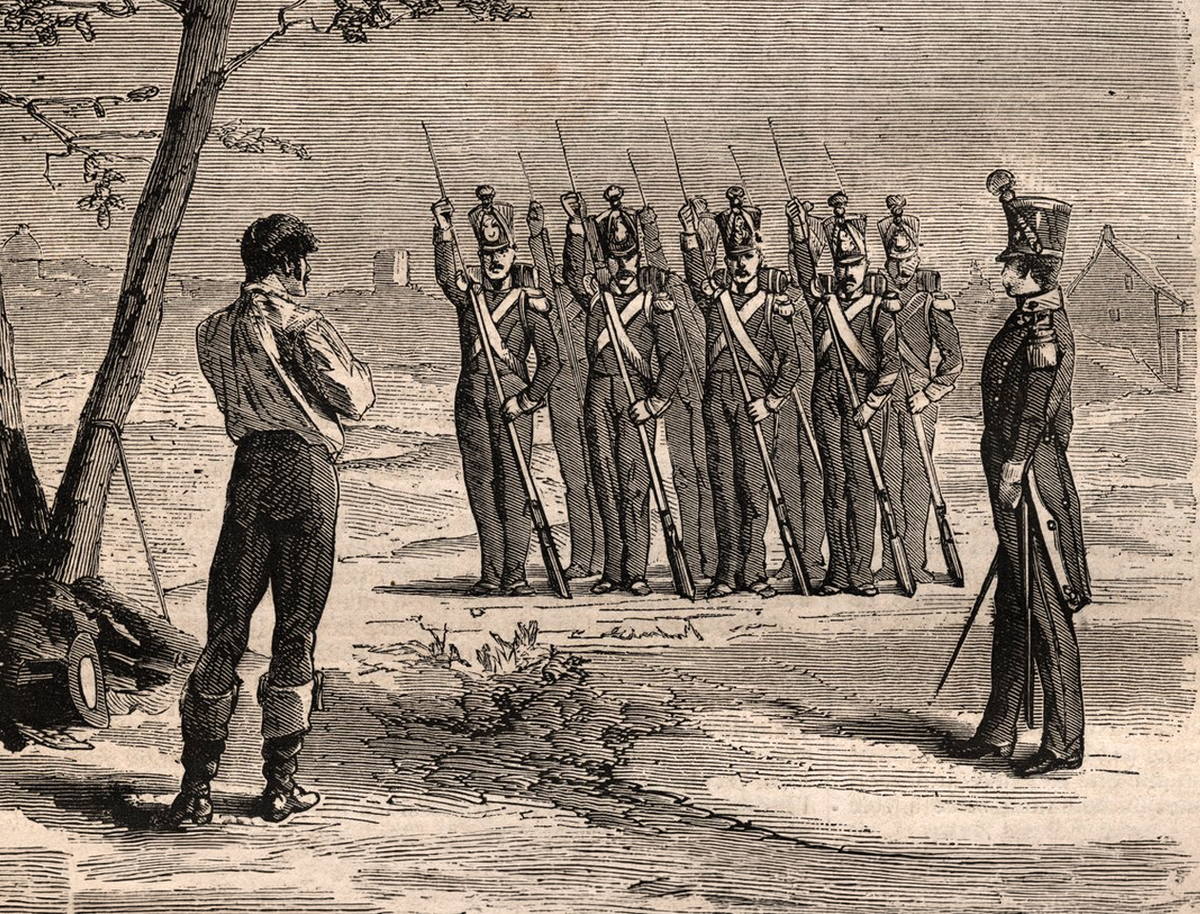
On 19 August 1815, at seven in the evening, Charles de La Bédoyère was shot in the plain of Grenelle. Tradition holds that the condemned man refused the blindfold and gave the order to fire himself. The body was transferred to Père-Lachaise on 22 August and buried in Division 16, in the front row facing Division 17. La Bédoyère was twenty-nine. The general's widow, Georgine de Chastellux, never remarried. La Bédoyère's son, Georges, was buried in the same grave in 1867. Georgine joined them in 1871. The family grave, plain and unadorned, carries the names and dates — with no mention of the cause of death or the circumstances of the defection. The stone's silence speaks volumes: under the Restoration, carving “shot for joining the Emperor” would have amounted to sedition.
La Bédoyère's grave, in Division 16 of Père-Lachaise, draws few visitors. The tourist guides do not mention it. Yet the grave tells one of the most dramatic episodes of the Hundred Days: a young officer who chose the Eagle over the Lily and paid for that choice with his life five months later. La Bédoyère is one of those figures whose memory Père-Lachaise keeps alive when official history has forgotten them. A visitor looking for the grave in Division 16 will find a modest family headstone, three names, three dates — and will have to piece together, unaided, the story of the colonel who opened the road to Paris for Napoleon and was shot for it before Waterloo had even finished going cold.
Charles de La Bédoyère (1786-1815) was a French colonel who brought his regiment over to Napoleon during the Hundred Days, in March 1815. Present at Waterloo, arrested during the White Terror, La Bédoyère was shot on the plain of Grenelle on 19 August 1815.
Among the officers shot during the White Terror for rallying to Napoleon in the Hundred Days were Colonel de La Bédoyère, shot on 19 August 1815, and Marshal Ney, shot on 7 December 1815. Both rest at Père-Lachaise.
Père-Lachaise holds many Napoleonic figures: Marshal Ney (Division 29), General de La Bédoyère (Division 16), Marshal Masséna (Division 28), General Foy (Division 28), and several dozen officers of the Grande Armée.
Charles de La Bédoyère's grave lies in Division 16 at Père-Lachaise, front row facing Division 17. The plain family stele bears 3 names — the general, his wife Georgine de Chastellux and their son Georges — with no mention of the defection or the execution.
 Figures