 Figures
Who Was Père Lachaise?
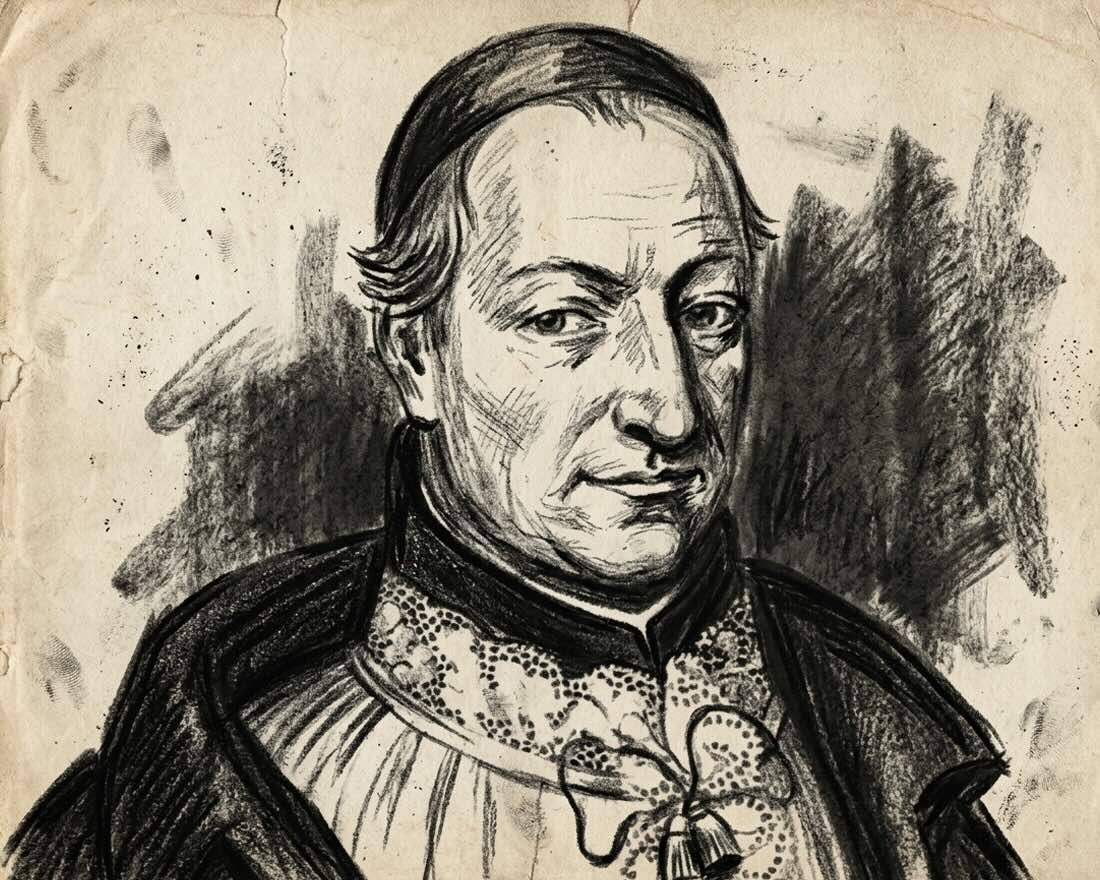
Louis XIV's confessor, who gave the hill its name.
FiguresLouis XIV's confessor, who gave the hill its name.
If there is one name that echoes through Parisian eternity, it is surely that of Père-Lachaise, the vast necropolis where forty-four hectares of silence hold the graves of some of history's most celebrated figures. Yet, in an irony only History could orchestrate, the man who lent his name to this world-famous sanctuary never found his own final rest there. To find the remains of François d'Aix de La Chaise, a Jesuit of high lineage and confessor to the Sun King for more than three decades, one must go into the Marais, beneath the vaults of the church of Saint-Paul-Saint-Louis. How did this clergyman — praised by Voltaire for his gentleness, and dismissed by the caustic Saint-Simon as a mediocre mind — come to give his name for ever to a city of the dead?
It all began on a hill bathed in light, where, in the seventeenth century, the Jesuits owned a pastoral estate, covered in vines and orchards, far from the dizzying bustle of the court. Louis XIV, charmed by the serenity of these heights east of Paris, had a residence built there called “Mont-Louis,” and granted its use to his favourite confessor. As Father La Chaise tended its gardens and welcomed guests with an affability that offended no one, Parisians took to calling this retreat after its most illustrious occupant. People went “to Father La Chaise's” the way one might visit a friend, and the name eventually clung to the land with the tenacity of ivy on old stone.
People went “to Father La Chaise's” the way one might visit a friend, and the name eventually stuck to the ground itself.
But who was this man whose name Paris turned into an address? Born on 25 August 1624 at the château d'Aix, in the Forez region, and admitted to the Jesuit order at sixteen, François d'Aix de La Chaise patiently climbed the ranks of his order — teacher, then rector of the Collège de la Trinité in Lyon — before the death of Father Ferrier in 1675 carried him to the most delicate post in the kingdom: confessor to Louis XIV. He would hold it for thirty-four years, until his last breath on 20 January 1709. True to the rule of his order, he did not live at Versailles: each week his carriage left the Jesuit professed house near the church of Saint-Paul to go and hear the sins of Europe's most powerful monarch.
History, moreover, credits him with a far greater role than that of a royal ear. It was he who is said to have secretly blessed the marriage of the Sun King and Madame de Maintenon in 1683; he, too, who brought his moderating influence to bear on the sovereign's anger, both amid the Jansenist turmoil and at the time of the revocation of the Edict of Nantes. A man of conciliation, in short — what the unforgiving Saint-Simon called mediocrity, and what Voltaire called gentleness.
Long after the Jesuit's death in 1709 and the expulsion of his order, the estate was bought in 1803 by the prefect Nicolas Frochot, who commissioned the architect Brongniart to turn this romantic park into an “Eastern Cemetery.” But while the administration aimed for rigour, the people stayed faithful to their memories. Despite official decrees, residents kept calling the place Père-Lachaise, eventually forcing the authorities to bow to common usage. And so this “good gentleman,” a man of peace and conciliation who wished only to let others live, came to an unexpected posthumous fame. His memory, which would otherwise have faded into the shadow of Versailles, still endures today, carried by the prestige of his guests — making him the only namesake in the world whose immortality rests entirely on the sleep of others.
No, and that is the paradox of the place. The Jesuit François d'Aix de La Chaise, who died in 1709, rests at the church of Saint-Paul-Saint-Louis, in the Marais. The cemetery simply bears the name of the hill where his residence once stood.
The history of Père-LachaiseIts official name in 1804 was “Cimetière de l'Est” (“Eastern Cemetery”). No one ever used it: Parisians said they were going “to Father La Chaise's,” and popular usage permanently won out over the administrative name.
See all the gravesPrefect Nicolas Frochot, who bought the Mont-Louis estate in 1803 and entrusted its layout to the architect Brongniart. The cemetery opened its gates on 21 May 1804, and the first burial took place on 1 June.
The first burialA residence built on the Charonne hillside, which Louis XIV granted for the use of his confessor, Father La Chaise. The Jesuits grew vines and orchards there: it was this land that the City bought in 1803 to create the cemetery.
The first chapel