Père-Lachaise is home to sixty-two bird species, recorded between 2010 and 2020 by the City of Paris. Tawny owl, Eurasian sparrowhawk, green woodpecker, Eurasian jay, goldcrest: the cemetery is one of the richest ornithological sites within central Paris.
At Père-Lachaise, birds are the most visible residents. Sixty-two species were counted on the site between 2010 and 2020 by naturalists from the City of Paris — a remarkable number for a forty-four-hectare space hemmed in by the concrete of the twentieth arrondissement. The green woodpecker forages on the lawns for ants. The Eurasian nuthatch, clinging to the trunks, cracks open seeds. The Eurasian jay, a noisy sentinel, perches on the highest branches. The goldcrest — Europe's smallest bird, weighing barely six grams — hunts spiders and centipedes in the undergrowth. And in the more open divisions, the Eurasian sparrowhawk hunts from the tallest funerary monuments.
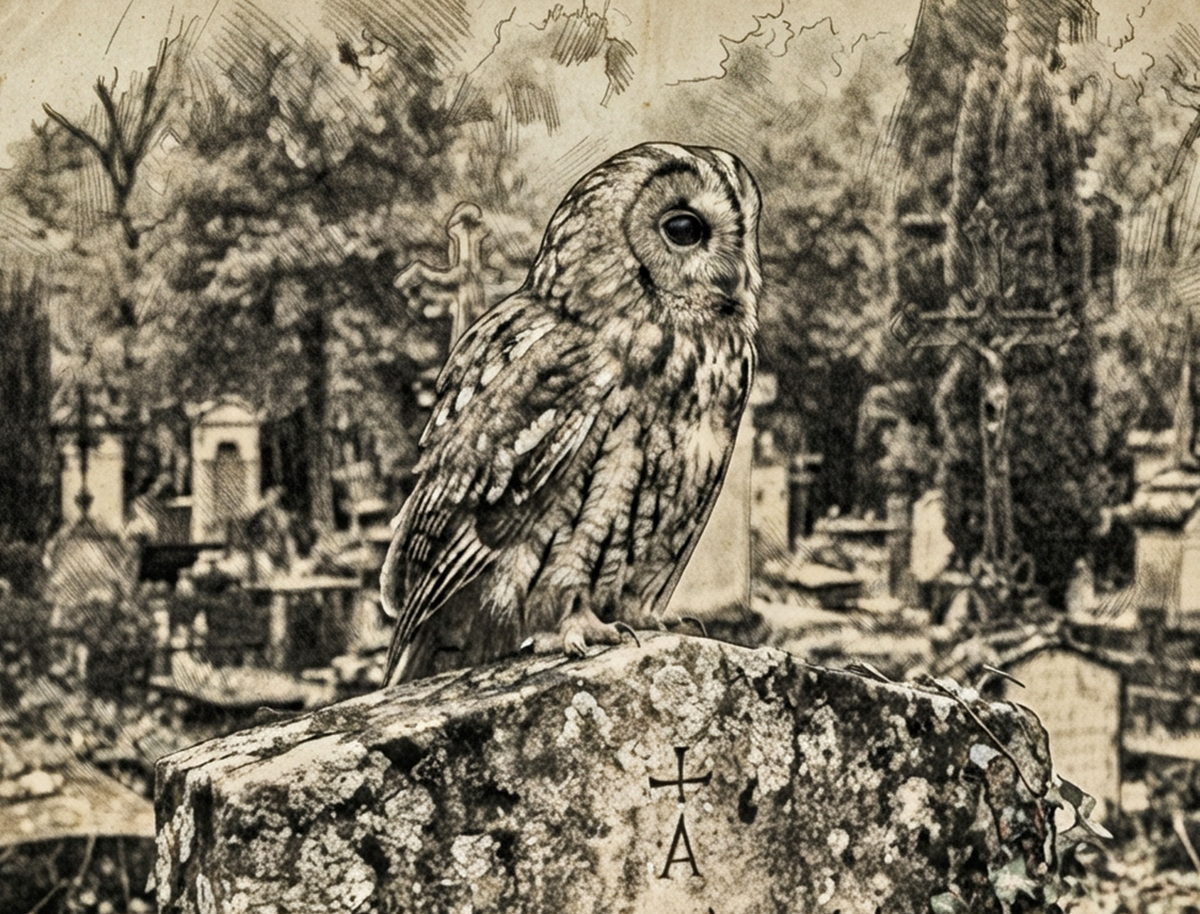
Père-Lachaise is one of the few sites in Paris where tawny owls nest. The nocturnal bird of prey occupies tree cavities in the most wooded parts of the cemetery. At night, once the gates are closed and there is no lighting, the tawny owl hunts the field mice, shrews and voles that thrive in the undergrowth. The Eurasian sparrowhawk, a daytime hunter, prefers more open, more mineral surroundings — the broad, clear avenues between the graves, which offer it an ideal hunting ground. The common kestrel, another bird of prey, patrols the cemetery from on high. The presence of these birds of prey at Père-Lachaise is a marker of the site's ecological health: a bird of prey settles only where prey is plentiful, which presupposes a complete food chain.
The Eurasian sparrowhawk favours the open, stone-covered stretches of Père-Lachaise, which make an ideal hunting ground. The bird of prey watches the paths from the tallest funerary monuments.
Songbirds are the most numerous. The common blackbird and the song thrush pick through the ground for worms and snails. Blue tits and great tits hop from branch to branch, eating buds and seeds in spring and insects in summer. The common chaffinch and the European robin flit through the undergrowth. The carrion crow and the black redstart prefer to perch on the funerary monuments. Common starlings form great flocks above the cemetery in autumn. Père-Lachaise also serves as a stopover for migratory birds: some species pause in the cemetery's foliage in spring and autumn, drawn by the unusual mass of vegetation at the heart of the city.
Père-Lachaise's ornithological richness comes from the variety of habitats packed into a small space: dense undergrowth, mineral pathways, open lawns, and century-old trees offering cavities for nesting. The end of chemical treatments in 2015 allowed insects to return, the staple diet of most songbirds. The Petite Ceinture — a disused railway line running along the cemetery's eastern edge that forms an ecological corridor — helps species move between Père-Lachaise and Paris's other green spaces. An attentive visitor can spot around twenty species on a single walk — provided they look up from the graves. Père-Lachaise is a cemetery, but it is also a forty-four-hectare aviary that Parisians share with blackbirds, jays and owls.
Père-Lachaise hosts 62 bird species: tawny owl, Eurasian sparrowhawk, green woodpecker, Eurasian jay, goldcrest, nuthatch, tits, blackbirds, robin, crow and chaffinch. The common kestrel can be seen circling above the site.
Yes. The tawny owl nests in tree hollows at Père-Lachaise. The Eurasian sparrowhawk hunts along the open alleys, and the common kestrel circles above the cemetery. The presence of birds of prey points to a complete food chain across the site's 44 hectares.
The City of Paris recorded 62 bird species at Père-Lachaise between 2010 and 2020. The cemetery is one of the richest sites for birdwatching within inner Paris, thanks to its varied habitats — undergrowth, alleys, lawns — and the end of pesticide use in 2015.
Père-Lachaise offers birds a rare diversity of habitats for a city site: dense undergrowth, mineral alleys, lawns and century-old trees with hollows. No pesticides have been used since 2015, and the nearby Petite Ceinture provides an ecological corridor.
 Society