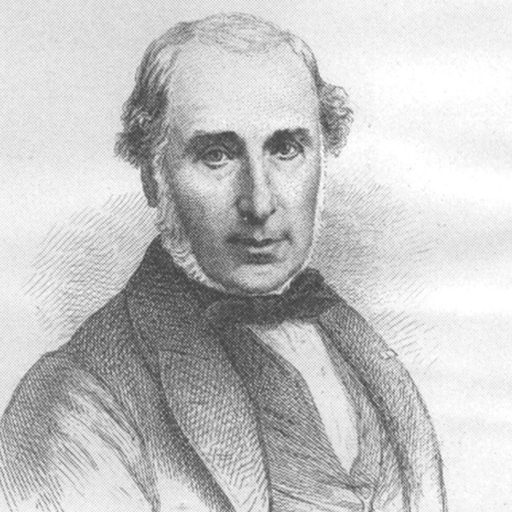
Casimir Davaine, a physician born in 1812, spent his life at the microscope at a time when French medicine would not admit that an invisible being could kill. In 1850, he glimpsed in the blood of animals dead of anthrax small motionless rods: no one before him had described a microbe responsible for a disease. Koch, who would give the decisive demonstration, came thirteen years after him.
The story
Born at Saint-Amand-les-Eaux in 1812, Davaine spent his life at the microscope, over the blood of sick animals, at a time when French medicine had no room for the idea that an invisible creature could kill.
In 1850, working with the physician Pierre Rayer, he saw in the blood of sheep dead of anthrax small motionless rods: the first description of a disease-causing micro-organism — the future Bacillus anthracis.
In 1863 he went further and proved that anthrax passed directly from one animal to another through the blood. Robert Koch's work, which settled the matter, came thirteen years later.
A founding member of the Société de biologie in 1848 and the author of a Traité des Entozoaires (1860), he lived meanwhile off his practice: his patients included Napoleon III, the Rothschilds and Rossini, whose tomb is still in Division 4 although the body left for Florence in 1887.
He died at Garches on 14 October 1882 and rests in Division 47, avenue Circulaire, third row, in a family grave whose inscription ends with “Priez pour eux” — pray for them.
The grave
A family tomb, whose inscription grants the scientist only a physician's title: “Doctor Casimir Joseph DAVAINE, 1812-1882”, then “Jules DAVAINE, 1845-1890”, “Mrs Maria DAVAINE, née FORBES, 1824-1895”, and this formula that closes the stone: “Pray for them”. Nothing of the anthrax bacillus, nothing of the Société de biologie: the first man to have seen a pathogenic microbe rests beneath a parishioner's epitaph.
On site, do not miss
A family tomb without any sign of science: neither microscope nor scholar's title. Only the inscription “Doctor Casimir Joseph DAVAINE” marks the man who saw the first pathogenic microbe in history.
Visitors' questions
Where is Casimir Davaine's grave?
In Division 47, avenue Circulaire, third row, in a family grave: “Docteur Casimir Joseph DAVAINE, 1812-1882”, followed by his son and his wife, née Forbes, and a “Priez pour eux” — pray for them.
François MagendieWhat was Casimir Davaine's discovery?
The anthrax bacillus, observed in 1850 with Pierre Rayer in the blood of sheep that had died of the disease. It was the first time a micro-organism was described as the cause of a disease — thirteen years before Davaine went on to prove its direct transmission.
Claude BernardDid Davaine come before Pasteur and Koch?
Yes, by more than twenty years for the observation and by thirteen for the proof of contagion. It was Pasteur and Koch who reaped the glory of germ theory; Davaine had supplied the first piece of evidence.
Xavier BichatWho were Casimir Davaine's patients?
Napoleon III, the Rothschild family and the composer Rossini, who rests in Division 4 of Père-Lachaise. His practice paid for what research did not: he was also a founding member of the Société de biologie, in 1848.
Gioachino RossiniAudio guide to Père Lachaise: the best unusual guided tour!
Discover the secrets of the most astonishing tombs
the audio guidefrom€6.99