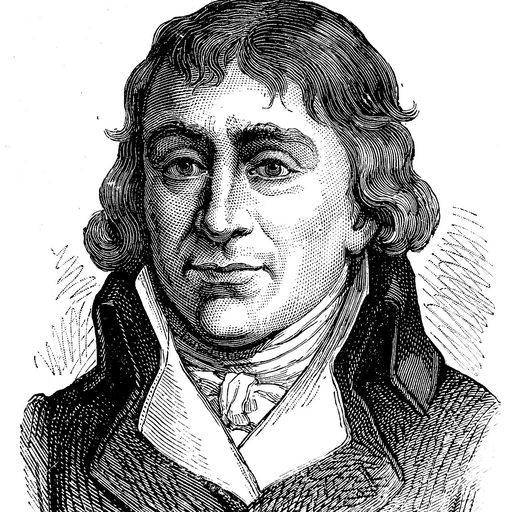
He drafted the Constitution of Year III, in 1795, which instituted the Directory, then that of the Batavian Republic, and directed the National Archives. A historian and librarian, he fits on his stone in four initials: “P.F.C. DAUNOU”, beneath a sculpted medallion.
The story
Two constitutions, and three initials to sum them up: “P.F.C. DAUNOU.” The man who wrote the Constitution of the Year III — that of 1795, which set up the Directory after the Terror — and that of the Batavian Republic, giving revolutionary Holland its fundamental law, lies under an inscription in abbreviation.
Born at Boulogne-sur-Mer in 1761, a historian and librarian, he belonged to the generation for whom governing and knowing were not two separate trades. Director of the National Archives, he had the keeping of the memory of the State.
He died in 1840. A second line barely completes the first: “P. Cl Fr. DAUNOU de Boulogne-sur-Mer.” Three initials and a native town. The carved medallion on the stone says more than the text.
The grave
A sculpted medallion, and an inscription that fits into initials: “P.F.C. DAUNOU”, then “P. Cl Fr. DAUNOU de Boulogne-sur-Mer”. Four letters and a native town, for the man who drafted the Constitution of Year III and that of the Batavian Republic, and who directed the National Archives. The medallion says more than the stone.
On site, do not miss
A sculpted medallion, and an inscription in initials: “P.F.C. DAUNOU”, then “P. Cl Fr. DAUNOU de Boulogne-sur-Mer”.
Visitors' questions
Where is Daunou's grave?
In Division 28, chemin du Dragon, second row — the Division of Beaumarchais and Brillat-Savarin. A carved medallion stands on it, and the inscription comes down to initials: “P.F.C. DAUNOU”. He died in 1840.
Boissy d’AnglasWhat was the Constitution of the Year III?
The one of 1795, which set up the Directory after the Terror — and Daunou was its father. He would also draft the constitution of the Batavian Republic, in the revolutionary Netherlands.
The Duke of MassaDid he run the National Archives?
He did: he was director of the National Archives, the institution that keeps the memory of the State. He was besides a historian and a librarian — learning and government were not separate trades in his generation.
André Joseph AbrialWhat does his epitaph say?
Almost nothing: “P.F.C. DAUNOU”, then “P. Cl Fr. DAUNOU de Boulogne-sur-Mer”. Three initials and a town, for the author of two constitutions. The carved medallion says more than the stone does.
Pierre-Jean de BérangerAudio guide to Père Lachaise: the best unusual guided tour!
Discover the secrets of the most astonishing tombs
the audio guidefrom€6.99