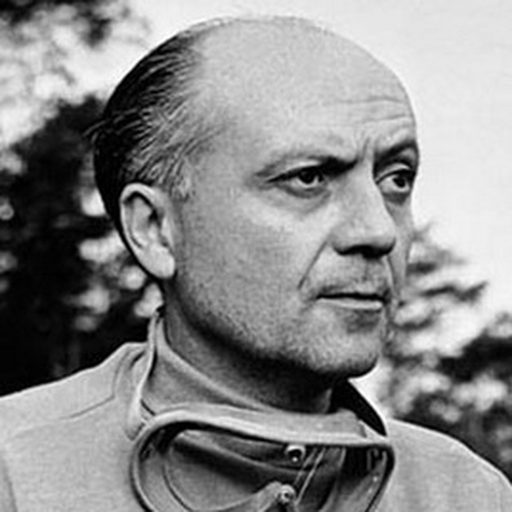
Levegh's real name was Bouillin, and he raced under the name of an uncle who had been a driver. At the Le Mans 24 Hours of 1952, in the lead and not having left the wheel for twenty-three hours, he broke his engine sixty minutes from the flag for refusing to hand over. In 1955, his car took off in front of the grandstands and disintegrated on the embankment: the accident changed the safety rules of every race.
The story
Born in 1905, Pierre Bouillin raced under the name Pierre Levegh — that of a racing uncle, Alfred Velghe, of which it is an anagram. He belonged to that generation of gentlemen drivers who made racing an expensive passion, run at their own cost and for honour, in a discipline that was not yet a salaried trade. He is remembered for the 1952 Le Mans 24 Hours: leading, alone at the wheel for twenty-three hours, he broke his engine an hour from the finish for having refused to hand over.
In 1955, at forty-nine, he drove for Mercedes. On 11 June, at twenty-eight minutes past six in the evening, the cars slowed in front of the grandstands: an Austin-Healey swerved, Levegh's Mercedes struck it and took off. The car came down on the earth bank at the edge of the track — the only thing then separating the public from the race — and broke apart: the engine, the bonnet and the front axle were thrown into the crowd at full speed.
The toll was eighty-three dead — Levegh and the spectators — and more than a hundred injured. It is the deadliest disaster in the history of motor sport, and it remains unequalled. The race was not stopped: the organisers feared that two hundred thousand spectators leaving at once would block the roads and keep the ambulances from moving. The choice has been argued over ever since, but it followed a logic of rescue and not of indifference.
The consequences went beyond sport. Mercedes withdrew from competition for thirty years. Switzerland banned motor racing on its territory — a ban that would last into the twenty-first century. Circuits the world over reconsidered the separation between track and public: protecting the spectators, until then left to the good sense of organisers, became a constraint of design.
On site, do not miss
He lies in Division 93 — the man whose crash changed the safety rules of every circuit in the world.
Visitors' questions
Where is Pierre Levegh's grave?
In Division 93 of Père-Lachaise, the one where Félix Ziem and Robert Planquette lie. The stone carries three names, Velghe, Strom and Bouillin: Pierre Bouillin lies beside Alfred Velghe, the racing-driver uncle whose name he had borrowed to race.
Robert PlanquetteWhat happened at Le Mans in 1955?
On 11 June his Mercedes struck an Austin-Healey that pulled across in front of him, took off and broke up on the bank at the edge of the track: engine, bonnet and front axle were thrown into the crowd. The toll: eighty-three dead.
Camille du GastWhat were the consequences?
Considerable: Mercedes withdrew from racing for thirty years, Switzerland banned motor racing until the twenty-first century, and circuits the world over rebuilt the barrier between track and public.
Léon ThéryWas he known before the accident?
He was, for an exploit that got away: at the 1952 Le Mans 24 Hours, leading and at the wheel alone for twenty-three hours, he broke his engine an hour from the finish — because he had refused to hand over to his co-driver.
Ernest ArchdeaconAudio guide to Père Lachaise: the best unusual guided tour!
Discover the secrets of the most astonishing tombs
the audio guidefrom€6.99