Markswoman, fencer, parachute jumper, she was at the Paris–Berlin of 1901 the second woman to compete in a major motor race. In the Paris–Madrid of 1903, the deadliest in history, she was among the leaders when she stopped to help a competitor who had crashed.
The story
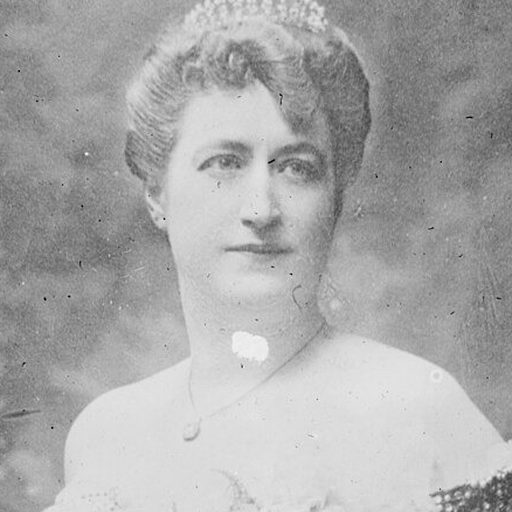
Born in 1868, Camille du Gast belonged to that generation of wealthy Belle Époque women who made physical daring a way of life. She shot, fenced, rode, went up in airships and jumped with a parachute. The motor car was not yet a spectator sport but an endurance trial on open roads: beaten earth, machines passing a hundred kilometres an hour, no helmet, no barrier, and the crowd standing at the edge of the road.
In 1901 she took the start of the Paris-Berlin: she was the second woman in history to run a major motor race, and she finished thirty-third. The press gave her whole columns in which the question of her presence mattered more than her placing — a woman at the wheel of a racing machine shocked more than the speed did.
In 1903 she ran the Paris-Madrid, the deadliest race in the history of motor sport: eight dead, and the event stopped at Bordeaux by the authorities. Du Gast was running among the leaders when she stopped to give help to the driver Phil Stead, trapped beneath his overturned car. She stayed with him until help came and lost any chance of a placing — the press would report the gesture as more remarkable than a win.
The ban then placed on women racing ended her career. She turned to the motor boat, then to philanthropy and the protection of animals: she campaigned against the transport of live animals and presided over the Société protectrice des animaux from 1929 — the first woman to lead it. She died in 1942 and lies in Division 36.
On site, do not miss
She lies in Division 36 — Léon Théry, another pioneer of the motor car, is in Division 42.
Visitors' questions
Where is Camille du Gast's grave?
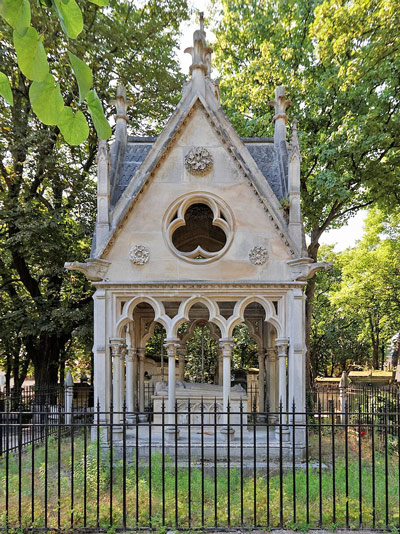
In Division 36 of Père-Lachaise, under a name that is not the one she raced under: the monument, carved by the sculptor Frédéric Étienne Leroux, belongs to the Crespin family — her husband's name. Camille du Gast was born Marie Marthe Desinge.
Maria KlonarisWhich races did she drive?
The Paris-Berlin in 1901 — where she is the second woman in history to run a major motor race, finishing thirty-third — and then the Paris-Madrid in 1903. Close to a hundred and fifty entrants had taken the start.
Léon ThéryWhat happened in the Paris-Madrid?
The deadliest race in motor sport: eight killed, and the event stopped at Bordeaux by the authorities. Du Gast was running among the leaders when she stopped to help an injured rival, throwing away any chance of a placing.
Pierre LeveghWhat did she do after motor racing?
The ban on women competing ended her career. She turned to motorboats, to philanthropy and to animal welfare — she was president of the Société Protectrice des Animaux, the French animal protection society. She campaigned against the transport of live animals.
The crematorium and the columbariumAudio guide to Père Lachaise: the best unusual guided tour!
Discover the secrets of the most astonishing tombs
the audio guidefrom€6.99