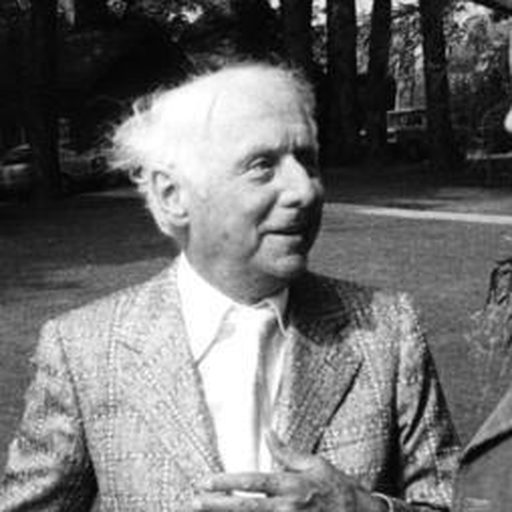
Max Ernst discovered modern painting in Cologne in 1912, before Van Gogh, Cézanne and Picasso gathered together. His Dadaist exhibition of 1920 was closed down for obscenity. Close to Paul Éluard, he painted the walls of his house and travelled with him; La Femme 100 têtes, a novel made of collages, appeared in 1929, and Buñuel gave him a part in L'Âge d'or. His ashes occupy a niche in the columbarium.
The story
Max Ernst was born on 2 April 1891 at Brühl, near Cologne, to a father who taught deaf children and painted as an amateur. A student of letters at Bonn from 1910 to 1914, he discovered Van Gogh, Cézanne, Gauguin, Picasso, Matisse and Munch at the Sonderbund exhibition in Cologne in 1912.
Called up into the artillery during the First World War, he met Hans Arp, then Paul Klee in Munich in 1919. His Dada exhibition in Cologne, in 1920, was closed for obscenity.
In 1921 he met Paul Éluard and Gala; he covered their house at Eaubonne with murals and travelled with them to the Far East in 1924. The Salon des Indépendants took him in Paris in 1923, “La Femme 100 têtes”, a novel in collage, appeared in 1929, and Buñuel put him on screen in “L'Âge d'or” in 1930.
A refugee at Saint-Martin-d'Ardèche in 1938, he was hounded by the French authorities as a German national, then hunted by the Gestapo, and reached New York on 14 July 1941. He came back to Europe in 1950, settled in Paris for good in 1953 and took the grand prize for painting at the Venice Biennale in 1954.
He died in Paris on 1 April 1976, the day before his eighty-fifth birthday. His ashes were placed in the columbarium, niche 2102.
On site, do not miss
Niche 2 102 of the columbarium — and, in the same building, those of Isadora Duncan and Maria Callas.
Visitors' questions
Where is Max Ernst's grave?
In the Père-Lachaise columbarium, Division 87, niche 2,102: these are his ashes. Isadora Duncan rests in the same building, niche 6,796, and Maria Callas's plaque in front of an empty niche is there too.
Isadora DuncanWhat did Max Ernst invent?
Frottage and grattage, techniques that draw the image out of the chance of the material, and the collage novel, of which “La Femme 100 têtes”, published in 1929, is the best-known example. He belonged to Dada, then to Surrealism.
Hans BellmerWhat was his link with Paul Éluard?
A friendship born in 1921: he covered the poet's house at Eaubonne with murals and travelled with the Éluards to the Far East in 1924. Éluard rests in Division 97, in the same cemetery.
Paul ÉluardWhat did he do during the war?
A refugee at Saint-Martin-d'Ardèche from 1938, he was persecuted as a German national by the French authorities, then hunted by the Gestapo. He reached New York on 14 July 1941 and did not return to Europe until 1950.
Nusch ÉluardAudio guide to Père Lachaise: the best unusual guided tour!
Discover the secrets of the most astonishing tombs
the audio guidefrom€6.99