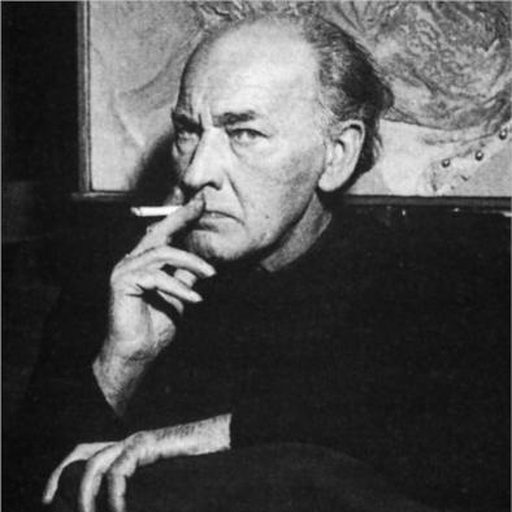
Hans Bellmer had worked in a steelworks and a mine before studying in Berlin, where he crossed paths with the fathers of Dadaism. When the Nazis took power, he set himself a rule that amounted to a programme: never again to produce anything from which his country could profit. In 1933 he built a doll nearly one metre forty tall, with multiplied joints, which the regime at once filed among the degenerate works.
The story
Hans Bellmer was born in 1902 at Kattowitz, then in Germany. He worked in a steelworks and then down a coal mine, where he pressed his fellow workers towards revolution, and in 1923 took courses at the Technische Hochschule in Berlin, where he met the founders of Dada.
The Nazis' arrival in power, in 1933, made him take a decision he stated as a programme: to make nothing that could be of any use to his nation.
In 1933 he built in Berlin “La Poupée”, the Doll: a figure of nearly one metre forty, joints multiplied everywhere, brown hair, ankle socks, naked, which he photographed and published the following year; a second, in 1935, would have four legs to a single torso. It is at once a revolt against authority and a frontal attack on the cult of the perfect body; the regime filed it under degenerate art.
He fled to France in 1938 and the Surrealists took him in. Interned at the camp of Les Milles, in Provence, in 1939 and 1940, he was held alongside Max Ernst, whose portrait he drew, and made work there out of his own confinement. His first one-man show came in 1943.
He died in Paris on 23 February 1975. He lies in Division 9 with his companion Unica Zürn, painter and writer, who died in 1970. In 2006 the Centre Pompidou gave him a retrospective under the title ‘anatomie du désir’ — anatomy of desire.
The grave
The stone bears two names joined by a dash, “BELLMER – ZURN”, and nothing else: no dates, no profession, no surrealist sign. Unica Zürn, painter and writer, who died in 1970, rests there with him — five years before he joined her. This sobriety is striking for the author of “The Doll”, the work that placed the dismantled body at the centre of Surrealism: the grave is the only place where Bellmer articulated nothing.
On site, do not miss
Two names on a single stone — “Bellmer – Zürn” — without dates or mention of a profession.
Visitors' questions
Where is Hans Bellmer's grave?
In Division 9, Avenue du Puits, third row, in the lower, older part of the cemetery. The stone bears two names side by side, “Bellmer – Zürn”: the artist's and that of his companion Unica Zürn.
Eric AdjaniWhat is Bellmer's “La Poupée”?
“The Doll”: an articulated figure built in Berlin in 1933, nearly one metre forty tall, which he photographed and published the following year; a second, in 1935, had four legs on a single torso. It was a revolt against authority and against the Nazi cult of the perfect body: the regime classed it as degenerate art.
Max ErnstWho was Unica Zürn?
A painter and writer, his companion, who died in 1970 and was buried with him in Division 9 — five years before he joined her there. Their two names share the same stone, with no dates and no mention of profession: “Bellmer – Zürn”.
Nusch ÉluardWhat did he do during the war?
A refugee in France from 1938, he was interned at the Camp des Milles, in Provence, in 1939 and 1940, where he was held alongside Max Ernst, whose portrait he drew, and made work from his prison surroundings. His first solo exhibition dates from 1943.
Paul ÉluardAudio guide to Père Lachaise: the best unusual guided tour!
Discover the secrets of the most astonishing tombs
the audio guidefrom€6.99