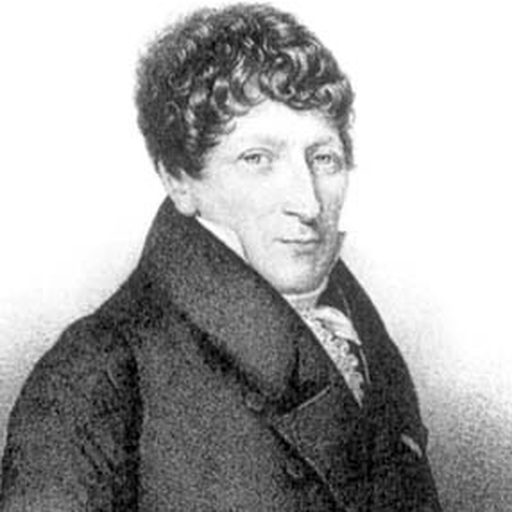
A pupil of Gaspard Monge, he in turn taught descriptive geometry at Polytechnique, entered the Academy of Sciences and became a deputy. His epitaph carves the academic title, then a sentence that breaks off: “Ci gît HACHETTE qui fut…” — here lies Hachette, who was… It is the only unfinished inscription recorded in this cemetery.
The story
The epitaph stops in the middle of a sentence: “Ci gît HACHETTE qui fut…” Nothing follows. It is the only inscription recorded in this cemetery that was left unfinished — as though the carver had run out of room, or of words.
Born at Mézières, in the Ardennes, in 1769, Jean Nicolas Pierre Hachette was the pupil of Gaspard Monge, inventor of descriptive geometry and founder of the École polytechnique. He became a professor there in his turn, and his pupils included Poisson, Arago and Fresnel.
Elected to the Academy of Sciences in 1823, he did not take his seat: Louis XVIII refused to confirm the election, just as he had stripped him seven years earlier of his chair at the École polytechnique. It took the revolution of 1830 for him to sit there at last, in 1831. He died three years afterwards.
A first inscription gives the academic title. The second begins, and breaks off. What he was, the stone gave up saying.
The grave
An inscription in two stages, the second of which intrigues. First the title: “HACHETTE, membre de l'Institut, Académie des Sciences.” — member of the Institut, Academy of Sciences. Then a formula that breaks off: “Ci gît HACHETTE qui fut…” — here lies Hachette, who was… The sentence remains unfinished — no other like it is known at Père-Lachaise. Neither Monge, nor Polytechnique, nor the seat as deputy comes to complete it.
On site, do not miss
Read the second inscription to the end: “Ci gît HACHETTE qui fut…” — here lies Hachette, who was… The sentence remains unfinished — a unique case in the cemetery.
Visitors' questions
Where is Hachette's grave?
In Division 18, at the carrefour du Grand Rond, second row. The stone reads “HACHETTE, membre de l'Institut, Académie des Sciences”, member of the Institute, Academy of Sciences, and then a sentence that stops short: “Ci gît HACHETTE qui fut…”, here lies Hachette, who was…
Michel ChaslesWho was his master?
Gaspard Monge, the inventor of descriptive geometry and one of the founders of the École Polytechnique. Hachette in turn became a professor there and passed his master's method on to generations of engineers.
Joseph FourierWhy is the Institute cut first on the stone?
Because he waited eight years for it. Elected to the Academy of Sciences in 1823, he watched Louis XVIII refuse to confirm the election on political grounds — he had already been pushed out of the École Polytechnique in 1816. It took the July Revolution for him to take his seat at last, in 1831, three years before he died.
François AragoWhat does his epitaph say?
Two things, one of them unfinished: “HACHETTE, membre de l'Institut, Académie des Sciences”, then “Ci gît HACHETTE qui fut…”, here lies Hachette, who was… The sentence stops there, as though the carver had run out of room, or of words.
Gaspard MongeAudio guide to Père Lachaise: the best unusual guided tour!
Discover the secrets of the most astonishing tombs
the audio guidefrom€6.99