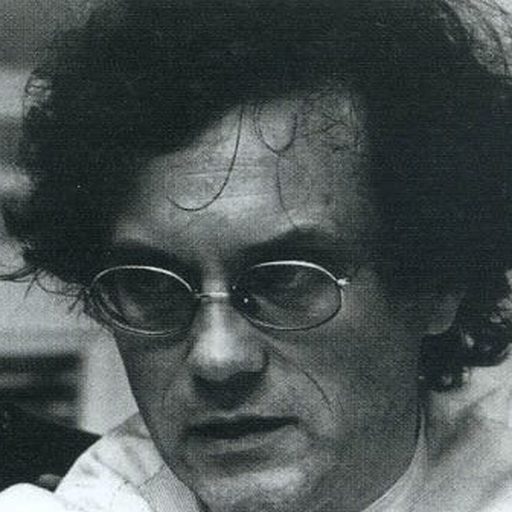
Trained by Lacan, he chose not the Paris consulting room but the clinic of La Borde, where institutional psychotherapy meant to treat the hospital before those it shuts away. His meeting with Gilles Deleuze, in 1969, opened twenty years of four-handed writing: Anti-Oedipus, then A Thousand Plateaus.
The story
Born in 1930, Félix Guattari was trained in psychoanalysis by Jacques Lacan, whose seminar he attended and whom he never quite disowned. But he did not practise where a Lacanian was expected to: instead of a Paris consulting room he chose the La Borde clinic, in the Sologne, founded by Jean Oury. What is practised there is institutional psychotherapy — the idea that the hospital itself makes people ill, and that the institution must be transformed before anyone claims to treat those it shuts in. Roles rotate, patients take part in the decisions, and the psychiatrist does the washing-up.
He was a militant as much as a clinician, and on every front at once: anticolonialism during the Algerian war, the movements that came out of May 68, free radio, support for minority struggles, then political ecology in the 1980s. That activity was not a sideline to his thought but its heart: Guattari held that the psyche is shot through with politics and economics, and that a cure which ignores this repairs individuals only to hand them back to a world that damages them. It was that conviction which set him apart from analytic orthodoxy.
In 1969 he met Gilles Deleuze. Out of that meeting came a writing for four hands that would last twenty years, and of which each said the shares could no longer be told apart. L'Anti-Œdipe appeared in 1972 and caused a scandal: the book attacked the reduction of the unconscious to the family triangle and proposed to think desire as production rather than as lack. Mille Plateaux followed in 1980. The two volumes make up Capitalisme et schizophrénie, an unclassifiable summa borrowing from ethnology, geology and music.
Guattari died at La Borde in 1992, at sixty-two; Deleuze outlived him by three years. Their concepts found an afterlife neither man had foreseen: rhizome, deterritorialisation, assemblage are current now in architecture, network theory, internet studies and contemporary art. Many use them without knowing they are quoting a country psychoanalyst who spent his days in a clinic in the Sologne — and who died there. He lies in Division 42.
On site, do not miss
Division 42 brings together Mouloudji, Fromanger, the film-maker Téo Hernandez and the racing driver Léon Théry.
Visitors' questions
Where is Félix Guattari's grave?
In Division 42 of Père-Lachaise, that of Mouloudji, of Gérard Fromanger, of the film-maker Téo Hernandez and of the racing driver Léon Théry.
Gérard FromangerWhat is Anti-Oedipus?
The first book written with Gilles Deleuze, in 1972: an assault on the family reading of the unconscious, in favour of a thinking of flows and of desire as production. With A Thousand Plateaus it makes up the pair Capitalism and Schizophrenia.
Téo HernandezWhat was the La Borde clinic?
The clinic in the Sologne where Jean Oury was trying out institutional psychotherapy: treating people by transforming the institution itself, and not the patient alone. Guattari worked there all his life, until his death in 1992.
MouloudjiWhat is the rhizome?
One of the concepts that came out of A Thousand Plateaus: a model of thought with no centre and no hierarchy, set against the tree. It has spread far beyond philosophy — architecture, network theory, contemporary art.
Jean-François LyotardAudio guide to Père Lachaise: the best unusual guided tour!
Discover the secrets of the most astonishing tombs
the audio guidefrom€6.99