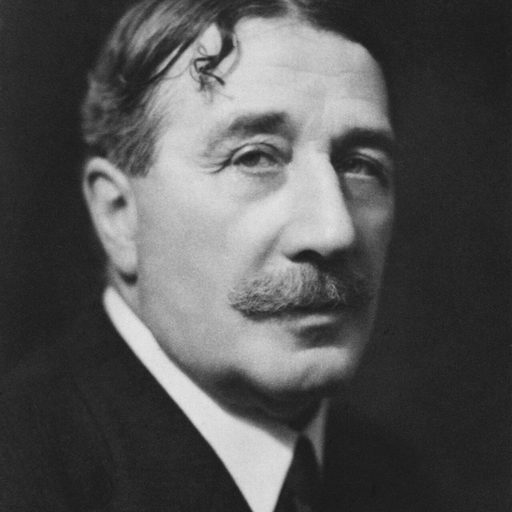
Émile Chartier, whom everyone knows as Alain, was a philosophy teacher and never wrote a treatise. His thought lies in nearly three thousand “Propos”, two pages a day given to provincial newspapers on work, sleep, war or trees. He taught for twenty-four years at the Lycée Henri-IV, where Raymond Aron and Simone Weil were his pupils. A pacifist, he nevertheless enlisted in 1914.
The story
Émile Chartier was born on 3 March 1868 at Mortagne-au-Perche. He chose the lycée over the university and never left it: his philosophy was written in a classroom and in a newspaper, never in a treatise.
In 1903 he began giving his “Propos” to the Dépêche de Lorient, then to the Dépêche de Rouen: two sheets a day on whatever passed — the war, work, sleep, trees. He wrote close to three thousand of them, a philosopher's body of work made of newspaper columns.
Appointed in 1909 to teach the khâgne, the elite preparatory class, at the lycée Henri-IV, he stayed twenty-four years. Raymond Aron, Simone Weil and Georges Canguilhem came out of his classes, and his teaching left deeper marks than his books.
A pacifist, he nevertheless volunteered in 1914 rather than philosophise from safety, and served as an artillery corporal; a crushed foot in 1917 ended his war. Out of it came “Mars ou la guerre jugée” (1921); he opposed the 1927 law on the general organisation of the nation, and in 1934 co-founded the Vigilance Committee of Anti-Fascist Intellectuals.
A stroke put him in a wheelchair in 1936; he went on writing for fifteen years. He died at Le Vésinet on 2 June 1951 and lies in Division 94, under a stone where his pen name comes before his real one.
On site, do not miss
The order of the names on the stone: “ALAIN” first, “Émile Chartier” second — and, lower down, the sister-in-law who died at thirty in 1919.
Visitors' questions
Where is Alain's grave?
In Division 94, Avenue Circulaire, fourth row, in the upper, eastern part of the cemetery. The stone is plain: the pen name, “ALAIN”, is engraved above his civil name, “Émile Chartier, 1868-1951”.
Jules RomainsWho were Alain's students?
Raymond Aron, Simone Weil and Georges Canguilhem, all of whom passed through his preparatory class at the Lycée Henri-IV, where he taught from 1909 to 1933. His influence worked through the spoken word more than through his books, which explains his reputation as a teacher.
Sadegh HedayatWhat are Alain's “Propos”?
Two-page columns supplied to the press from 1903 onward, first to La Dépêche de Lorient and then to its Rouen edition. He wrote nearly three thousand of them: it is there, and not in any treatise, that his philosophy is to be found.
Gertrude SteinWas Alain a pacifist?
Yes, and yet he volunteered for service in 1914 rather than philosophise from safety. An artillery gunner, his foot crushed in 1917, he published “Mars, or War Examined” in 1921 and co-founded, in 1934, the Vigilance Committee of Antifascist Intellectuals.
Sully PrudhommeAudio guide to Père Lachaise: the best unusual guided tour!
Discover the secrets of the most astonishing tombs
the audio guidefrom€6.99