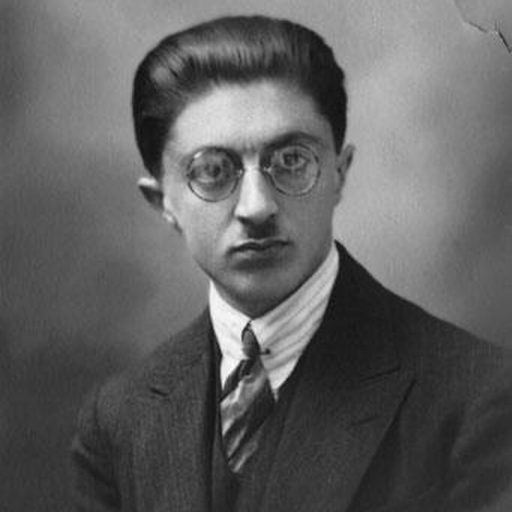
Sadegh Hedayat studied in France in the 1920s, read Kafka and Poe there, and brought back to Iran a new language. His Blind Owl, in 1936, carries Persian letters into our century: the tale of a hallucinated man, in which the plot slips away and in which readers saw as much nihilism as mysticism. The regime banned it for a long time. He came back to Paris to die, in 1951.
The story
Sadegh Hedayat was born in Tehran on 17 February 1903, into a family of the Iranian aristocracy. He came to France to study in the twenties, discovered Kafka and Poe, and went home to Iran with a new language in his hands.
“The Blind Owl”, published in 1936, is the book that brought Persian literature into the twentieth century: a hallucinated narrative with no plot you can pin down, read as nihilism and as mysticism in equal measure. The regime banned it for years.
A translator of Kafka into Persian and an essayist, he lived Iran's authoritarian modernisation as a slow suffocation, and his whole body of work carries the mark of that dead end.
He came back to Paris in 1950, with no money and no plan to go home. He took his own life on 9 April 1951, by gas, in a flat on the rue Championnet.
He lies in the Muslim enclosure of Père-Lachaise, in Division 85. Visitors come to his grave from Iran and from across the diaspora: it is one of the few places where his memory can be honoured without hindrance.
The grave
A black marble of irregular pyramidal shape, beneath a tree that spreads its foliage above it — the grave is one of those noticed for its geometry rather than its size. The inscription is double: “Sadegh Hedayat, 1903-1951” in Latin letters, and his name in Persian. It stands in the cemetery's Muslim enclosure, in Division 85, and remains one of the graves most visited by a diaspora: Iranian readers come to it from the whole world.
On site, do not miss
The black marble and his name engraved twice, in Latin letters and in Persian, beneath the foliage of the tree.
Visitors' questions
Where is Sadegh Hedayat's grave?
In Division 85, Avenue Transversale No. 2, eleventh row, in the Muslim enclosure of Père-Lachaise. The black marble in an irregular pyramid shape and the tree that overhangs it make it recognisable.
Léon JouhauxWhy is his grave a place of pilgrimage?
Because his memory was long suppressed in Iran, where his work was banned. Iranian readers and the diaspora come to Père-Lachaise, one of the few places where they can pay him tribute freely.
Georges MoustakiWhat is “La Chouette aveugle”?
His most famous book, “The Blind Owl”, published in 1936: a hallucinatory narrative with no identifiable plot, in which readers have found nihilism and mysticism in equal measure. It brought Persian literature into the twentieth century.
Gertrude SteinHow did he die?
He took his own life by gas, on 9 April 1951, in a flat in the rue Championnet in Paris, where he had returned the previous year with no money and no plan to go back to Iran. He was forty-eight.
Gérard de NervalAudio guide to Père Lachaise: the best unusual guided tour!
Discover the secrets of the most astonishing tombs
the audio guidefrom€6.99