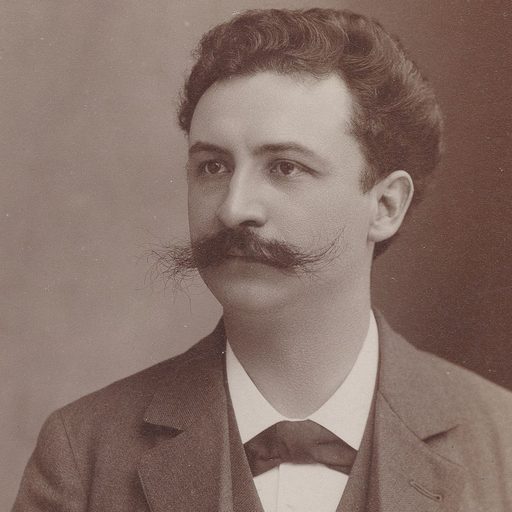
Xavier Leroux, the son of a military bandmaster, entered the Conservatoire under Massenet and won the Prix de Rome. At the Villa Medici he befriended a difficult resident who hated the place: Debussy. As a professor of harmony he trained Paray, Désormière and Bigot, three conductors who would hold the baton in the France of the following century. His Chemineau, first staged in 1907, was revived at the Opéra-Comique until 1945: a hundred and six performances in all.
The story
Born at Velletri, in Italy, on 11 October 1863, the son of a military bandmaster, Henri Napoléon Xavier Leroux entered the Paris Conservatoire in the classes of Massenet and Théodore Dubois.
The Prix de Rome was awarded to him for his cantata Endymion. At the Villa Medici, in 1886, he struck up a friendship with a difficult resident who loathed the place: Debussy.
Professor of harmony at the Conservatoire from 1896, he trained Paul Paray, Roger Désormière and Eugène Bigot — three conductors who would run French music through the following century.
His masterpiece was Le Chemineau, first staged in 1907: the Opéra-Comique kept bringing it back until 1945, a hundred and six times in all, for a work now forgotten.
He died in Paris on 2 February 1919 and rests in Division 96, on the Avenue Circulaire, seventh row, in the Leroux family grave. The stone calls him “prix de Rome, en 1884” — winner of the Prix de Rome in 1884; he won it in 1885.
The grave
A family tomb beneath the heading “Famille LEROUX”, where the composer lies beside four relatives. His inscription lists everything, in narrow columns: “Xavier LEROUX, compositeur, de musique, prix de Rome, en 1884, professeur, au conservatoire, national de Paris, chevalier, de la légion d'honneur, 11 8bre 1863, 2 février 1919.” — composer of music, Prix de Rome in 1884, professor at the Paris Conservatoire, Knight of the Legion of Honour. Two details: “8bre” for October, in the old manner, and a Prix de Rome dated 1884 when he won it in 1885.
On site, do not miss
The inscription is written in narrow columns, with the date of birth in the old style: “11 8bre 1863”. And a Prix de Rome dated 1884, when he won it in 1885.
Visitors' questions
Where is Xavier Leroux's grave?
In Division 96, avenue Circulaire, seventh row, in a family tomb that lines up five members of the Leroux family. The Division is also home to Modigliani and Jeanne Hébuterne: a little-visited corner of the upper cemetery.
Camille ErlangerWhat was Xavier Leroux's great success?
Le Chemineau — the Vagabond — first staged in 1907: the Opéra-Comique revived it until 1945, a hundred and six performances in all, a remarkable run for a work now forgotten. He had trained under Massenet and Théodore Dubois at the Conservatoire.
Charles LecocqWho were Xavier Leroux's pupils?
Paul Paray, Roger Désormière and Eugène Bigot, three conductors who shaped French music in the twentieth century. He had taught harmony at the Paris Conservatoire since 1896, having himself trained under Massenet and Théodore Dubois.
Napoléon-Henri ReberIs there a mistake on his grave?
A discrepancy of a year: the inscription reads “prix de Rome, en 1884” where he won it in 1885. The stone also writes his date of birth the old way, “11 8bre 1863” — October abbreviated, a common usage in the nineteenth century.
Émile WaldteufelAudio guide to Père Lachaise: the best unusual guided tour!
Discover the secrets of the most astonishing tombs
the audio guidefrom€6.99