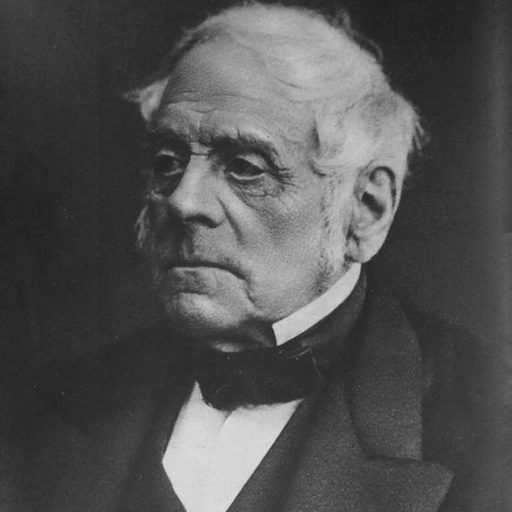
Daniel-François-Esprit AUBER
See onthe map
Composer, director of the Paris Conservatoire.
Auber, a pupil of Cherubini, was the most performed composer at the Opéra-Comique, with some fifty works almost all written to librettos by Scribe. On 25 August 1830 a performance of his Muette de Portici set the house alight in Brussels: the audience poured out of the theatre and the Belgian revolution was under way. No other opera ever did as much. He died in 1871.
The story
Born in Caen on 29 January 1782, a pupil of Cherubini, Auber became the most performed composer of the Opéra-Comique: some fifty stage works, of which thirty-nine were written with Eugène Scribe, his librettist for forty-one years.
La Muette de Portici (1828) tells of an uprising in Naples. On 25 August 1830 a performance in Brussels set the house alight: the audience walked out of the theatre and the Belgian revolution began. No other opera ever did that.
Then came Fra Diavolo (1830), Le Domino noir (1837), Les Diamants de la couronne (1841) and Manon Lescaut (1856): a machinery of success the public never tired of calling back.
From 1842 to 1871 he ran the Paris Conservatoire, and from 1852 to 1870 he held the imperial chapel at the Louvre, Napoleon III's private music: the most complete official career French music had to offer.
He died in Paris on 12 May 1871, during the Commune, aged eighty-nine. He rests in Division 4, on the Avenue Principale, first row, beneath a marble bust by Antoine-Laurent Dantan.
The grave
A marble bust by the sculptor Antoine-Laurent Dantan (1798-1878) — whose brother Jean-Pierre rests in the same Division — on a monument built by the contractor Chambroy. The inscription confines itself to the civil record: “AUBER, Daniel François Esprit, né à Caen, 1782, mort à Paris, 1871.” — born in Caen, died in Paris. Neither the Conservatoire, nor the superintendence of music, nor La Muette de Portici and the revolution it set off.
On site, do not miss
The marble bust by Antoine-Laurent Dantan, and an inscription that states only the civil record: “AUBER, Daniel François Esprit, né à Caen, 1782, mort à Paris, 1871” — born in Caen, died in Paris. Nothing of the forty-eight lyric works.
Visitors' questions
Where is Auber's grave?
In Division 4, avenue Principale, first row, beneath a marble bust by the sculptor Antoine-Laurent Dantan. The Offenbach monument stands in the same Division: two men of the Opéra-Comique a few metres apart.
Gioachino Rossini, Division 4Did an opera by Auber set off a revolution?
It did. La Muette de Portici, which tells of an uprising in Naples, was performed in Brussels on 25 August 1830: the audience poured out of the theatre and the Belgian Revolution began. The libretto was by Eugène Scribe, his lifelong librettist.
Eugène ScribeHow long did Auber run the Conservatoire?
From 1842 to 1871 — twenty-nine years — until his death during the Commune. He had himself been a pupil of Cherubini, who ran the institution before him: the post passed from master to pupil.
Luigi CherubiniWho sculpted the bust on his grave?
Antoine-Laurent Dantan (1798-1878). His brother, the caricaturist and sculptor Jean-Pierre Dantan, rests in the same Division 4 of the cemetery: two Dantans, one earnest, the other mocking. Auber's bust is by the former, and it is undated.
Jean-Pierre DantanAudio guide to Père Lachaise: the best unusual guided tour!
Discover the secrets of the most astonishing tombs
the audio guidefrom€6.99