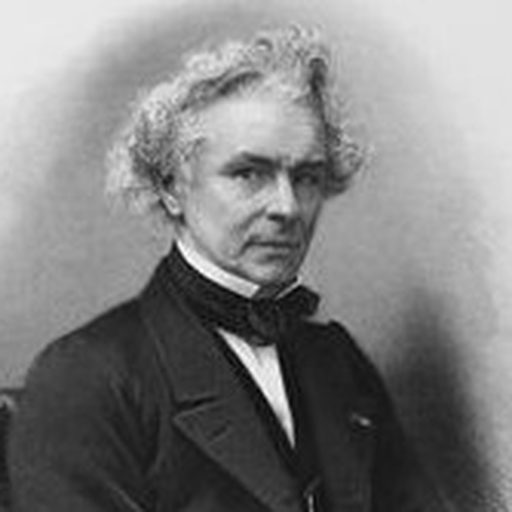
A pupil of Reicha and Le Sueur, he succeeded Halévy in the composition class at the Conservatoire in 1862 and published the same year a Traité d'harmonie on which French teaching lived for decades. His monument, unveiled in 1883, bears the carved list of his opéras-comiques.
The story
Born at Mulhouse on 21 October 1807, Napoléon Henri Reber trained under Antoine Reicha and Jean-François Le Sueur — two masters who also lie in Père-Lachaise.
Professor of harmony at the Conservatoire in 1851, he succeeded Halévy in the composition class in 1862 and published that same year a Traité d'harmonie that French teaching would live on for decades.
Elected to the Académie des beaux-arts in 1853 to Onslow's seat, he became inspector of the conservatoires in 1871: the complete official career.
He left four symphonies, seven piano trios, comic operas — La Nuit de Noël, Le Père Gaillard, Les Dames capitaines — and a ballet, Le Diable amoureux: the titles his tomb cuts into the stone in a list, on either side of his name.
He died in Paris on 24 November 1880. The City granted him a free plot by prefectoral order, and his monument was unveiled on 26 May 1883 in Division 55, on the Avenue de la Chapelle, first row, beneath a high relief by Tony Noël in which Music, veiled, holds a lyre.
The grave
A monument raised to the plans of the architect A. Jal and unveiled on 26 May 1883, the City of Paris having granted the plot free of charge. It bears a marble high relief by Tony Noël (1845-1909) entitled La Musique — a veiled woman holding a lyre — and a bas-relief of a cherry tree in blossom in the Japanese taste. On either side of the name, the stone lists his works: “La nuit de Noël, Le diable amoureux, Le Père Gaillard, Les dames capitaines” on one side, “Les papillotes de Mr. Benoist, Le ménétrier, Ouverture de Naïm” on the other.
On site, do not miss
The high relief by Tony Noël — a veiled woman holding a lyre — and, more discreet, a bas-relief of a cherry tree in blossom in the Japanese taste, rare in Père-Lachaise. On either side, the carved list of his operas.
Visitors' questions
Where is Napoléon-Henri Reber's grave?
In Division 55, avenue de la Chapelle, first row. The monument, designed by the architect A. Jal, carries a marble high relief by Tony Noël: a veiled woman holding a lyre, La Musique. It was unveiled on 26 May 1883.
Baron TaylorWhat is carved on his grave?
The list of his works, to the left and right of the monument: La Nuit de Noël, Le Diable amoureux, Le Père Gaillard, Les Dames capitaines, Les Papillotes de Mr Benoist, Le Ménétrier, and the overture to Naïm.
Tony NoëlWhat did Reber teach at the Conservatoire?
Harmony from 1851, then composition from 1862, succeeding Halévy. His Traité d'harmonie, published that same year, served as the textbook of French musical training for decades.
Antoine ReichaWhy was his plot free of charge?
Because the City of Paris granted it by prefectoral decree, as it did for other artists — Prud'hon, Paul Baudry, Alfred Assolant, Charles Amouroux. The monument, unveiled in 1883, was raised after his death.
Charles AmourouxAudio guide to Père Lachaise: the best unusual guided tour!
Discover the secrets of the most astonishing tombs
the audio guidefrom€6.99