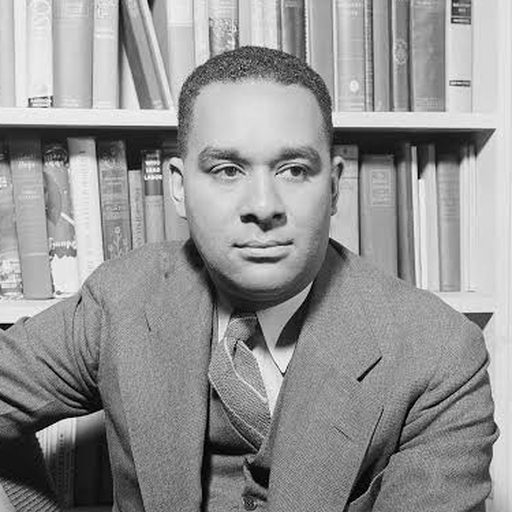
Grandson of a slave, born in Mississippi, he signed with Native Son, in 1940, the first novel by a Black author to become an American best-seller. Under surveillance, he settled in Paris in 1947, obtained French citizenship there and never went back to live in the United States.
The story
When Native Son appeared in 1940, it became the first novel by a Black author to reach the rank of national bestseller in the United States. Its author, the grandson of a slave, born in Mississippi in 1908, had grown up in the segregation of the Deep South. Black Boy, an autobiographical account, followed in 1945.
A member of the Communist Party since the thirties and under mounting surveillance, Wright chose to break with it. In 1946 he settled in Paris, saw Sartre, Beauvoir and Camus, took French citizenship the following year — and never went back to live in the United States.
He died on 28 November 1960, at fifty-two. Niche 848 in the columbarium, in Division 87, carries no inscription at all: nothing marks that this small numbered rectangle holds the ashes of America's first Black bestselling novelist.
The grave
A columbarium niche, number 848, in Division 87. No particular inscription is documented: neither Native Son, nor Black Boy, nor the French citizenship obtained after 1947. The grandson of a slave who was America's first best-selling Black novelist occupies a few square inches of numbered plaque, in the same columbarium as Loïe Fuller, whose plaque was stolen.
On site, do not miss
Niche 848 of the columbarium, in Division 87. No inscription: neither Native Son, nor Black Boy, nor French citizenship. A number is enough.
Visitors' questions
Where are Richard Wright's ashes?
In the columbarium of Père-Lachaise, niche 848, Division 87 — the Division of Maria Callas, Georges Perec and Isadora Duncan. Note the number: nothing marks the novelist's niche. He died in Paris on 28 November 1960.
Mezz MezzrowWhy did he leave the United States?
Because he could no longer bear the way Black Americans were treated: the grandson of a slave and a member of the Communist Party, he left for Paris in 1947, mixed there with Sartre, Beauvoir and Camus, and became a French citizen.
Rufina NoeggerathWhat are his books?
Native Son (1940), the first novel by a Black author to become a national bestseller in the United States, and Black Boy (1945), his memoir. Two books that changed American literature.
Nestor MakhnoDid he become French?
He did: settled in Paris in 1947, he obtained French citizenship and never went back to live in the United States. He died in Paris in 1960, aged fifty-two, and his ashes remained at Père-Lachaise.
Sadegh HedayatAudio guide to Père Lachaise: the best unusual guided tour!
Discover the secrets of the most astonishing tombs
the audio guidefrom€6.99