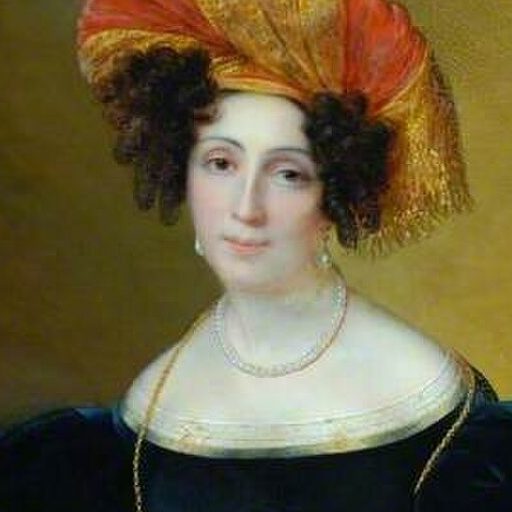
Anne Boutet, known as Mademoiselle Mars, entered the company of the Comédie-Française at twenty and was its leading actress for close on forty years. She reigned first over Molière and Marivaux, with a diction her whole century talked about. In 1830, aged fifty-one, she created Doña Sol in Hernani: to pass like this from the classics to the Romantics without leaving the stage, few managed it.
The story
Anne Boutet, known as Mademoiselle Mars, was born on 9 February 1779, the daughter of an actor. A full member of the Comédie-Française from 1799, at twenty, she was its leading lady for close to forty years.
She reigned first over the classical repertoire — the young heroines of Molière and Marivaux — with a delivery and a naturalness the whole century's criticism wrote about.
In 1830, at fifty-one, she created the part of doña Sol in Victor Hugo's “Hernani”, in the thick of the battle between classics and romantics. She crossed from one camp to the other without leaving the stage, which few actors have managed.
Her longevity became famous: she played girls until she was nearly sixty, and the audience allowed it — talent and a reputation for undimmed beauty were enough to suspend all likelihood.
She died on 20 March 1847. Her grave in Division 8, on the avenue Casimir-Perier, carries an urn by the sculptor Hippolyte Bronner and an inscription of three words whose brevity puzzles: “À ma fille” — to my daughter.
The grave
The grave is closed by a cast-iron door adorned with an antique theatre mask, a column with a bas-relief rises above it, and an urn by the sculptor Hippolyte Bronner crowns it. The inscription of the name comes down to one word, “MARS” — the stage name, as on the graves of Talma and Rachel. Three other words, engraved apart, remain unexplained: “À ma fille” — to my daughter.
On site, do not miss
The antique theatre mask cast in the iron door, and the three words engraved beneath the name: “To my daughter”.
Visitors' questions
Where is Mademoiselle Mars's grave?
In Division 8, avenue Casimir-Perier, second row — the path where Robertson's monumental tomb also stands. A cast-iron door adorned with an antique theatre mask closes the grave and makes it easy to recognise.
Étienne-Gaspard RobertsonWhat was her part in “Hernani”?
She created the role of Doña Sol in 1830, at fifty-one, in the thick of the battle between classicists and Romantics. Queen of the Molière and Marivaux repertoire, she crossed from one camp to the other without ever leaving the stage.
François-Joseph TalmaDid she really act until she was sixty?
Yes, and in the parts of young girls, which the public went on accepting from her. A member of the Comédie-Française company from 1799, she was its leading actress for close on forty years.
RachelWhat does “À ma fille” on her grave mean?
The inscription — “to my daughter” — sits beneath her stage name, with no further explanation, beside an urn by the sculptor Hippolyte Bronner. The brevity of the words and the silence of the inventories leave the question wide open.
Roger de BeauvoirAudio guide to Père Lachaise: the best unusual guided tour!
Discover the secrets of the most astonishing tombs
the audio guidefrom€6.99