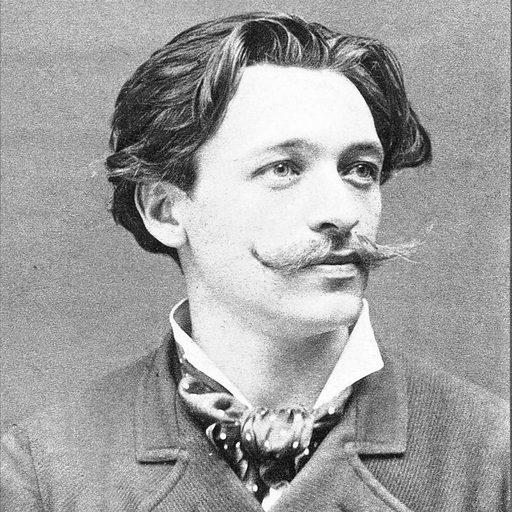
A caricaturist who moved to cinema at fifty, in 1908 he made Fantasmagorie — seventy seconds, seven hundred white-line drawings — held to be the first animated cartoon in history. More than three hundred films followed, of which he patented nothing; he died poor and forgotten at Villejuif.
The story
Born in Paris in 1857, Émile Courtet — Cohl was a pen name — began in press drawing. A pupil and friend of the caricaturist André Gill, who lies at Père-Lachaise, he belonged to the bohemia of the Incohérents, that parodic movement of the 1880s which exhibited blank canvases and hoaxes before the avant-garde turned the idea into a method. He drew for the satirical papers, invented rebuses, wrote for the stage: a whole career before the one that would make him famous.
He was fifty-one when he came to the cinema, at Gaumont, almost by accident — he had gone in to complain that one of his drawings had been plagiarised. In 1908 came Fantasmagorie: one minute forty, some seven hundred drawings traced in white line on black, in which a clown turns without logic into objects, into a bottle, into an elephant. Each drawing was photographed twice: fourteen hundred frames for that one film, every one of them from the hand of a single man. It is the first animated film in the history of cinema, screened at the Théâtre du Gymnase on 17 August 1908 before an audience that had no idea what it was looking at.
More than three hundred films followed in a dozen years, at Gaumont, Pathé, Éclair, then in the United States where he worked in New Jersey. Cohl invented almost everything animation would use: frame-by-frame drawing, object animation, the animated puppet, the first transformation effects. He had patented nothing and never made a fortune out of those discoveries: the Disney studio would be born fifteen years after Fantasmagorie, on processes Cohl had left free for the taking.
The end was wretched. The war, then American competition, put him out of the game; he lived poorly at Villejuif, forgotten by the profession he had founded. He died in 1938, at eighty-one, of burns. Recognition came afterwards: film historians gave him back his title of first animator, and his name is given today to prizes and festivals. His ashes rest in the columbarium, in Division 87.
On site, do not miss
No inscription recorded. He rests in the columbarium — like Michel Magne and Jérôme Savary, other men of images whose niche says nothing of the trade.
Visitors' questions
Where are Émile Cohl's ashes?
In the columbarium at Père-Lachaise, in Division 87 — the one where Maria Callas and Georges Perec lie. The man who invented the cartoon fits into a numbered niche, 24 023, one plaque among thousands.
The crematorium and the columbariumWhat is Fantasmagorie?
The 1908 film held to be the first animated cartoon ever made: seventy seconds, some seven hundred drawings in white line on black, in which a clown turns without logic into objects and animals.
Georges MélièsWhat did he invent?
Very nearly the whole vocabulary of animation: frame-by-frame drawing, object animation, the animated puppet, transformation effects. He patented none of it, and the American industry took the discoveries for its own.
Michel MagneDid he die poor?
He did: put out of the running by the war and by American competition, he was living in poverty at Villejuif, forgotten by the trade he had founded. He died in 1938 of burns, at eighty-one.
André GillAudio guide to Père Lachaise: the best unusual guided tour!
Discover the secrets of the most astonishing tombs
the audio guidefrom€6.99