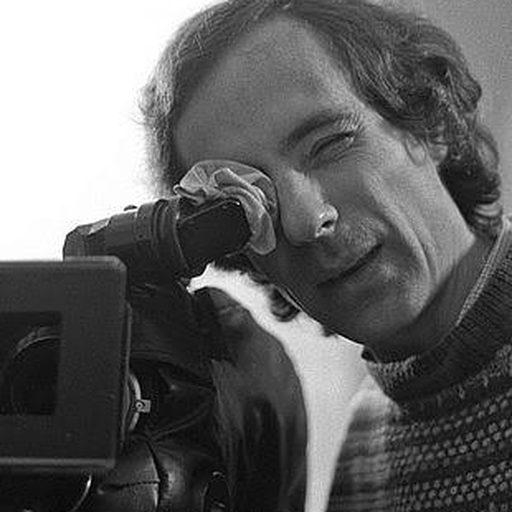
Zucca was a stills photographer at twenty, and he spent ten years photographing other people's shoots, for Franju, Rivette, Boisset, Chabrol: a whole swathe of French cinema observed from the edge of the frame. He then crossed to the other side, as director and screenwriter. A single word of profession is engraved, and it is film-maker: of his first ten years, not a trace.
The story
Pierre Zucca spent ten years photographing other men's films. A stills photographer from 1963, at twenty, he worked on the shoots of Georges Franju, Jacques Rivette, Ruy Guerra, Yves Boisset and Claude Chabrol: five directors, five schools, a decade of French cinema seen from the edge of the frame.
He then moved to the other side of the camera, as director and screenwriter. Ten years of watching other men shoot had served as his school.
He died in 1995, at fifty-two. The stone in Division 59 engraves a single word of trade: “Pierre ZUCCA 1943-1995 cinéaste.” Not “photographe” — the craft of his first ten years is not there.
The grave
An inscription of four elements, the last of which is a choice: “Pierre ZUCCA 1943-1995 cinéaste.” The word retained — film-maker — is that of his second career, not his first: he had been a stills photographer for ten years, for Franju, Rivette, Ruy Guerra, Boisset and Chabrol, before directing his own films.
On site, do not miss
The epitaph keeps a single word of profession: “Pierre ZUCCA 1943-1995 cinéaste.” Not “photographe”, which nonetheless came first.
Visitors' questions
Where is Pierre Zucca's grave?
In Division 59 of Père-Lachaise. The inscription is short and picks one word: “Pierre ZUCCA 1943-1995 cinéaste”, film-maker — not “photographer”, which was his first trade for ten years. He died in 1995, at fifty-two.
Raymond OliverWhich directors did he photograph for?
Georges Franju, Jacques Rivette, Ruy Guerra, Yves Boisset and Claude Chabrol — five directors, five schools. He was a stills photographer, the man who fixes the images of a film while it is being shot.
Claude ChabrolWhen did he begin?
In 1963, at twenty, as a stills photographer. He would move behind the camera later as a director and screenwriter — an eye trained by ten years of watching other men work.
Michel DrachWhat does his epitaph say?
One word of trade: “cinéaste”, film-maker. The one he had chosen, and not the one he had started with.
Pierre BrasseurAudio guide to Père Lachaise: the best unusual guided tour!
Discover the secrets of the most astonishing tombs
the audio guidefrom€6.99