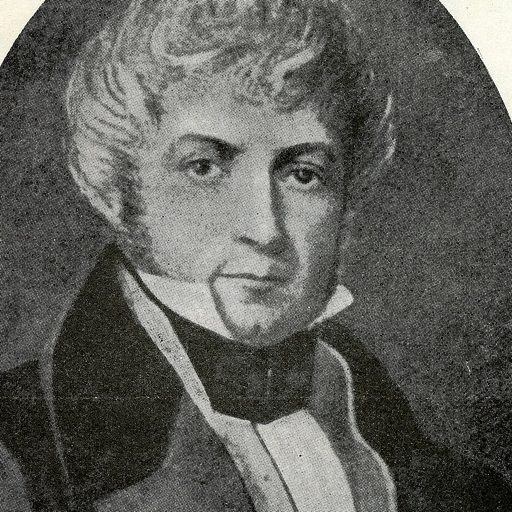
Rossini wrote for his voice the role of Count Almaviva, which he created in Rome in 1816 at the premiere of The Barber of Seville. His voice worn, he became one of the great singing masters of the century and trained his own children: La Malibran, Pauline Viardot, and Manuel the younger, inventor of the laryngoscope.
The story
Manuel García, a tenor, was born in Seville in 1775 and was singing in Cadiz from his teens; in 1798, in Madrid, he created a tonadilla — the Spanish sung interlude — that he had written himself. He reached Paris in 1808 with a reputation already made in Spain. Turin, Rome, Naples: he sang everywhere and composed in three languages.
In Rome, in 1816, he created the part of Count Almaviva in Le Barbier de Séville: Rossini had written it for him, for a voice described as powerful and uncommonly agile. On the first night the audience hissed the work that would become the most performed opera in the world.
His voice worn out, he became one of the greatest singing teachers of his century. He trained Adolphe Nourrit, and above all his own children: Maria, la Malibran, struck down at twenty-eight after a meteoric career, and Pauline Viardot, an intimate of George Sand, Schumann and Turgenev. His son Manuel, a teacher who lived past a hundred, would invent the laryngoscope.
He died in Paris in 1832. His funeral oration was delivered by the musicologist Fétis, who honoured him above all as a composer. He lies in Division 25, chemin Laplace, first row, under a stone that reads simply: sépulture de García.
On site, do not miss
A stone without emphasis, on the chemin Laplace, for the singer for whom Rossini tailored a role.
Visitors' questions
Where is Manuel García's grave?
In Division 25 of Père-Lachaise, chemin Laplace, first row. The stone carries only the words “sépulture de García”, the García grave. Molière and La Fontaine rest in the same Division, a few paths further on.
MolièreWho created the role of Almaviva in The Barber of Seville?
Manuel García, in Rome, at the première of Rossini's opera in 1816. The composer had written the part for his voice, famous for its power and its rare agility. García was then singing all over Europe.
Gioachino RossiniWho were Manuel García's children?
Maria, known as La Malibran, dead at twenty-eight after a meteoric career; Pauline Viardot, singer and composer, close to George Sand and to Turgenev; and Manuel the younger, a singing teacher who lived past a hundred and invented the laryngoscope.
Marietta Alboni, the singerWas Manuel García a composer too?
Yes, and the funeral oration given by the musicologist Fétis honoured him on that count first. He wrote operas and operettas in Spanish, French and Italian, among them Le Calife de Bagdad; most of it was never published.
Luigi CherubiniAudio guide to Père Lachaise: the best unusual guided tour!
Discover the secrets of the most astonishing tombs
the audio guidefrom€6.99