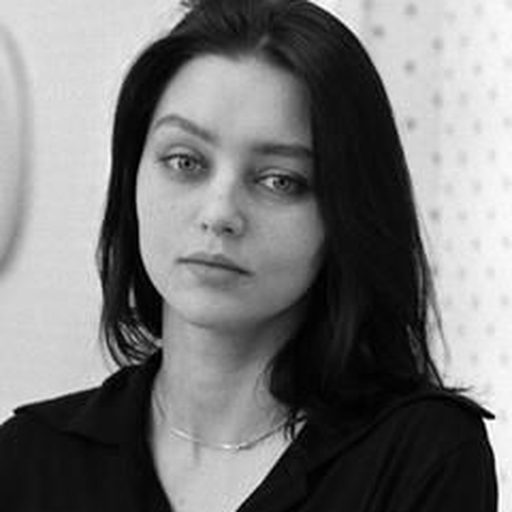
Katerina Golubeva, born in Leningrad in 1966, came out of VGIK, the school that produced most of the film-makers of the East. The Lithuanian director Šarūnas Bartas, whom she married, revealed her in a cinema made of long takes and silences. She is one of those performers from the former USSR whom our screens welcomed from the 1990s onwards. Her stone names her in the French manner, and does not even call her an actress.
The story
The stone in Division 73 carries “Katerina GOLUBEVA, 1966-2011”: the name of the French posters, and not that of her Russian civil status, Goloubeva. Neither the trade, nor Leningrad where she was born.
Born in Leningrad on 9 October 1966, Ekaterina Nikolayevna Goloubeva studied at the State Institute of Cinematography, the VGIK — the school from which most of the film-makers and actors of the East have come.
She was revealed by Šarūnas Bartas, the Lithuanian director she married: a cinema of long takes and silences, at the opposite pole from commercial films. A Franco-Russian actress, she worked between the two countries at the moment when European auteur cinema was opening to the East.
In France, Leos Carax gave her the part of Isabelle in Pola X, in 1999: the sister risen from nowhere who overturns everything. She died in August 2011, at forty-four.
The grave
An inscription of three elements: “Katerina GOLUBEVA, 1966-2011.” The name appears in its French transcription — that of the cinema posters — and not in that of her Russian civil status, Goloubeva. Neither the profession, nor Leningrad where she was born, nor the cinema of Šarūnas Bartas that had revealed her.
On site, do not miss
Three elements on the stone: “Katerina GOLUBEVA, 1966-2011”. The name is in its French transcription, not that of her Russian civil status.
Visitors' questions
Where is Katerina Golubeva's grave?
In Division 73 of Père-Lachaise. The inscription runs to three items: “Katerina GOLUBEVA, 1966-2011” — her working name in its French spelling, with no mention of her trade. She died in 2011, at forty-four.
General FabvierWho brought her out?
The Lithuanian director Šarūnas Bartas, whom she married: a cinema of long takes and silences, at the far end of the scale from commercial film-making.
Karasjov-OrgusaarWas she Russian or French?
Both: born in Leningrad in 1966, she became a Franco-Russian actress, working between the two countries just as European art cinema was opening to the East.
Natalia GorbanevskayaWhere had she trained?
At the Institute of Cinematography — the VGIK in Moscow, the school of Soviet film, which turned out most of the directors and actors of the East. Her name on paper was Goloubeva.
Léon MiloAudio guide to Père Lachaise: the best unusual guided tour!
Discover the secrets of the most astonishing tombs
the audio guidefrom€6.99