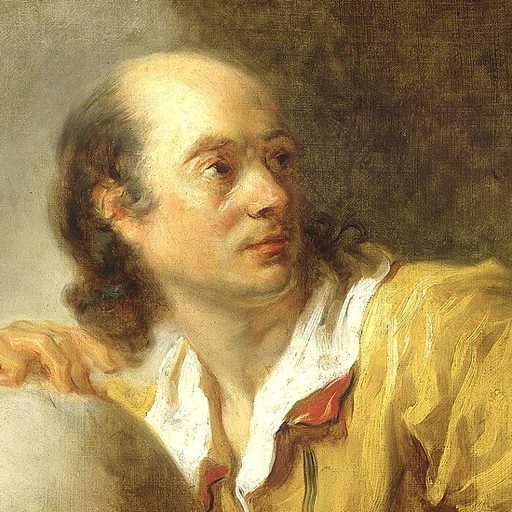
Sent at twenty-one to measure the parallax of the Moon, elected at the same age to the Academy of Sciences, he had a catalogue of fifty thousand stars drawn up. A militant atheist, he published a Dictionnaire des athées — a dictionary of atheists — which Napoleon, mindful of the Concordat, forbade him to publish.
The story
Born in 1732 at Bourg-en-Bresse, Joseph Jérôme Lefrançois de Lalande was sent at nineteen to Berlin to measure the parallax of the Moon, in coordination with an observation made at the Cape. The method demands two observers at either end of the same terrestrial baseline: the young man held one of the two ends, and the result went into the tables. Two years later the Academy of Sciences elected him: he was twenty-one.
His work was that of a compiler as much as an observer. He published a Traité d'astronomie that became authoritative, edited the Connaissance des temps, and gave in 1803 his Bibliographie astronomique: a record of everything written about the sky since antiquity. He also had a catalogue of fifty thousand stars drawn up with his collaborators — that kind of thankless census is what allows later generations to know where to look.
He was, lastly, one of the few scholars of his day to claim atheism in public. He enlarged with his own supplements the Dictionnaire des athées of Sylvain Maréchal, which listed the famous unbelievers — and entered in it names that would have done without. The gesture was provocative under the Consulate: the Concordat had just been signed, the rising Empire meant to spare the clergy it had reinstated, and Napoleon forbade him to publish.
He died in 1807, at seventy-four. Buried in the cemetery of Sainte-Catherine, which Paris closed in 1824, he was moved to Père-Lachaise, to Division 4 — that of Auber, Colette and Lefébure-Wély. His posthumous reputation long suffered from his vanity, which was real, and from his taste for controversy; his Bibliographie and his star catalogue, for their part, still serve historians of astronomy.
On site, do not miss
Division 4 is among the most visited in the cemetery: Colette, Auber, Haussmann and Sergeant Hoff lie there.
Visitors' questions
Where is Jérôme Lalande's grave?
In Division 4 of Père-Lachaise, the one where Auber, Colette and Lefébure-Wély lie — but he was not buried there. Lalande lay in the cimetière Sainte-Catherine, which Paris closed in 1824; his remains were moved here seventeen years after his death.
Arsène HoussayeWhat is the Bibliographie astronomique?
His great work of compilation, published in 1803: a record of everything written about the sky since antiquity. He also had a catalogue of fifty thousand stars drawn up, carried through with his collaborators.
Adam PrazmowskiWas he really an atheist?
Openly, and he made a profession of it: he added his own supplements to the Dictionnaire des athées of Sylvain Maréchal, which listed the famous unbelievers — some of whom would have done without the honour. Napoleon forbade him to publish, in the name of the religious peace of the Concordat.
Prosper EnfantinWhen did he enter the Academy?
At twenty-one, after measuring the parallax of the Moon from Berlin in coordination with an observation made at the Cape — one of the youngest members elected that century. He died in 1807, at seventy-four.
René-Just HaüyAudio guide to Père Lachaise: the best unusual guided tour!
Discover the secrets of the most astonishing tombs
the audio guidefrom€6.99