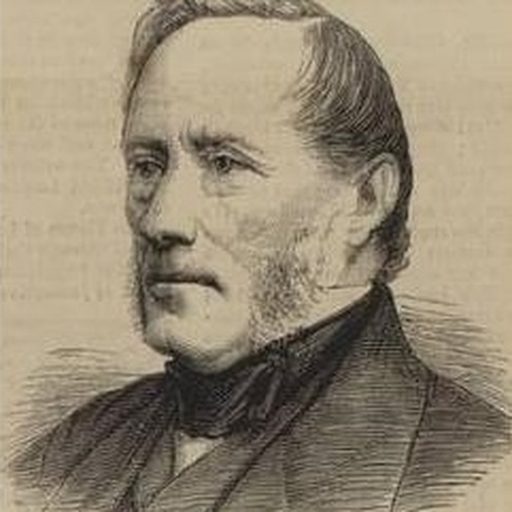
Nicknamed “the sculptor of princes”, he signed the bronze doors of the Madeleine and the memorial to Prince Albert at Windsor. His son died at twenty-one stopping a runaway horse to save a stranger; the following year, in 1862, he sculpted a bronze Raising of Lazarus for the family.
The story
Henry de Triqueti, a sculptor, was born in 1803 into a Waldensian family from Piedmont — Protestants driven out by persecution — settled in the Loiret. His neighbour the painter Girodet started him in painting before he turned to sculpture. Noticed at the Salon of 1831 among the young Romantics, he received official commissions at once and became one of the sculptors of the July Monarchy.
His great undertaking was the bronze doors of the church of the Madeleine, illustrating the Decalogue, the ten commandments: commissioned in 1834 and finished seven years later. Close to the Orléans family and then to the British court, he earned the name of “sculptor to princes” and made, in England, the memorial to Prince Albert in the chapel at Windsor.
In 1861 his son Édouard-Henry died at twenty-one, trying to stop a bolting horse in order to save someone else. The epitaph says it without ornament: “selon le commandement d'aimer son prochain comme soi-même, il a donné sa vie pour sauver celle d'autrui” — in obedience to the commandment to love thy neighbour as thyself, he gave his life to save another. The following year Triqueti carved for the family grave a bronze high relief, the Raising of Lazarus, which he signed and dated August 1862.
He died in 1874 and was buried there in his turn, in Division 42, at the north corner of the chemin des Anglais. His mistress, the British sculptor Susan Durant, who had died the year before, lies in Division 56 under a bronze medallion he had carved for her.
On site, do not miss
The high relief of the Raising of Lazarus, signed by the deceased: few artists sculpted their own tomb in their lifetime.
Visitors' questions
Where is Henry de Triqueti's grave?
In Division 42 of Père-Lachaise, in the first row of the chemin des Anglais, at the northern corner of the Division. You find it by the great bronze of the Raising of Lazarus that adorns it, the sculptor's own work.
Gérard Fromanger, Division 42Why was Triqueti called the sculptor of princes?
Because he worked for the Orléans family under the July Monarchy, and then for the British court: Queen Victoria commissioned him to make the Prince Albert memorial, in the chapel at Windsor. He had been trained by the painter Girodet.
Girodet, his first masterWhat does the bronze on the Triqueti grave show?
The Raising of Lazarus: Lazarus kneeling at the feet of Christ, who blesses him. Triqueti carved it in August 1862, the year after the death of his son Édouard-Henry, killed at twenty-one while going to another's aid.
Albert BartholoméWhere can you see works by Triqueti in Paris?
The bronze doors of the Madeleine, his largest commission, finished in 1841, and the Christ on the cross above the high altar at Les Invalides. The Musée Girodet at Montargis holds much of his studio estate.
David d'AngersAudio guide to Père Lachaise: the best unusual guided tour!
Discover the secrets of the most astonishing tombs
the audio guidefrom€6.99