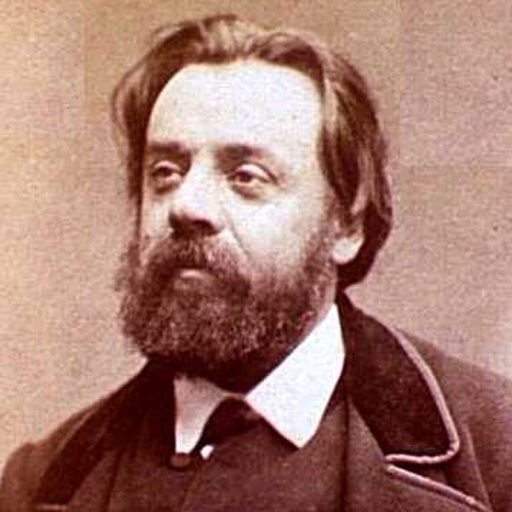
A schoolteacher dismissed in 1849 for his socialist ideas, he never found another post and lived by his pen. Elected to the Commune, he presided over several of its sessions, then wrote in exile one of the first accounts from the inside. It was to him that Eugène Pottier dedicated L'Internationale.
The story
Born at Angers in 1826, Gustave Lefrançais was a schoolmaster when the Second Republic collapsed. His socialist views had him struck off the teaching rolls in 1849; he never found another post and lived off bookkeeping and copying work to survive.
In February 1871 he was among the speakers of the revolutionary clubs of Paris, and he stood on the place de l'Hôtel-de-Ville on 18 March, when the National Guard refused to give up its cannon. Elected to the Commune for the 4th arrondissement, he chaired several of its sittings.
After the Bloody Week, sentenced to death in his absence, he took refuge in Switzerland. There he wrote in 1871 his Étude sur le mouvement communaliste à Paris, one of the first accounts from the inside, and joined the ranks of Jura anarchism alongside Élisée Reclus.
It was to him that Eugène Pottier dedicated L'Internationale, written in June 1871. Amnestied, he came back to Paris and died there in 1901. He lies in Division 76.
On site, do not miss
The plainness of the Communard graves in Division 76, without statuary or chapel: a deliberate contrast with the bourgeois monuments of the lower Divisions.
Visitors' questions
Where is Gustave Lefrançais buried?
In Division 76 of Père-Lachaise, up against the Communards' Wall. The Division gathers the graves of Communards: Jean-Baptiste Clément and Benoît Malon lie there too.
Benoît MalonWho is The Internationale dedicated to?
To Gustave Lefrançais. Eugène Pottier wrote the poem in June 1871, just after the Commune had been crushed, and dedicated it to this schoolmaster who had become one of its figures. Pierre Degeyter's music would not come until 1888.
Jean-Baptiste ClémentWhy was Gustave Lefrançais dismissed?
For his opinions. A socialist schoolmaster, he was driven out of teaching in 1849, as the Second Republic hardened, and never got another post: he lived afterwards on bookkeeping work.
Political figures at Père-LachaiseWhat did Gustave Lefrançais write about the Commune?
An Étude sur le mouvement communaliste à Paris, published as early as 1871 from his Swiss exile. It is one of the first accounts written by a member of the Commune, while it was still raw, before the legend set.
Writers & poets at Père-LachaiseAudio guide to Père Lachaise: the best unusual guided tour!
Discover the secrets of the most astonishing tombs
the audio guidefrom€6.99