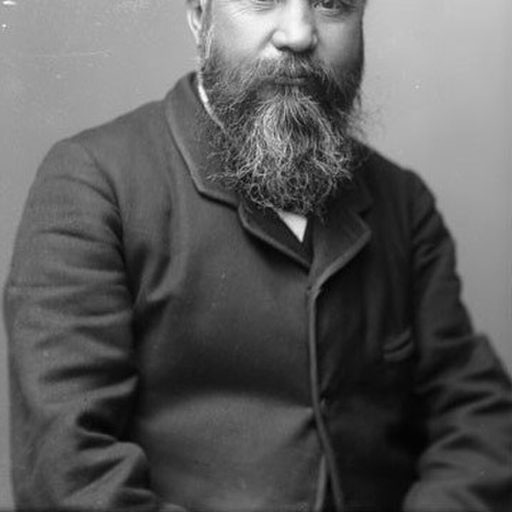
A shepherd, then a dye-worker, he learned to read late and read everything. Deputy for the Seine, then member of the Commune, he escaped the Bloody Week and wrote in exile a Histoire du socialisme in five volumes. Back in France, he founded La Revue socialiste in 1885.
The story
The son of peasants from the Forez, a shepherd and then a dyeworks hand at Puteaux, Benoît Malon learned to read late and read everything. He joined the International Working Men's Association in 1865 and stood among the accused in the first trials brought against the International in France.
Elected deputy for the Seine in February 1871, then a member of the Paris Commune for the 17th arrondissement, he belonged to the minority that refused the Committee of Public Safety. He escaped the Bloody Week and made for Switzerland, then Italy.
Exile was for him a long labour of writing. He published La Troisième Défaite du prolétariat français as early as 1871, then a five-volume Histoire du socialisme that remains one of the first surveys of its kind in French.
Back in France in 1880, he founded La Revue socialiste in 1885, which would become the great theoretical laboratory of French socialism, and argued for an “integral socialism” open to morality and to art. He died in 1893 and lies in Division 76.
On site, do not miss
Division 76 as a whole: its graves form a political geography, that of the labour movement come to gather around the wall.
Visitors' questions
Where is Benoît Malon's grave?
In Division 76 of Père-Lachaise, the Division of the Communards' Wall, where many Communards and leaders of the labour movement lie. Charles Amouroux, Communard and hatter, has his grave there too.
Charles AmourouxWhat part did Benoît Malon play in the Commune?
Elected for the 17th arrondissement, he sat with the minority that refused to create the Committee of Public Safety in May 1871. He escaped Bloody Week and spent nine years in exile in Switzerland and Italy.
Political figures at Père-LachaiseWhat was La Revue socialiste?
The journal Benoît Malon founded in 1885, the chief place of theoretical debate in French socialism until the First World War. Malon argued there for an “integral socialism” attentive to morality, to art and to the sciences.
Writers & poets at Père-LachaiseWas Benoît Malon a working man?
He was: a shepherd in the Forez, then a dyer's workman at Puteaux. Self-taught, he joined the International in 1865 and became one of the few French socialist leaders to come from the workshop rather than the bar or the press.
Paul-Louis BrousseAudio guide to Père Lachaise: the best unusual guided tour!
Discover the secrets of the most astonishing tombs
the audio guidefrom€6.99