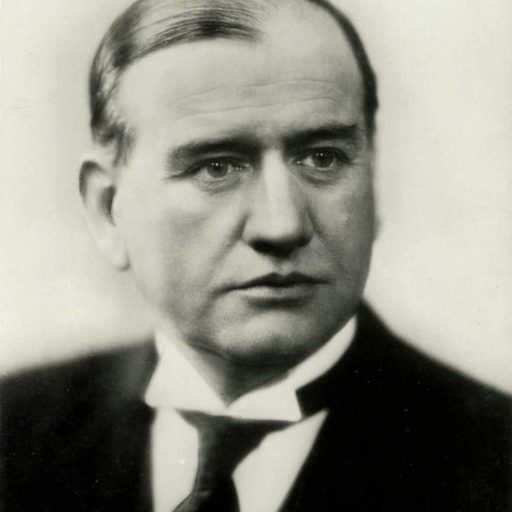
Elected mayor of Carpentras in 1912, the youngest in France, he signed the Munich Agreement on 29 and 30 September 1938 and, welcomed as a hero at Le Bourget, is said to have muttered: “Ah, les cons” — the fools. A year later he declared war on Germany; Vichy deported him until 1945.
The story
Édouard Daladier was born in Carpentras on 18 June 1884, a baker's son. A qualified teacher of history, he was elected mayor of his town in 1912 — the youngest in France. Radical deputy for the Vaucluse from 1919 to 1940, he became prime minister in 1933.
On 7 June 1933 his government initialled the Four-Power Pact between France, Britain, Germany and Italy, signed in Rome the month after. The policy was appeasement, and it led to Munich.
On 29 and 30 September 1938, with Chamberlain, Hitler and Mussolini, he signed the agreement that gave away the Sudetenland. Met as a hero when he landed at Le Bourget, he is said to have muttered at the cheering crowd: “Ah, the fools” — he knew what the agreement was worth.
On 3 September 1939 it was he who declared war on Germany. Pushed out of office in 1940 and arrested by Vichy, he was deported to Germany from 1943 to 1945, to Itter Castle with Reynaud, Weygand and Gamelin.
He came back to politics after the war and became mayor of Avignon in 1953. He died in Paris on 10 October 1970 — the date cut on his tomb is four days out — and lies in Division 72.
The grave
The vault bears the name of the Laffont family, his wife's family, and the President of the Council's inscription is added to it without title or office: “Edouard Daladier, 18 June 1884 – 14 October 1970”. Neither Munich, nor the declaration of war, nor the deportation. The date of death is wrong by four days: Daladier died on 10 October 1970, as his record as a deputy at the National Assembly establishes.
On site, do not miss
The engraved date of death, “14 October 1970”: Daladier died on the 10th. The engraver added four days to his life.
Visitors' questions
Where is Édouard Daladier's grave?
In Division 72, Avenue Circulaire, sixth row, in the upper, eastern part of the cemetery. The tomb bears the name of the Laffont family, his in-laws, and the inscription for the former prime minister stands alone.
Félix FaureWhat did he sign at Munich?
The agreement of 29 and 30 September 1938, which surrendered the Czechoslovak Sudetenland to Germany, alongside Chamberlain, Hitler and Mussolini. Welcomed as a hero at Le Bourget, he is said to have muttered at the sight of the crowd: “Ah, les cons” — the fools.
Baron HaussmannDid he declare war on Germany?
Yes, on 3 September 1939, a year after Munich: it was he who, as prime minister, took France into the war. He was removed from power in March 1940, before the German offensive.
General d'Astier de la VigerieIs there a mistake on his grave?
Yes, by four days: the stone has him dying on 14 October 1970, whereas Édouard Daladier died on the 10th. His record as a deputy at the National Assembly gives the exact date; the engraver missed it.
Marcel CachinAudio guide to Père Lachaise: the best unusual guided tour!
Discover the secrets of the most astonishing tombs
the audio guidefrom€6.99