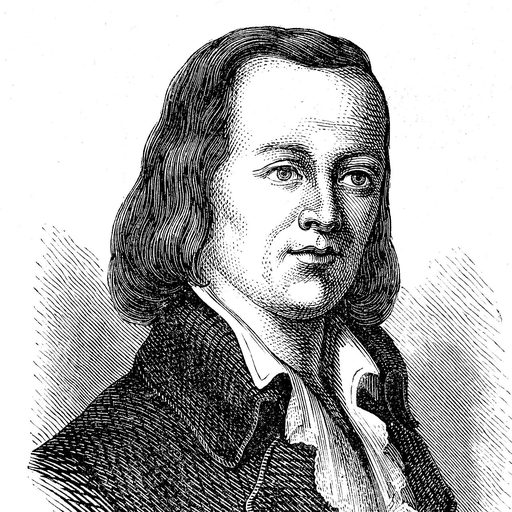
Chappe, an abbé without a parish turned physicist, searched with his brothers for a way to send signals over distance. On 2 March 1791, a first message crossed the fifteen kilometres separating Brûlon from Parcé. Three years later, his line from Paris to Lille carried in a few minutes a message that had taken a day on horseback: it was the first rapid communication network in the world.
The story
Claude Chappe was born at Brûlon, in the Sarthe, on 25 December 1763. As an abbé commendataire he drew church income without priestly duty, set up a physics cabinet in Paris and invented an electrometer. The Revolution took his income away: he went home to Brûlon and looked, with his brothers, for a way of sending signals at a distance.
On 2 and 3 March 1791 a first message travelled from Brûlon to Parcé, fifteen kilometres, on a system of dials. His brother Ignace, a deputy in the Legislative Assembly, brought him to Paris; there he was appointed ‘telegraph engineer’ and given a line between Paris and Lille.
The line worked in 1794 and carried in a few minutes what a horseman took a day to deliver. Paris to Strasbourg followed in May 1798, Paris to Brest in 1799, then the first work towards Milan by way of Lyon: the first fast communication network in the world.
At the end of 1800 Bonaparte cut the funding sharply and let the lines fall idle. Chappe offered to pay for the network by carrying the results of the national lottery. Broken in body and in spirit, he threw himself down a well in 1805, at forty-one.
Buried in the cemetery of Vaugirard, he was moved to Père-Lachaise in 1824, when that ground was closed. His monument in Division 29 shows a semaphore telegraph raised on rocks, with not one word engraved. Western Union sent its last telegram on 27 January 2006.
The grave
The monument is a heap of rocks topped by a semaphore telegraph, the very machine he had invented, raised in stone above his grave. It bears no inscription: no name, no dates, no office — the object alone is meant to say who this is. The burial place is not the original: Chappe had been buried in the Vaugirard cemetery, and his remains were transferred here in 1824, when that ground was closed. A statue had been raised to him in the rue du Bac; it was melted down in 1941.
On site, do not miss
The semaphore telegraph carved at the top of the rocks — and the total absence of inscription: the machine stands in for the name.
Visitors' questions
Where is Claude Chappe's grave?
In Division 29, Chemin des Chèvres, second row. The monument is unmistakable: a heap of rocks topped by a semaphore telegraph, the machine he invented, without a single engraved letter.
Alphonse BertillonWhat is the Chappe telegraph?
A system of articulated arms mounted on towers, whose positions encoded the letters, relayed from hilltop to hilltop. The Paris–Lille line, opened in 1794, carried in a few minutes what a rider took a day to deliver.
François AragoHow did Claude Chappe die?
By suicide, throwing himself down a well, at the age of forty-two. Bonaparte had cut the network's funding at the end of 1800; broken in body and spirit, he had proposed in vain to finance the lines from the proceeds of the national lottery.
Claude BernardIs his grave the original one?
No: he was first buried in the Vaugirard cemetery and moved to Père-Lachaise in 1824, when that burial ground was closed. The present monument, without an inscription, dates from that reburial.
Jean-Louis BaudelocqueAudio guide to Père Lachaise: the best unusual guided tour!
Discover the secrets of the most astonishing tombs
the audio guidefrom€6.99