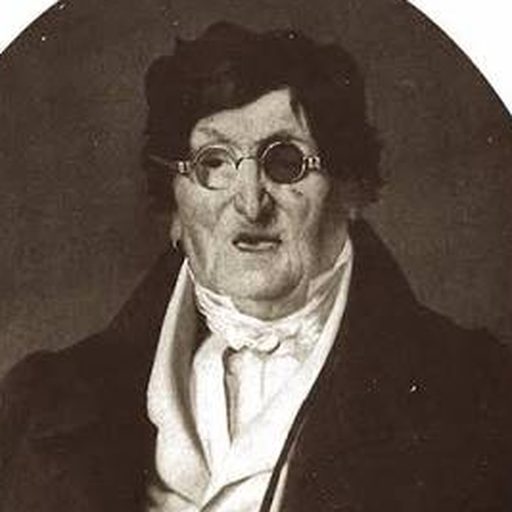
Born in Udine, he left Italy around 1760 after a duel, joined in 1789 the Paris troupe of Philip Astley, inventor of the circular ring, then took over his amphitheatre at the Revolution. From it was born the Cirque-Olympique, where the horsewoman, the clown and the equestrian pantomime came together in a single show.
The story
Antonio Franconi, a horseman and the founder of the first French circus, was born in Udine in 1737 and left Italy around 1760, after a duel that went badly wrong. In France he performed at fairs as a physicien, a conjuror, trained birds, then horses, and even tried to naturalise bullfighting in Lyon and Bordeaux.
His meeting with the English horseman Philip Astley, who invented the circular ring, decided everything: Franconi joined his Paris troupe in 1789, then took the establishment over in 1793, when the Revolution sent the English home. Out of that amphitheatre grew the Cirque-Olympique, where the horsewoman, the clown, the animal trainer and the equestrian pantomime all found a place in a single show.
His sons Laurent and Henri, known as Minette, ran the house from 1807 to 1837 and made it one of the great popular stages of Paris. Throughout the nineteenth century the name Franconi meant the circus itself.
He died in 1836, aged ninety-nine, and lies in a chapel in Division 35, where several generations of the family joined him. Philip Astley, his master, had been buried at Père-Lachaise in 1814, in Division 23; his grave has gone.
On site, do not miss
The family chapel, rare for circus people: the Franconis had themselves buried like a dynasty.
Visitors' questions
Where is Antonio Franconi's grave?
In a family chapel in Division 35 of Père-Lachaise, which holds several generations of the dynasty. The playwright Eugène Scribe, whose plays were filling the theatres at the same moment, rests in the same Division.
Eugène Scribe, Division 35Who invented the modern circus?
The Englishman Philip Astley, with the thirteen-metre ring, in London and then in Paris. Antonio Franconi, who joined his company in 1789 and took it over, added the equestrian pantomime and the variety turns: the French circus descends from him.
Joseph Oller, the Nouveau CirqueHow old was Antonio Franconi when he died?
Ninety-nine. Born in Udine in 1737 and dead in Paris in 1836, Antonio Franconi lived through the monarchy, the Revolution, the Empire and two restorations — and stayed in the saddle to a very great age.
Madame SaquiWhat became of the Franconis after him?
His sons Laurent and Henri ran the Cirque-Olympique until 1837, and the dynasty produced riders over four generations. A second family grave, that of Henri's branch, also lies at Père-Lachaise.
Foottit, the whiteface clownAudio guide to Père Lachaise: the best unusual guided tour!
Discover the secrets of the most astonishing tombs
the audio guidefrom€6.99