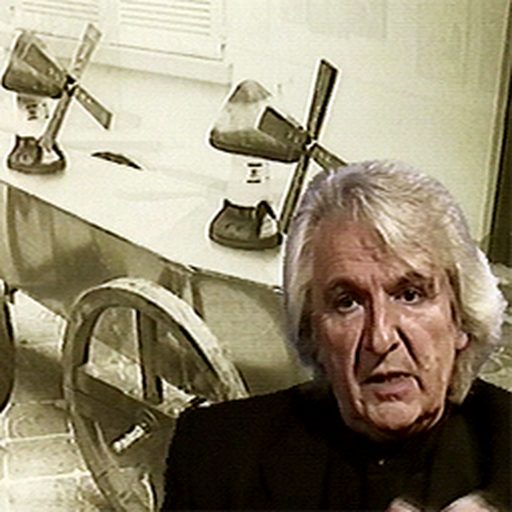
André Chabot, a photographer born in Saint-Étienne in 1941, presents himself as a necropolitan wanderer: for decades he has photographed the tombs of the whole world, one hundred and sixty-five thousand pictures and more, deposited at the Musée Nicéphore-Niépce. He had his plot prepared in his own lifetime. The inscription is already carved while the place is still empty: “La mémoire nécropolitaine” — necropolitan memory.
The story
The plot is reserved, the inscription is cut, and the occupant has not come. André Chabot, born in Saint-Étienne on 7 June 1941, prepared his own grave while alive, in the cemetery he knows best: a nineteenth-century chapel he bought and restored in Division 20, avenue de la Chapelle. On the pediment, a pelican feeds its young with its own flesh — the old Christian symbol of sacrifice, which he left where it was.
He describes himself as a “promeneur nécropolitain”, a walker among the necropolises. A photographer in black and white, he has photographed graves, mausoleums, hypogea, cenotaphs and catacombs across the world for half a century: his archive holds more than a hundred and sixty-five thousand images of funerary monuments, deposited at the Musée Nicéphore-Niépce in Chalon-sur-Saône.
Three words are already cut, and they sum up the whole work: “La mémoire nécropolitaine.” The memory of the necropolis. Only the dates are missing — and the man who photographed a hundred and sixty-five thousand graves remains, for the time being, the only one to know his own from the outside.
The grave
A future grave: the artist, born in 1941, is still alive, and the cemetery association lists the plot as such. The inscription, on the other hand, is already there — three words that sum up an entire body of work: “La mémoire nécropolitaine” — necropolitan memory. The photographer who spent his life documenting other people's tombs — more than one hundred and sixty-five thousand pictures, today at the Musée Nicéphore-Niépce — has prepared his own, in the cemetery he knows best.
On site, do not miss
The inscription is already carved while the plot is still empty: “La mémoire nécropolitaine”, the necropolitan memory. On the altar of the chapel he restored in 2022, a large camera in black marble, carved by him, rests on a book.
Visitors' questions
Where is André Chabot's grave?
In Division 20 of Père-Lachaise — except that it is a plot bought in advance: the artist, born in 1941, is still alive. The inscription is already in place: “La mémoire nécropolitaine”, necropolitan memory. The Friends of the cemetery list it as a future grave.
Louise ContatWhat is a “necropolitan walker”?
It is how he describes himself: a man who strolls through necropolises. His entire body of work is given over to death and to cemeteries — graves, mausoleums, hypogea, cenotaphs, catacombs, photographed in black and white the world over.
NadarHow many photographs has he taken?
More than a hundred and sixty-five thousand funerary monuments: a collection with no equal anywhere, deposited at the Musée Nicéphore-Niépce in Chalon-sur-Saône. It is probably the largest body of funerary images in the world.
Jack VanarskyIs he really still alive?
Yes: born on 7 June 1941, he reserved his plot in his lifetime, and the cemetery association lists it as a future grave. On the pediment of the chapel, a stone pelican opens its breast to feed its young, an old image of sacrifice. On the side, a QR code leads to his website.
Reine FévezAudio guide to Père Lachaise: the best unusual guided tour!
Discover the secrets of the most astonishing tombs
the audio guidefrom€6.99