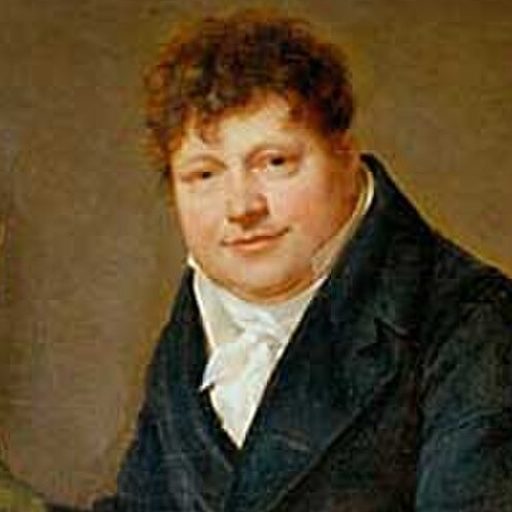
An art bronze-maker under the Empire, André-Antoine Ravrio bequeathed three thousand francs to whoever found a way to protect metal gilders from mercury. To care about health at work in 1814 was decades ahead of its time. Admitted as a master founder in 1777, he also wrote verse and vaudevilles. A bronze bust portrays him, but the slab names only his descendants.
The story
Antoine André Ravrio left 3,000 francs to whoever could find a way of protecting gilders from mercury. The trade was his own: admitted a master founder in 1777, in business on his own account by 1790, he had become one of the great makers of art bronze under the Empire. To gild a bronze, it was then coated with an amalgam of gold and mercury and heated until the mercury evaporated — and the workmen breathed the vapour.
Born in Paris on 23 October 1759, he was also a songwriter and a writer of vaudevilles: he kept a table in a singing society where he met the tragedian Talma and the painter Carle Vernet. His cousin Henri François Riesener painted his portrait, now in the Louvre.
He died on 4 October 1814. The slab in Division 10 carries the name of the Lenoir-Ravrio family — that of his adopted son — and four inscriptions spread from 1880 to 1901, not a line for him. Only a bust represents him, set in an enfeu, the niche cut into the wall of the vault, and signed Antoine Joseph Romagnési: the bronze-maker is named nowhere, but he is there, in bronze.
The grave
A grave in the name of the Lenoir-Ravrio family, whose bronze bust set in a niche — the work of the sculptor Antoine Joseph Romagnési (1781-1850) — is the only tribute to the bronze-maker. The slab, for its part, bears only his descendants: “Madame Veuve LENOIR-RAVRIO, née Pauline CHAULIN, décédée le 5 septembre 1880, à l'âge de 87 ans. Monsieur Paul Aimé FOUCHER, né le 4 mai 1810, décédé le 18 mai 1884. Madame Vve Paul FOUCHER, née Euphrasie LENOIR-RAVRIO, 2 juin 1816 – 16 novembre 1901.” — Madame Lenoir-Ravrio, widow, née Pauline Chaulin, died 5 September 1880, aged 87. Monsieur Paul Aimé Foucher, born 4 May 1810, died 18 May 1884. Madame Paul Foucher, widow, née Euphrasie Lenoir-Ravrio, 2 June 1816 – 16 November 1901. Not a line for him.
On site, do not miss
A bronze bust by Romagnési set in a niche. The slab, for its part, names only the Lenoir-Ravrio family — four inscriptions between 1880 and 1901, without a line for the bronze-maker.
Visitors' questions
Where is Ravrio's grave?
In Division 10, chemin Denon, first row. It is the grave of the Lenoir-Ravrio family, whose slab carries four nineteenth-century inscriptions; a bronze bust stands in a recess. He had died in 1814, having been received a master founder in 1777.
Vivant DenonWhat was his prize of 3,000 francs?
A bequest for health at work, far ahead of its time: it rewarded whoever should find a preventive against the dangers of mercury for metal gilders — the very trade he lived by.
Pierre-Augustin BéclardWhat was his trade?
Art bronze founder: received a master founder in 1777, in business on his own account from 1790, he became a celebrated maker of art bronzes. He was besides a poet and a writer of vaudevilles.
Charles PercierIs there a portrait of him?
Yes, at the Louvre: his cousin Henri François Riesener painted him. On his grave it is a bronze bust by Antoine Joseph Romagnési, set in a recess, that stands for him.
René LaliqueAudio guide to Père Lachaise: the best unusual guided tour!
Discover the secrets of the most astonishing tombs
the audio guidefrom€6.99