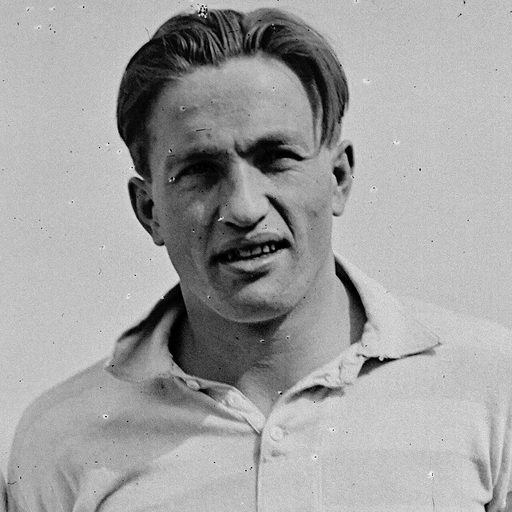
Polytechnique graduate, officer, aviator: three callings for twenty-three years of life, and that is all his stone retains. It omits the fourth, winger for the French rugby team — the one that, after his death in a plane crash in 1928, gave his name to the stadium at Colombes.
The story
Three trades cut one after the other: “polytechnicien, officier, aviateur.” — polytechnician, officer, airman. Yves Le Pelley du Manoir was born on 11 August 1904 at Vaucresson and died on 2 January 1928: twenty-three years for three professions.
He practised a fourth, absent from the stone: wing for the France rugby team, an international in a sport then rising fast. It was a plane crash that stopped him, at Reuilly in the Indre, south of the Loire, in January 1928.
His death marked French rugby so deeply that the Racing Club de France stadium at Colombes has carried his name ever since. The one title the stone leaves out is the one that earned him a stadium.
The grave
An inscription in two movements: the title of nobility first — “Viscount Le PELLEY du MANOIR” — then the callings: “Yves LE PELLEY du MANOIR, Polytechnique graduate, officer, aviator, 1904-1928.” Three professions for twenty-three years of life. And one remarkable absence: rugby, which made him an international and gave his name to the Racing stadium, is not there.
On site, do not miss
The title of nobility first — “Viscount Le PELLEY du MANOIR” — then the three callings: “Polytechnique graduate, officer, aviator, 1904-1928.” Rugby is not there.
Visitors' questions
Where is Yves du Manoir's grave?
In Division 19, chemin des Chèvres, first row — the Division of the Demidoff mausoleum and Samuel Hahnemann. The inscription lists his callings: “polytechnicien, officier, aviateur” — Polytechnique graduate, officer, aviator. He died in 1928, aged twenty-three.
Élisabeth DemidoffWhy is a stadium named after him?
Because he was a winger for the French national team and died at twenty-three: the Racing Club de France stadium at Colombes bears his name in memory of that life cut short. He died in 1928, aged twenty-three.
Laurent FignonWas he only a sportsman?
No, and his stone says so: polytechnicien, officier, aviateur — three callings by the age of twenty-three, on top of international rugby. Rugby is the one thing the inscription leaves out. He died in 1928, aged twenty-three.
Yves CoppensHow did he die?
In a plane crash, in 1928, aged twenty-three. He was a military aviator, and his death left such a mark on French rugby that a stadium has borne his name ever since. He died in 1928, aged twenty-three.
Croce-Spinelli et SivelAudio guide to Père Lachaise: the best unusual guided tour!
Discover the secrets of the most astonishing tombs
the audio guidefrom€6.99