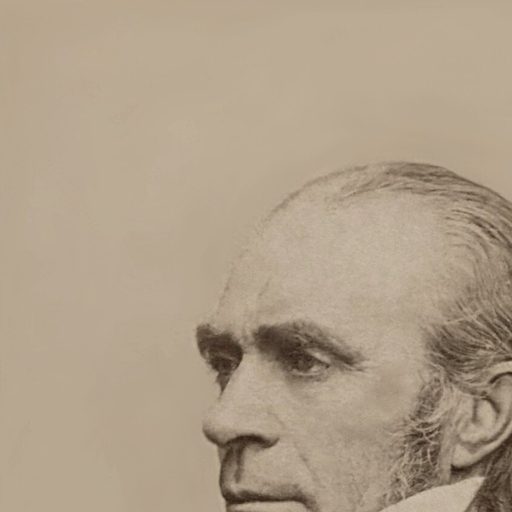
Louis-Antoine GARNIER-PAGÈS
See onthe map
Member of the Provisional Government of 1848.
Garnier-Pagès succeeded his elder brother in 1842 at the head of the republican party, under Louis-Philippe. In 1848 he held, one after the other, two of the most perilous offices of the century: Finance for the Second Republic, then the mayoralty of Paris at the time of the June insurrection. The nation paid for his monument by subscription; the bust by David d'Angers that made it recognisable is gone.
The story
The bust by David d'Angers that once adorned the monument of Louis-Antoine Garnier-Pagès is gone. Nothing is left but the stone and two lines: “A GARNIER-PAGES, souscription nationale” — for the tomb was paid for by the country.
Born in Marseille on 16 February 1803, he was the younger brother of Étienne Garnier-Pagès (1801-1841), who led the republican party with Armand Carrel under Louis-Philippe and whose place he took in 1842. He had organised the barricades of the Three Glorious Days of 1830 before being elected to the Chamber of Deputies.
In 1848 he held two of the most exposed posts of the century: Minister of Finance of the Second Republic, and Mayor of Paris during the June insurrection. A fierce opponent of the monarchical regimes from 1830 to 1870, he crossed forty years of republican struggle.
He died in Paris on 31 October 1878 and lies in Division 19. The national subscription paid for the monument; it did not prevent the disappearance of the one thing that made it recognisable.
The grave
A tomb raised by national subscription, as its inscription recalls in two words: “A GARNIER-PAGES, souscription nationale. L-A GARNIER-PAGES.” — to Garnier-Pagès, national subscription. It was originally adorned with a bust by David d'Angers — which is now gone. The cemetery's bronzes go one by one: the bust of Le Sueur (Div. 11), the palm of Stephen Heller (Div. 90), that of Jules Danbé (Div. 41) and the portrait of Ted Lapidus (Div. 53), the last of these replaced in 2025.
On site, do not miss
The tomb was paid for by national subscription, as the inscription states. The bust by David d'Angers that once crowned it is gone.
Visitors' questions
Where is Garnier-Pagès' grave?
In Division 19, chemin du Dragon, first row. The tomb was raised by national subscription; the inscription comes down to two lines: “A GARNIER-PAGES, souscription nationale” — to Garnier-Pagès, by national subscription — and his initials.
Samuel HahnemannDoes the bust from his grave still exist?
No: the bust by David d'Angers that originally crowned the monument is gone. The cemetery loses its bronzes one by one: the bust of Le Sueur and Stephen Heller's palm went the same way.
David d’AngersWhat part did he play in 1848?
Two parts, and both of them exposed: Minister of Finance of the Second Republic, and mayor of Paris during the June insurrection. He had taken part in the Three Glorious Days of 1830, eighteen years earlier, before being elected a deputy.
Alexandre Ledru-RollinWho was his brother?
Étienne Garnier-Pagès (1801-1841), leader of the republican party under Louis-Philippe. Louis-Antoine took over from him in 1842, after his death, and remained until 1870 a fierce opponent of every monarchical regime.
François AragoAudio guide to Père Lachaise: the best unusual guided tour!
Discover the secrets of the most astonishing tombs
the audio guidefrom€6.99