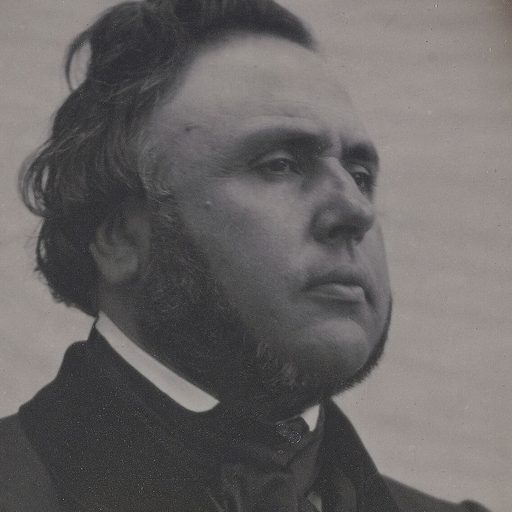
Ledru-Rollin, a lawyer born in 1807, defended the republicans the July Monarchy prosecuted. In February 1848 the revolution made him Minister of the Interior. A month later he signed the decree giving the vote to all men: from two hundred and fifty thousand electors to more than nine million. The coup d'état of 1851 sent him to London for twenty years.
The story
Alexandre Auguste Ledru-Rollin was born in Paris on 2 February 1807. A barrister, he made his name defending republicans prosecuted under the July Monarchy, and became one of the faces of the parliamentary left.
The revolution of February 1848 carried him into the provisional government as minister of the interior. In March 1848 he signed the decree bringing in universal male suffrage: the electorate went from two hundred and fifty thousand men to more than nine million.
He stood in the presidential election of December 1848, was heavily beaten by Louis-Napoléon Bonaparte, and became one of the leaders of the republican opposition.
The failed rising of 13 June 1849 sent him into exile in London, where he stayed more than twenty years. He came home only in 1870, when the Empire fell.
He died at Fontenay-aux-Roses on 31 December 1874 and lies in Division 4. The bust set on his grave in 1877 is by Robert David d'Angers, son of the sculptor who left so many medallions in this cemetery.
The grave
A bronze bust signed Robert David d'Angers and dated 1877 — the son of the sculptor whose medallions this cemetery bears in such numbers. The inscription is one of those that tell rather than list: “Ledru-Rollin, he contributed powerfully to the advent of the republic of 1848, minister of the interior, he organised universal suffrage. 1807-1874.” One sentence, one act, and nothing about the twenty years of exile that followed.
On site, do not miss
The epitaph, which states an act rather than a title: “minister of the interior, he organised universal suffrage”.
Visitors' questions
Where is Ledru-Rollin's grave?
In Division 4, avenue Principale, first row, a few minutes from the boulevard de Ménilmontant entrance — the same path as Colette, Musset, Félix Faure and Rossini's cenotaph. A bronze bust stands on top.
Félix FaureDid he really create universal suffrage?
He signed the decree, in March 1848, as Minister of the Interior in the provisional government: the male electorate grew from two hundred and fifty thousand to more than nine million men. His epitaph recalls it.
François AragoWhat became of him after 1848?
Beaten by Louis-Napoléon Bonaparte in the presidential election of December 1848, he became leader of the republican opposition, then went into exile in London after the coup of 1851. He did not return until 1870, when the Empire fell.
Jules MicheletWho sculpted his bust?
Robert David d'Angers, in 1877: the son of David d'Angers, the sculptor who left Père-Lachaise the tomb of General Foy, the bust of Arago and dozens of bronze medallions on the neighbouring graves.
David d'AngersAudio guide to Père Lachaise: the best unusual guided tour!
Discover the secrets of the most astonishing tombs
the audio guidefrom€6.99