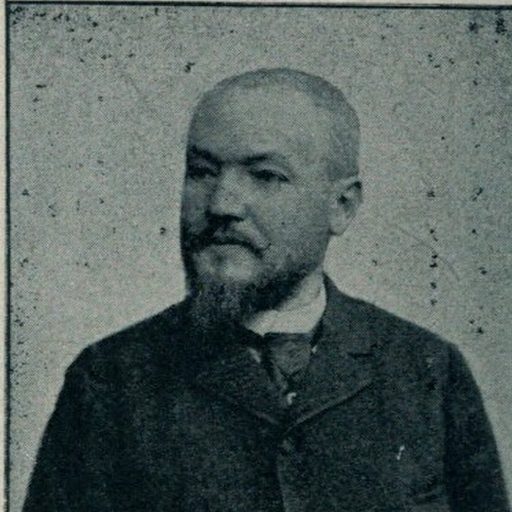
Cornély wrote for the great newspapers of the Third Republic — the Gaulois, where he was editor-in-chief, then the Figaro — at a time when an editorial could make or break a reputation. The Dreyfus Affair put him to the test: an anti-Dreyfusard like his readers, he changed his mind, left the Gaulois in December 1897 and went to defend Dreyfus at the Figaro, which few in his camp did. He died in 1907. A bronze plaque sealed to his tomb carries his profession of faith.
The story
The Dreyfus affair put Jules Cornély to the test. Editor-in-chief of the Gaulois, a paper of the right, he was an anti-Dreyfusard at first, like his readers. Then he changed his mind, left the paper in December 1897 and moved to the Figaro to defend Dreyfus there — a leader writer who reversed himself in public and lost his post for it.
Born in 1845 at Nogna, in the Jura, Jules Cornély made his career in the great press of the Third Republic — the Gaulois, where he was editor-in-chief, then the Figaro — and had founded his own paper, Le Clairon, in 1881, at a time when the editorial made and unmade reputations.
He died in 1907. A bronze plaque sealed to his tomb carries his profession of faith: “Nous laisserons les fenêtres de nos logis ouvertes pour entendre de plus près les cris des opprimés et les plaintes des victimes” — we shall leave the windows of our houses open, to hear more closely the cries of the oppressed and the complaints of the victims. He lies in Division 92, the division of the recumbent effigy of Victor Noir — another journalist who entered history, but through his death.
On site, do not miss
A bronze plaque sealed to the tomb: “Nous laisserons les fenêtres de nos logis ouvertes pour entendre de plus près les cris des opprimés et les plaintes des victimes” — we shall leave the windows of our houses open, to hear more closely the cries of the oppressed and the complaints of the victims. Division 92 is that of the recumbent Victor Noir, another journalist who entered history — but through his death.
Visitors' questions
Where is Jules Cornély's grave?
In Division 92 of Père-Lachaise, that of the recumbent Victor Noir — another journalist who entered history, but through his death.
Victor NoirWas he a Dreyfusard?
He became one. Jules Cornély was an anti-Dreyfusard first, then converted publicly in the course of the Affair. Such an open change of mind is rare in the press of the time: a man kept quiet rather than admit he had been wrong.
Alphonse BertillonWhich papers did he write for?
The Gaulois, where he was editor-in-chief, then the Figaro, which he joined in December 1897 to defend Dreyfus there. He held the political column, at a time when the leading article made and unmade reputations. He had begun as an anti-Dreyfusard.
Jules ClaretieWho paid for his tomb?
A public subscription launched by the newspaper Le Siècle, under the patronage of the President of the Senate, the President of the Chamber of Deputies, the Prince of Monaco and Millerand, then a government minister. The monument carries a bronze bust by Paul Moreau-Vauthier and bronze panels showing the newspapers he wrote for. The epitaph amounts to a thank-you: “À J. CORNELY, 1845-1907. Ses admirateurs, ses amis” — to J. Cornély, from his admirers and friends.
Charles LonguetAudio guide to Père Lachaise: the best unusual guided tour!
Discover the secrets of the most astonishing tombs
the audio guidefrom€6.99