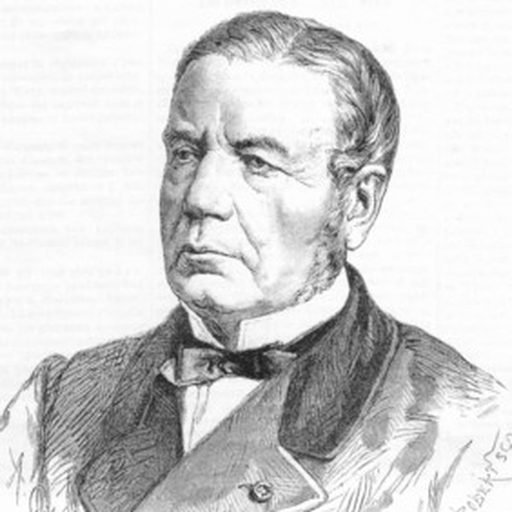
An apprentice boilermaker at twelve, a journeyman on the tour de France of the guilds, he found himself alone at the head of a sugar-machinery firm in 1846. Steam engines, locomotives, bridges, sugar refineries in Europe and the colonies: Jules Verne mentions his workshops in Twenty Thousand Leagues Under the Sea.
The story
Born at Chef-Boutonne, in the Deux-Sèvres, on 8 February 1804, into a poor farming family, Cail left school at nine and was apprenticed to a coppersmith at twelve. From 1818 to 1824 he walked his tour de France as a journeyman.
In 1824 he took a job with Derosne, a maker of sugar-refining machinery. When his employer died in 1846, he found himself alone at the head of the firm.
He made it one of the great names of French industry: steam engines, locomotives, bridges, and above all the equipment that fitted out the beet-sugar refineries of Europe and the colonies. In Twenty Thousand Leagues Under the Sea, Jules Verne has Cail build the Nautilus's air tanks.
His fortune can still be read in Paris: his private mansion is now the town hall of the 8th arrondissement.
He died on 22 May 1871, during the Semaine sanglante, the week the army retook Paris from the Commune. He rests in Division 69, avenue Cail, in the largest chapel in the cemetery after that of Thiers: two stone women guard its bronze door, one holding a palm, the other standing on a hammer and an anvil.
The grave
After that of Thiers, the most imposing chapel in the cemetery — and it shelters a boilermaker turned industrialist. Two life-size marble statues by the sculptor Alfred Thiébault occupy it; two marble angels bearing a chrismon top the entrance; a great polylobed stained-glass window depicts the Resurrection. The inscription fits in three words: “Famille J.F. CAIL.”
On site, do not miss
The two marble angels above the entrance and the great stained-glass window of the Resurrection. Then the inscription, which says nothing of all this: “Famille J.F. CAIL”.
Visitors' questions
Where is Jean-François Cail's grave?
In Division 69, avenue Cail, first row: the path carries the industrialist's name. The chapel is the most imposing in the cemetery after Thiers's, and one of the few raised for a man of industry.
René MouchotteWhat did the Cail company make?
Sugar-refining machinery first — the Derosne works, which he took over in 1846, were the specialists — then steam engines, locomotives and bridges. Jules Verne names his workshops in Twenty Thousand Leagues Under the Sea.
Claude Vignon, Division 46What can be seen on the Cail chapel?
Two life-size marble statues by Alfred Thiébault, two marble angels bearing a chrismon above the entrance, and a great polylobed stained-glass window of the Resurrection. The inscription, for its part, comes down to “Famille J.F. CAIL”.
Adolphe ThiersWhere did Jean-François Cail come from?
From a peasant family in the Deux-Sèvres. He left school at nine, was apprenticed to a boilermaker at twelve, made his journeyman's tour of France from 1818 to 1824, then joined Derosne — the firm he would be running twenty-two years later.
Armand PeugeotAudio guide to Père Lachaise: the best unusual guided tour!
Discover the secrets of the most astonishing tombs
the audio guidefrom€6.99