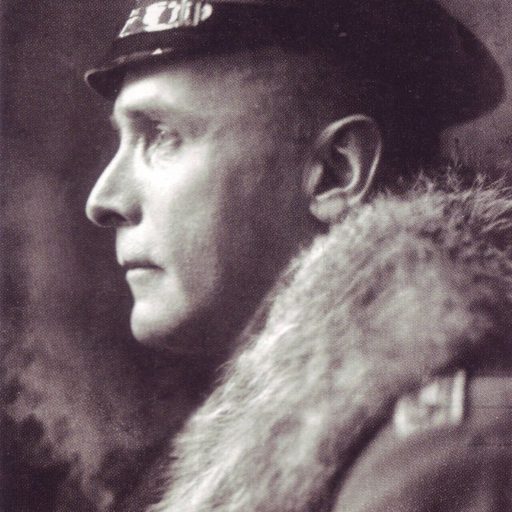
Kessler kept his diary for fifty-seven years: the Belle Époque, the war of 1914, Weimar, the rise of Nazism, seen by a man who moved as easily among artists as among chancelleries. A publisher, patron and diplomat himself, he counted Rodin, Maillol and Hofmannsthal among his intimates, and under his roof French sculpture met Viennese letters. His stone does not mention him.
The story
Harry Kessler's diary covers fifty-seven years, from 1880 to 1937: the Belle Époque, the Great War, the Weimar republic, the rise of Nazism. He knew every artist and every diplomat of his time, and he wrote it all down.
Born in Paris on 23 May 1868 to a German father and an Anglo-Irish mother, educated in Paris, Ascot and Hamburg, Harry Kessler was a publisher, a patron and a diplomat — three trades of a man whose fortune served artists. Rodin, Maillol and Hugo von Hofmannsthal were among his friends: French sculpture and Viennese literature met in his house.
He died in 1937. On the stone in Division 57 stand two other names: his sister Wilma, Marquise de Brion, who died in 1963, and his nephew Jacques, who died in 1986. Then a motto in three parts: “Divine beauté, Humaine bonté, Difficile vérité” — divine beauty, human goodness, difficult truth. The man of the fifty-seven years of diary is not named there.
The grave
A stone that does not name the dead man whose grave it is. It reads his sister and his nephew: “Wilma de MICHEL-DUROC Marquise de BRION née KESSLER 1877-1963. Jacques de MICHEL-DUROC Marquis de BRION 1904-1986.” Then a motto in three parts: “Divine beauté, Humaine bonté, Difficile vérité.” — divine beauty, human goodness, difficult truth. The man whose diaries span fifty-seven years of European history, friend of Rodin and Hofmannsthal, goes unmentioned.
On site, do not miss
Look for his name: it is not there. The stone bears his sister Wilma, Marquise de Brion, his nephew, and three phrases: “Divine beauté, Humaine bonté, Difficile vérité” — divine beauty, human goodness, difficult truth.
Visitors' questions
Where is Harry Kessler's grave?
In Division 57, avenue Neigre — but his name is not on it: the stone carries his sister Wilma, Marquise de Brion (1877-1963), his nephew Jacques, and a motto of three words. He died in 1937.
Baron NeigreWhat is in his diaries?
Fifty-seven years of European life: they run from 1880 to 1937, from the Belle Époque to the rise of Nazism, kept by a man who knew every artist and every diplomat of his day.
Marc FumaroliWhose company did he keep?
Rodin, Maillol and Hugo von Hofmannsthal, among others: French sculpture and Viennese letters met in his rooms. He was a publisher, a patron and a diplomat.
Albert BartholoméWas he French or German?
Both, and English through his mother: born in Paris to a German father and an Anglo-Irish mother, he was schooled at Paris, Ascot and Hamburg.
Sophie CruvelliAudio guide to Père Lachaise: the best unusual guided tour!
Discover the secrets of the most astonishing tombs
the audio guidefrom€6.99