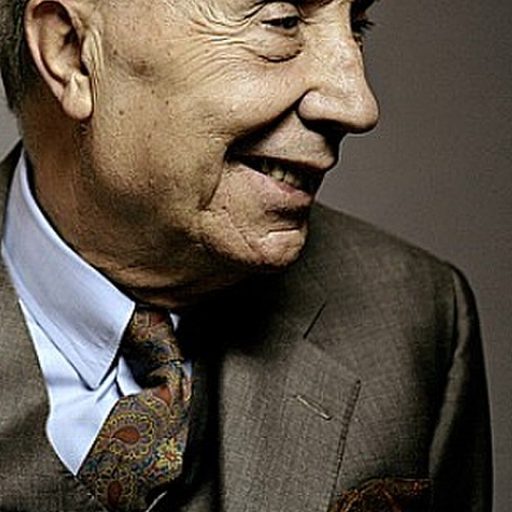
Marc Fumaroli treated eloquence as a historian: who spoke, before whom, and to wrest what. In 1986 the Collège de France created for him a chair of rhetoric and society, a discipline he had almost single-handedly refounded. Elected to the Académie française in 1995, he chaired the Society of Friends of the Louvre for twenty years. His name is carved with two Ls, beneath a maxim of Seneca.
The story
Born in Marseilles on 10 June 1932, Marc Fumaroli turned eloquence into a subject for history: how people spoke, to whom, and to obtain what — the art of persuasion as a social institution.
In 1986 he took the chair of “Rhetoric and Society in Europe, Sixteenth and Seventeenth Centuries” at the Collège de France: a discipline he had all but refounded single-handed.
He was elected to the Académie française on 2 March 1995, succeeding Eugène Ionesco, then to the Académie des inscriptions et belles-lettres on 30 January 1998, to the seat of Georges Duby.
President of the Société des amis du Louvre from 1996 to 2016, winner of the Balzan Prize in 2001, Grand Officer of the Légion d'honneur in 2013, he never separated the history of letters from the history of works of art.
He died in Paris on 24 June 2020 and rests in Division 57, on the Avenue Latérale Nord, third row. His name is cut there as “FUMAROLLI”, with two L's.
The grave
A bronze medallion signed by the Spanish sculptor Rafael Cidoncha (born 1952), and two inscriptions. The first contains a mistake: “MARC FUMAROLLI, de l'académie française. 1932-2020” — two Ls for a name that has only one. The second is from Seneca: “Otium sine litteris mors est et vivi hominis sepultura” — leisure without letters is death, and the burial of a living man. The Academician of rhetoric has a perfect epitaph and a misspelt name.
On site, do not miss
Two things to read: Seneca's maxim — Otium sine litteris mors est et vivi hominis sepultura — and the name above it, carved “FUMAROLLI” with one L too many.
Visitors' questions
Where is Marc Fumaroli's grave?
In Division 57, avenue Latérale Nord, third row, beneath a bronze medallion by the sculptor Rafael Cidoncha. The Division is also that of the poet Pierre Emmanuel, of the Flandrin painters, and of the creator of the role of Carmen, Célestine Galli-Marié.
Pierre EmmanuelWhat was Marc Fumaroli's field?
Rhetoric: the art of persuasion studied as a social institution of the sixteenth and seventeenth centuries. He held its chair at the Collège de France from 1986, and chaired the Society of Friends of the Louvre from 1996 to 2016.
Alain DecauxWhat does the Latin epitaph on his grave say?
Otium sine litteris mors est et vivi hominis sepultura — leisure without letters is death, and the grave of a living man. The maxim is Seneca's, and it is carved on a grave: the choice is not an innocent one.
Jean ReynaudIs there a mistake on his grave?
Yes, in his name: the stone carves “FUMAROLLI”, with two Ls. For an Academician elected to Eugène Ionesco's seat and a scholar of the classical language, the slip is hard to read without a smile.
Edmond du Sommerard, Division 41Audio guide to Père Lachaise: the best unusual guided tour!
Discover the secrets of the most astonishing tombs
the audio guidefrom€6.99