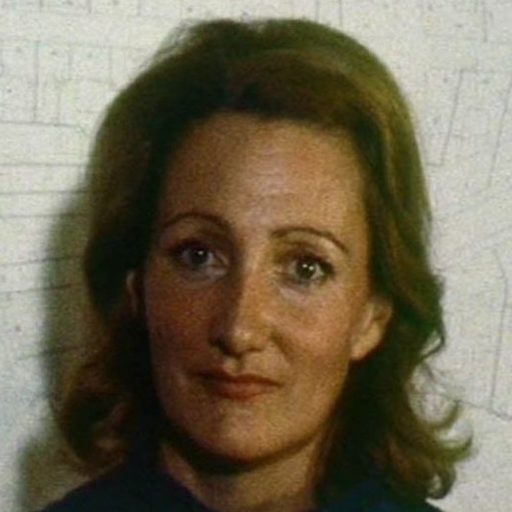
Françoise JANICOT HEIDSIECK
See onthe map
Painter, photographer, video and performance artist.
An abstract painter, she covered her canvases with wire mesh at the end of the 1960s to move on to performance, photography and video. In 1972, L'Encoconnage showed her winding herself in a length of cord to the point of suffocation, over a tape on which her husband Bernard Heidsieck spoke his sound poetry.
The story
At the end of the 1960s she stopped painting and covered her canvases with wire mesh. The gesture was final: abstraction was behind her, and performance, photography and video began.
Born in Paris on 30 May 1929, Françoise Janicot had first photographed her fellow travellers — Burroughs, John Cage, the cellist Charlotte Moorman, Jean-Jacques Lebel. Her lens fixed an avant-garde of which few other images exist.
In 1972 she created L'Encoconnage: she wound herself in a length of cord until she was smothered, over a tape on which her husband Bernard Heidsieck speaks his sound poetry. It is one of the major feminist performances of the decade in France. She then filmed the performers of sound poetry, before returning in the 1990s to photographs of absence, in whites.
She died on 18 June 2017, two and a half years after him. The stone in Division 10 gives each of them one line and one word: “poète” for him, “artiste” for her. Nothing of the cord, nothing of the wire-covered canvases — but the two names side by side say what mattered most in a work made by two.
The grave
A grave shared with her husband, where each is given one line and one word of profession: “Bernard HEIDSIECK, 1928-2014, poète” and “Françoise JANICOT HEIDSIECK, 1929-2017, artiste” — poet, artist. She is buried there under her artist's name followed by her married name. Nothing of L'Encoconnage, nothing of the burned canvases, nothing of the photographs of Burroughs and Cage — but the two names side by side say the essential about this work for two.
On site, do not miss
Two lines for two avant-gardes: “Bernard HEIDSIECK, 1928-2014, poète” and “Françoise JANICOT HEIDSIECK, 1929-2017, artiste” — poet, artist.
Visitors' questions
Where is Françoise Janicot's grave?
In Division 10, chemin du Coq, first row, in the same grave as her husband: “Bernard HEIDSIECK, 1928-2014, poète” and “Françoise JANICOT HEIDSIECK, 1929-2017, artiste”. Two callings in two words.
Bernard HeidsieckWhat was L'Encoconnage?
Her performance of 1972, the cocooning: she wound herself in cord until she could barely breathe, over a tape on which Bernard Heidsieck spoke his sound poetry. One of the major feminist works made in France that decade.
Maria KlonarisWhy did she cover her canvases with wire mesh?
Because she was done with painting. At the end of the 1960s she gave up abstraction and covered her canvases with a wire mesh — a gesture with no way back, marking her move into performance, photography and video.
Geneviève ClaisseWho did she photograph?
Burroughs, John Cage, the cellist Charlotte Moorman, Jean-Jacques Lebel: her fellow travellers. Her lens fixed an avant-garde of the 1960s and 1970s of which few other images survive.
NadarAudio guide to Père Lachaise: the best unusual guided tour!
Discover the secrets of the most astonishing tombs
the audio guidefrom€6.99