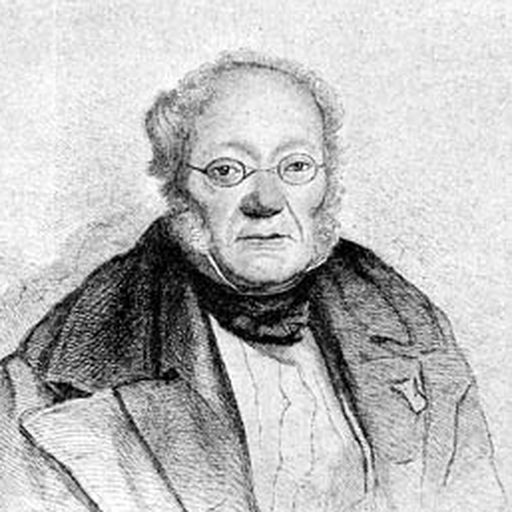
Habeneck conducted with his bow in hand, as was done then, beating time on his music stand. In 1828 he founded a concert society at the Conservatoire and gave Parisians a hearing of Beethoven, whose symphonies were more or less unknown in the country. It was he who premiered, in December 1830, Berlioz's Symphonie fantastique. His orchestra gave birth to the Orchestre de Paris.
The story
François-Antoine Habeneck conducted with his bow, as was then done: violin in hand, beating time on his stand. A first prize for violin, born at Mézières on 22 January 1781, he became deputy conductor at the Opéra in 1817.
In 1828 he founded the Société des concerts du Conservatoire and made it the house of Beethoven in France: it was through him that Paris heard the symphonies, then almost unknown in the country. The orchestra is the direct ancestor of the Orchestre de Paris.
On 5 December 1830 he gave the first performance of Berlioz's Symphonie fantastique; seven years later, to the day, that of the Grande Messe des morts. Conductor of the Opéra from 1824 to 1846, he gave the premieres of Robert le Diable, of La Juive, of Les Huguenots and of Benvenuto Cellini: French grand romantic opera was born under his direction. A professor at the Conservatoire from 1825, he trained Édouard Lalo and Hubert Léonard.
He died on 8 February 1849. Out of twenty-two years at the head of the Opéra, four major premieres and two first performances of Berlioz, the stone in Division 11 keeps only one title: “fondateur de la société des concerts du conservatoire” — founder of the Société des concerts du Conservatoire. No doubt what he would have chosen.
The grave
A simple grave, whose inscription makes a choice: “F.A. HABENECK, chevalier de la légion d'honneur, fondateur de la société des concerts du conservatoire, né à Mézières, le 23 février 1781, décédé le 8 février 1849.” — Knight of the Legion of Honour, founder of the Société des Concerts du Conservatoire, born at Mézières on 23 February 1781, died 8 February 1849. The birth date carved on the stone is wrong: Habeneck was born on 22 January 1781. Out of twenty-two years at the head of the Opéra orchestra, four premieres of great Romantic operas and two Berlioz premieres, the stone keeps the orchestra he founded — no doubt what he would have chosen.
On site, do not miss
The epitaph keeps only one title from a whole career: “fondateur de la société des concerts du conservatoire” — founder of the Société des Concerts du Conservatoire. Neither the Opéra, nor Beethoven, nor the Symphonie fantastique.
Visitors' questions
Where is Habeneck's grave?
In Division 11, chemin Denon, first row, in the musicians' quarter of the old cemetery. Of his whole career the stone keeps a single title: “fondateur de la société des concerts du conservatoire”, founder of the Conservatoire's concert society. Chopin and Cherubini lie a few paths away.
Jean-François Le SueurWhat did Habeneck found in 1828?
The Société des Concerts du Conservatoire, the orchestra through which Paris discovered Beethoven's symphonies, at that point almost unknown in France. It is the direct ancestor of today's Orchestre de Paris.
François-Adrien BoieldieuDid he premiere the Symphonie fantastique?
He did, on 5 December 1830 — and seven years later, to the day, the Grande Messe des morts by the same Berlioz. Habeneck is the conductor through whom the French music of his century entered the repertoire, and he conducted with his violin bow.
Luigi CherubiniWhich operas did Habeneck premiere?
The four pillars of French Romantic grand opera: Robert le Diable (1831), La Juive (1835), Les Huguenots (1836) and Benvenuto Cellini (1838). He led the Opéra orchestra from 1824 to 1846, alone from 1831: twenty-two years in all.
Jules DanbéAudio guide to Père Lachaise: the best unusual guided tour!
Discover the secrets of the most astonishing tombs
the audio guidefrom€6.99