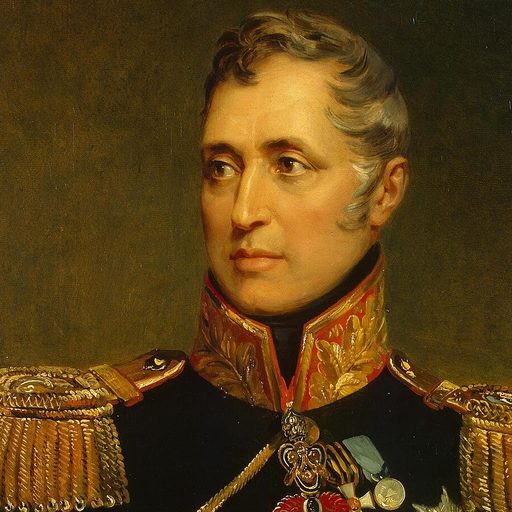
Pozzo di Borgo was, in the days of Pascal Paoli, the Corsican ally of the Bonapartes, before becoming Napoleon's most relentless adversary. He carried that enmity to Tsar Alexander I, who made him his ambassador in Paris and then in London: a Corsican representing Russia in the country of the man he was fighting. His stele bears no name. A bronze bust, and nothing else.
The story
In Corsica, in the days of Pasquale Paoli, the leader of Corsican independence, they had marched together: Charles-André Pozzo di Borgo, Napoleon and Joseph Bonaparte. The break was total, and the hatred the diplomat afterwards bore the Emperor made him his most relentless adversary.
Born at Alata, near Ajaccio, on 8 March 1764, he put that enmity at the service of Tsar Alexander I of Russia, becoming one of his diplomats. Russian ambassador in Paris from 1814 to 1835, then in London, he was made a Count and a Peer of France in 1818: a Corsican representing the Tsar in the country whose master he had fought.
He died in Paris on 15 February 1842. His stele in Division 57 is crowned by a bronze bust ninety-five centimetres high, signed by the Italian engraver Benedetto Pistrucci — and the grave carries no inscription at all. No name, no dates, no title: he has to be recognised by his face.
The grave
A stele crowned by a bronze bust ninety-five centimetres high, signed by the Italian engraver Benedetto Pistrucci (1783-1855) — and no inscription. Neither name, nor dates, nor the least of his titles: neither the Russian embassy in Paris, nor that in London, nor the peerage of France. The man who spent thirty years fighting Napoleon rests beneath an anonymous face of bronze.
On site, do not miss
No inscription on the grave. The only landmark: a bronze bust ninety-five centimetres high, signed Benedetto Pistrucci. One has to recognise him by his face.
Visitors' questions
Where is Pozzo di Borgo's grave?
In Division 57, avenue des Ailantes, first row. You know it by its bronze bust, ninety-five centimetres high, signed Benedetto Pistrucci, for the grave carries no inscription at all: no name, no dates.
Emmanuel de GrouchyWhy did he hate Napoleon?
They had been friends: Pozzo di Borgo, Napoleon and Joseph Bonaparte were political allies in the days of Pasquale Paoli, in Corsica. The break was total, and the hatred he then bore the Emperor made him his most relentless adversary.
Louis Blanc, Division 67Whom did he serve?
Tsar Alexander I of Russia. He was Russian ambassador in Paris, then in London — and a peer of France besides: a Corsican representing the Tsar of Russia in the country whose master he had spent thirty years fighting.
Élisabeth DemidoffWho sculpted his bust?
Benedetto Pistrucci (1783-1855), the Italian engraver — author of a bronze bust ninety-five centimetres high that crowns the stele. It is the only thing that identifies the diplomat, for want of an inscription.
Gaspard GourgaudAudio guide to Père Lachaise: the best unusual guided tour!
Discover the secrets of the most astonishing tombs
the audio guidefrom€6.99