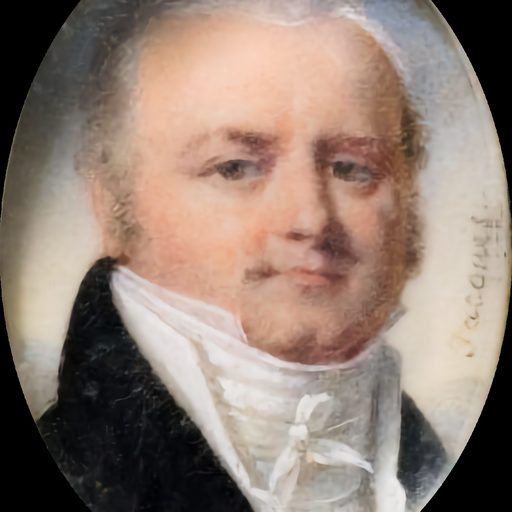
Aide-de-camp to Napoleon, then Director General of the Posts, he was sentenced to death after the Hundred Days. His wife Émilie, née de Beauharnais, obtained leave to see him in his cell: they exchanged clothes, he walked out in her place and fled to Bavaria, where King Maximilian I sheltered him for six years. Left behind in the cell, she sank into madness.
The story
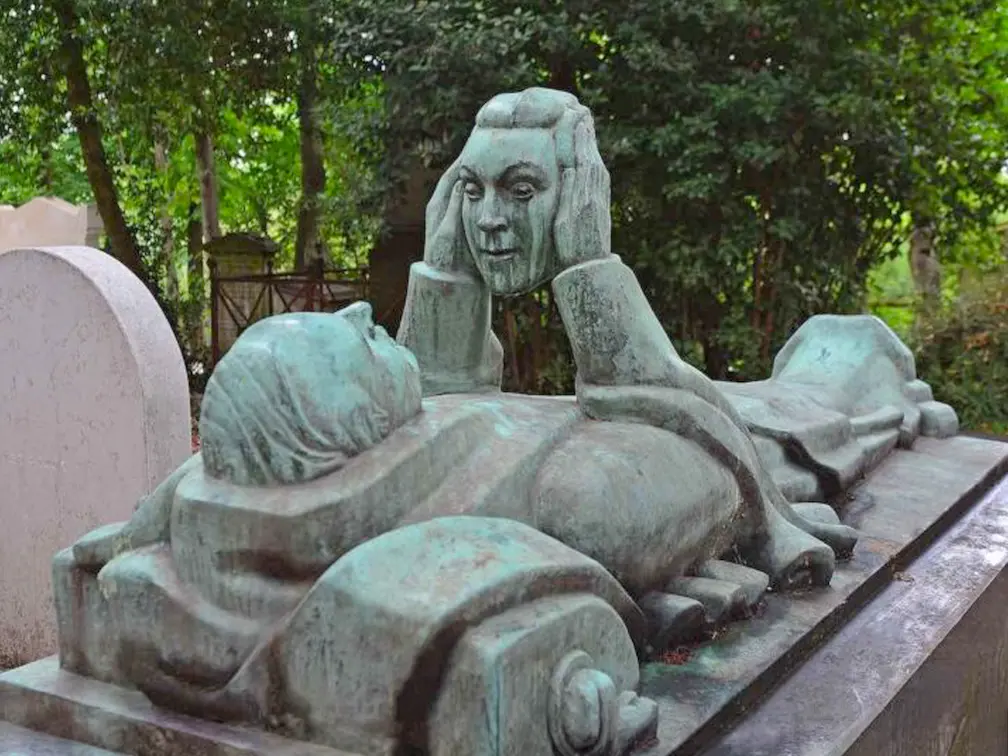
The relief on the grave of Antoine de Lavalette shows a man changing clothes in a prison. Few monuments in Père-Lachaise tell a scene, and no other tells an escape.
Born in 1769 into a family of small Paris bourgeois, Antoine Marie Chamans became Napoleon's aide-de-camp and his man for secret diplomatic errands. In 1798 Bonaparte had him marry Émilie Louise de Beauharnais, Joséphine's niece; under the Empire he would run the postal service.
Sentenced to death after the Hundred Days, he was waiting for the execution when Émilie obtained leave to dine with him one last time. On 20 December 1815, in the cell, they exchanged clothes. He walked out in her place and made for Bavaria, where King Maximilian I sheltered him for six years.
She stayed, and sank into madness. She joined him in Division 36 in 1855, twenty-five years after him. Their daughter, the baroness de Forget, completes the inscription: three generations under the stone, and a carved scene no one ever explained.
The grave
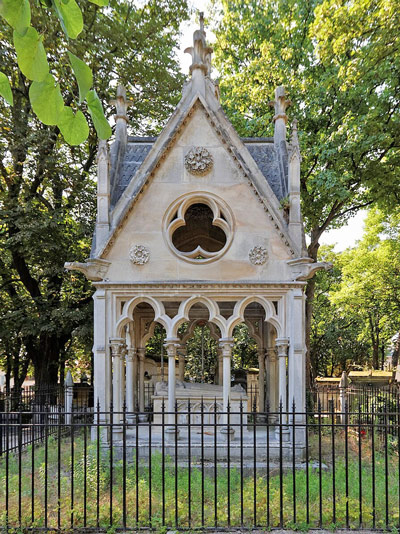
A monument whose interest lies in a unique detail: a bas-relief showing the count changing clothes in the prison — the very scene of his escape. Few graves in the cemetery depict an episode from the life of the deceased. The inscription brings together three generations: “Famille LAVALETTE. Le comte, de LAVALETTE, décédé, le 15 février 1830. Mme la comtesse, de LAVALETTE, née de BEAUHARNAIS, décédée, le 18 juin 1855. Mme la baronne de FORGET, née Louise Joséphine de LAVALETTE, décédée le 23 octobre 1886.” — the Lavalette family: the Count de Lavalette, died 15 February 1830; the Countess de Lavalette, née de Beauharnais, died 18 June 1855; the Baroness de Forget, née Louise Joséphine de Lavalette, died 23 October 1886. Émilie, the woman who took his place in the cell, rests there twenty-five years after him.
On site, do not miss
The bas-relief shows him changing clothes in the prison — the very scene of his escape. Few monuments in the cemetery depict an episode from the life of the deceased.
Visitors' questions
Where is Lavalette's grave?
In Division 36, avenue des Acacias, first row. The monument is one of the few in the cemetery to tell a story: a bas-relief shows the count exchanging his clothes in the prison, on the night of his escape.
NadarHow did he escape?
Thanks to his wife. Sentenced to death after the Hundred Days, he received in prison a visit from Émilie, herself dying: they exchanged clothes in the cell, and he walked out in her place. He fled to Vienna.
Charles de La BédoyèreWhat became of his wife?
She stayed behind in the cell, and her mind gave way. Émilie Louise de Beauharnais, a niece of Joséphine whom Bonaparte had given in marriage to Lavalette in 1798, died in 1855 and rests with him.
Edmond AboutWhat posts did he hold?
Aide-de-camp to Napoleon, entrusted with secret diplomatic missions, then Postmaster General under the Empire. It was his loyalty during the Hundred Days that brought him the death sentence, and the escape the bas-relief on his grave recounts.
Marshal NeyAudio guide to Père Lachaise: the best unusual guided tour!
Discover the secrets of the most astonishing tombs
the audio guidefrom€6.99