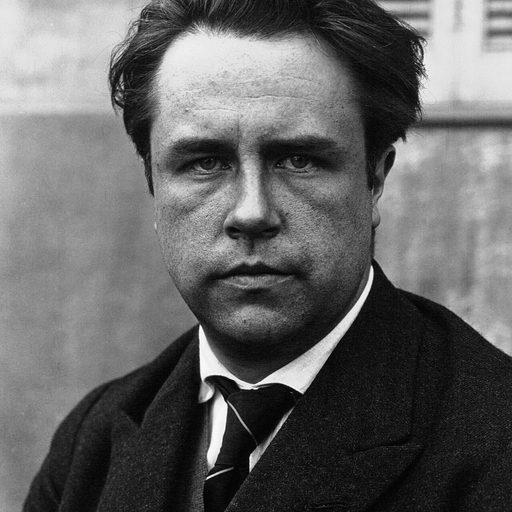
Paul VAILLANT-COUTURIER
See onthe map
Writer and founder of the French Communist Party.
Vaillant-Couturier was mobilised in 1914 and came back gassed, decorated and a pacifist. At the Congress of Tours, he was among those who tipped the socialist majority towards the Third International, and the French Communist Party was born of it. A deputy and mayor of Villejuif, he took over the direction of L'Humanité in 1935. His sudden death, in 1937, fixed the site of the plot where the party would later gather its own.
The story
The son of two opera singers, whose two names he carried — Marguerite Vaillant and Félix Couturier —, and a lawyer by training, Paul Vaillant-Couturier went to the war in 1914 and came back gassed, decorated and a pacifist. Out of that came La Guerre des soldats, written with Raymond Lefebvre, and a conviction he would never give up.
At the Tours congress, in December 1920, he was one of those who swung the Socialist majority over to the Third International: the French Communist Party was born. He became a deputy for the Seine, mayor of Villejuif, and editor-in-chief of L'Humanité — from April 1926 to September 1929, then from 1935 until his death.
He died suddenly in October 1937, at forty-five. His funeral drew an immense crowd, and his burial in Division 97, near Henri Barbusse who had died two years earlier, fixed the spot: from then on the party would gather its leaders, its intellectuals and its martyrs there.
In 1945 and 1946 the bodies of several Resistance heroes were moved there “so that they may rest near the Communards' Wall, beside their friends Barbusse and Paul Vaillant-Couturier”. The whole would become a kind of counter-Panthéon.
On site, do not miss
The position of the grave, at the head of the plot: the whole of the rest of the Division arranged itself around it.
Visitors' questions
Where is Paul Vaillant-Couturier's grave?
In Division 97 of Père-Lachaise, against the eastern boundary wall, right by the Communards' Wall. His grave, dug in 1937, is one of the two starting points of the Communist plot, along with that of Henri Barbusse, who died two years earlier.
Henri BarbusseWhat part did Vaillant-Couturier play in 1920?
He was one of the architects of the split at the Tours congress, in December 1920, which swung the majority of the Socialist Party over to the Third International and gave birth to the French Communist Party. He became a deputy for the Seine, mayor of Villejuif and, twice over, editor-in-chief of L'Humanité.
Marcel CachinWhy did the Communist plot form there?
Because Division 97 adjoins the Communards' Wall, the memorial ground of the Commune. The graves of Barbusse (1935) and Vaillant-Couturier (1937) served as the nucleus, and the party then gathered its leaders, its intellectuals and its martyrs around them.
The Communards' WallWas Paul Vaillant-Couturier a writer?
Yes. A lawyer who went to the front in 1914, he came back gassed and a pacifist, and drew several books from the war, among them La Guerre des soldats. He was also a poet, a songwriter and editor-in-chief of L'Humanité from 1935 until his death.
Paul ÉluardAudio guide to Père Lachaise: the best unusual guided tour!
Discover the secrets of the most astonishing tombs
the audio guidefrom€6.99