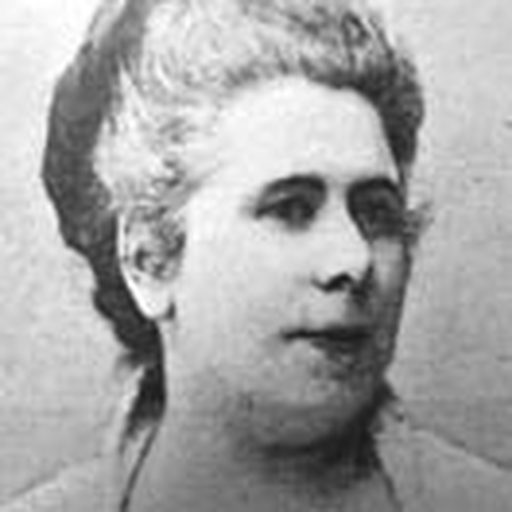
Marie Bequet de Vienne was seventeen when the Bloody Week laid low thousands of Parisians, and she remained marked by it. All that is left of her is a fragment of a name, on a family tomb. In 1876, aged twenty-two, she had opened a refuge of thirty-two beds for unmarried mothers, to whom society then left neither lodging, nor work, nor relief.
The story
Born in Paris on 4 February 1854, into a large republican family from Burgundy, Marie Bequet de Vienne was seventeen when the Commune was crushed: the Bloody Week left several thousand dead in Paris, and she carried the horror of it all her life. She married Léon Bequet, a freethinker and councillor of state: a household of secular republicans, in a France still hesitating between the Republic and a restored monarchy.
In 1876, at twenty-two, she opened in the 14th arrondissement a refuge of thirty-two beds for unmarried mothers. The gesture was precise: a pregnant woman without a husband had then neither lodging, nor work, nor assistance, and the municipal relief offices made their help conditional on the morality of the applicant, which ruled such women out on principle. Giving up the child was the only practical way out; to offer a bed was to act where the state did nothing.
She kept at it for forty years, founding one social work after another around the same axis: the mother and the child, breastfeeding, shelter, the return to work. She was a freemason — women's and mixed lodges remained marginal in a French freemasonry that was almost entirely male, and membership exposed a woman to disapproval — and was elected to the Committee for the Defence of the Rights of Women. The feminism she practised was not that of the platform but that of beds and meals.
She died in 1913, at fifty-nine, and lies in Division 51, in the Chatelain-de Vienne family grave. Her inscription there is reduced to a fragment: “Marie BE…”, the rest worn away. The stone gathers several generations of two allied families, and the least legible name on it is that of the only one still spoken of.
Her work outlived her by more than a century. The Œuvre de Marie Bequet de Vienne still exists and still bears her name — a rare case of a nineteenth-century women's foundation reaching us intact, when so many others were absorbed or dissolved. The institution carries on today the same work of receiving and supporting mother and child, in direct line from the refuge of 1876.
The grave
A stone whose inscription is today truncated: one reads “Marie BE…”, the name breaking off in the worn stone. Nothing there says that she founded the Œuvre de l'allaitement maternel — the Society for Maternal Breastfeeding — and the first shelters for destitute pregnant women, nor that these houses served as a model for the public maternity hospitals. The philanthropist who gave a roof to thousands of mothers rests under a name the stone no longer finishes writing.
On site, do not miss
The inscription that concerns her is reduced to a fragment — “Marie BE…” — on a family tomb. The work she founded in 1876, for its part, is still running.
Visitors' questions
Where is Marie Bequet de Vienne's grave?
In Division 51, avenue Feuillant, eighth row, in the Chatelain-de Vienne family grave. Her inscription is down to a fragment: “Marie BE…”, the rest worn away or unreadable. Division 51 lies in the upper part of the cemetery.
Léon RicherWhat did she found in 1876?
A refuge of thirty-two beds for unmarried mothers, in the 14th arrondissement. At twenty-two. A pregnant woman without a husband then had no lodging, no work and no assistance: giving the child up was the only practical way out.
Hubertine AuclertDoes her work still exist?
It does: the Œuvre de Marie Bequet de Vienne still carries her name. That is a rare thing — the women's foundations of the nineteenth century were almost all absorbed or wound up in the century that followed.
Christiane NitzelWhat kind of feminism did she practise?
The feminism of action rather than of platforms: forty years of social work around mother and child — refuge, breastfeeding, a way back to work. She was a Freemason, a rare and difficult commitment for a woman of her day.
Gisèle HalimiAudio guide to Père Lachaise: the best unusual guided tour!
Discover the secrets of the most astonishing tombs
the audio guidefrom€6.99