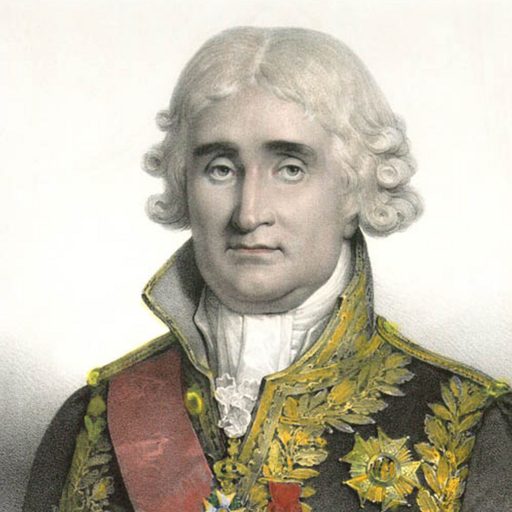
Cambacérès, a lawyer from Montpellier and a freemason, worked out with Bonaparte the details of the 18 Brumaire and became Second Consul. It was he who presided, in 1804, over the drafting of the Civil Code, of which he was the legal architect. The text dropped the penalties for relations between adults of the same sex: France stopped punishing them long before its neighbours. A single word is engraved.
The story
The son of the mayor of Montpellier, born on 18 October 1753, Cambacérès was a lawyer and a freemason, a councillor at his city's Court of Accounts — an office in the family since 1640. Deputy to the Convention, he sat on the Committee of Legislation.
Minister of Justice in 1799, he worked out the detail of 18 Brumaire with Bonaparte and became second consul. Talleyrand summed up the trio in one Latin word each: “Hic” for Bonaparte, “Haec” — the feminine — for Cambacérès, “Hoc” for Lebrun; the allusion to his homosexuality, public and caricatured under the nickname ‘tante Urlurette’, needed no explaining.
In 1804 he presided over the drafting of the Civil Code, of which he is the legal architect. The crime of sodomy, for its part, had gone with the penal code of 1791, and the code of 1810 did not restore it: France was more than a century and a half ahead of England and Germany, which would not decriminalise until the 1960s.
Arch-Chancellor of the Empire, Duc de Parme on 19 March 1808, he held power in the interim whenever Napoleon was away. His table was famous — “if you want to eat well, go to Cambacérès,” said the Emperor.
He lost his offices in 1815 and went into exile in Belgium; Louis XVIII restored his titles and his property in 1818. He died in Paris on 8 March 1824 and lies in Division 39.
The grave
The tomb is known from an engraving of 1899, and its inscription is the briefest imaginable for a figure of such importance: “CAMBACERES”, one word, without first name, title or dates. Not the consulate, not the arch-chancellorship, not the duchy of Parma, not the Civil Code. The man who drafted the most enduring text of the Empire left the most silent stone in his Division.
On site, do not miss
A single engraved word, “CAMBACERES”, for the man who governed France whenever Napoleon was away.
Visitors' questions
Where is Cambacérès's grave?
In Division 39, Chemin Camille-Jordan, first row, in the old part of the cemetery — not far from the Abbé Sicard's stele with its six hands. The inscription is reduced to a single word: “Cambacérès”.
Abbé SicardWhat was his role in the Civil Code?
He chaired its drafting in 1804 and was its legal architect. The text as adopted did not reinstate the criminalisation of relations between adults of the same sex, which made France one of the first countries to stop punishing them.
Paul BarrasWho was Cambacérès?
A lawyer from Montpellier who became a deputy to the Convention, Minister of Justice in 1799, Second Consul after the coup of 18 Brumaire, then Arch-Chancellor of the Empire and Duke of Parma. He governed in Paris whenever Napoleon was away on campaign.
Augustin-Daniel BelliardWhy did Talleyrand call him “Quae”?
Through a Latin pun on the three consuls — “Qui, Quae, Quod”, he, she, it — that assigned him the feminine gender. His homosexuality was common knowledge and much caricatured, under the nickname “tante Urlurette” — Auntie Urlurette.
Auguste BlanquiAudio guide to Père Lachaise: the best unusual guided tour!
Discover the secrets of the most astonishing tombs
the audio guidefrom€6.99