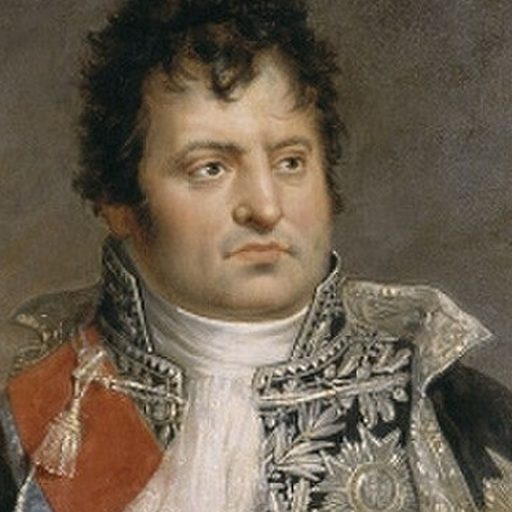
Denis Decrès was a naval cadet in 1779 and found himself dismissed in 1794 because he was a nobleman. Bonaparte took him back, entrusted him with the frigates of the Egyptian expedition, then with the Ministry of the Navy, which he held for thirteen years. The inscription on his monument contradicts itself from top to bottom on the year of his death. Four sculpted Victories flank the sarcophagus, and it is superb.
The story
Four stone Victories, carved by Louis Parfait Merlieux, flank the sarcophagus of Admiral Denis Decrès: it is one of the finest imperial monuments at Père-Lachaise, and the inscription lists titles and battles there like a service record.
Born at Chaumont, in Champagne, on 18 June 1761 to a cavalry officer, Denis Decrès entered the Navy as a cadet in 1779, became a ship-of-the-line captain in 1793, then was dismissed in 1794 under the decree against nobles. Squadron commander in March 1797 and rear admiral in April 1798, he was chosen by Bonaparte to command the frigates of the Egyptian expedition.
He distinguished himself in the action of the Guillaume Tell off Malta on 30 March 1800 — an episode the stone records. Minister of the Navy for thirteen years, from 1801 to 1814, he was made a duke of the Empire.
His valet packed gunpowder under his bed and set it alight; Decrès died of his injuries on 7 December 1820. The stone contradicts itself from top to bottom: the upper part has him dying in “MDCCCXXI”, the lower gives “1761-1820”. The most carefully made monument in Division 39 carries a one-year error about its own occupant.
The grave
A sarcophagus flanked by four stone Victories, the work of the sculptor Louis Parfait Merlieux (1796-1855) — one of the finest imperial monuments of Père-Lachaise. The inscription lists the titles and the actions, and contradicts itself: “Duc DECRES, vice-amiral, G-croix de la légion d'honneur, ancien ministre de la marine, décédé le VII décembre MDCCCXXI. Anvers Cherbourg. Remorque portée au Glorieux, combat du XII avril MDCCLXXXII. Combat du Guillaume Tell, devant Malte le 30 mars MDCCC. Denis, Duc DECRES, 1761-1820.” — Duke Decrès, vice-admiral, Grand Cross of the Legion of Honour, former Minister of the Navy, died 7 December 1821. Antwerp, Cherbourg. Tow-line carried to the Glorieux, action of 12 April 1782. Action of the Guillaume Tell, off Malta, 30 March 1800. Denis, Duke Decrès, 1761-1820. The top of the stone has him die in 1821, the bottom in 1820.
On site, do not miss
Four stone Victories by Merlieux flank the sarcophagus. Compare the top and the bottom of the inscription: “MDCCCXXI” on one side, “1761-1820” on the other.
Visitors' questions
Where is Duke Decrès's grave?
In Division 39, chemin Camille-Jordan, first row. The tomb is a sarcophagus flanked by four stone Victories, carved by Louis Parfait Merlieux — one of the finest imperial monuments in the cemetery.
Joachim MuratIs there a mistake on his grave?
Yes, of one year: the inscription has him dying “le VII décembre MDCCCXXI” — 1821 — when he died in 1820. Yet the same stone carries, lower down, “Denis, Duc DECRES, 1761-1820”: it contradicts itself.
Augustin d'AbovilleHow long was he a minister?
Thirteen years: Napoleon's Minister of the Navy from 1801 to 1814, the longest ministerial term of his day. Bonaparte had earlier chosen him to command the frigates of the Egyptian expedition.
Armand Joseph BruatWhich actions does his stone recall?
Two, both carved: the “remorque portée au Glorieux”, the tow given to the Glorieux in the action of 12 April 1782, and the fight of the Guillaume Tell off Malta, on 30 March 1800. Two city names appear as well, without explanation: Antwerp and Cherbourg.
François-André BaudinAudio guide to Père Lachaise: the best unusual guided tour!
Discover the secrets of the most astonishing tombs
the audio guidefrom€6.99